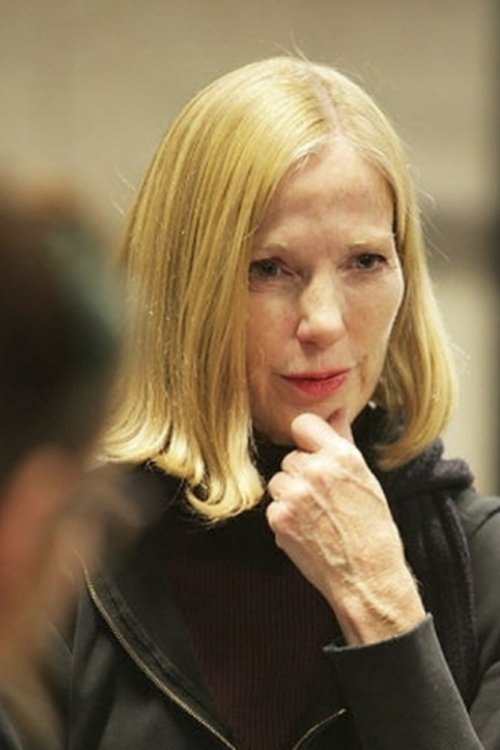
Janie Geiser
Directing
Biography
Janie Geiser is an American artist and experimental filmmaker. Her notable works include The Fourth Watch, Terrace 49, The Red Book, The Secret Story, Colors, Immer Zu, Lost Motion, and Clouded Sulphur.
Known For
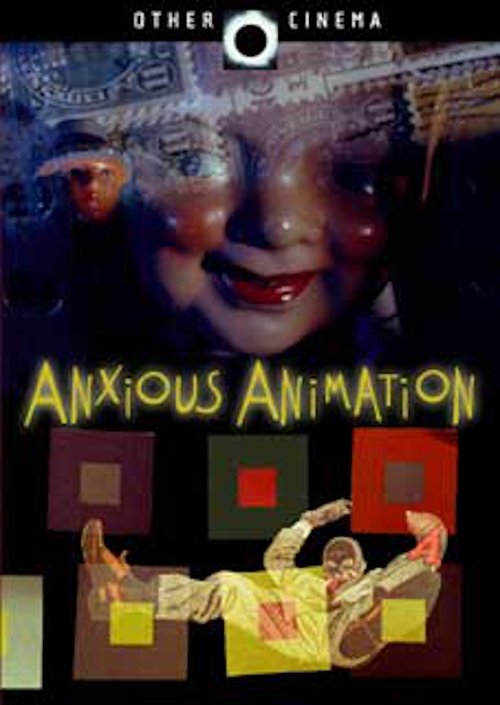
This aint no Pixar. This is aint no Disney. This aint no foolin around. ANXIOUS ANIMATION presents six contemporary film artists who take us into surreal worlds of delirium and paranoia The reigning proponent of cut-and-paste, LEWIS KLAHR nourishes intensely private visions on the compost heap of collective fantasy through old magazines, comic books, and cocktail iconography.Complex, full of charm, and pervaded by themes of loss, JANIE GEISER simultaneously creates and deconstructs fantasies through doll-like figurines, cut-outs, and found objects in her cryptic narratives.JIM TRAINORs handmade animations explore the inner lives of animals that appear strangely self-aware even as they instinctually copulate, feed, fight, kill and die.The Bay Area collective of RODNEY ASCHER, SYD GARON, and ERIC HENRY conjure diabolical visions with digital savvy, accompanied by the manic music of Buckethead and DJ Q-Bert.
Anxious Animation
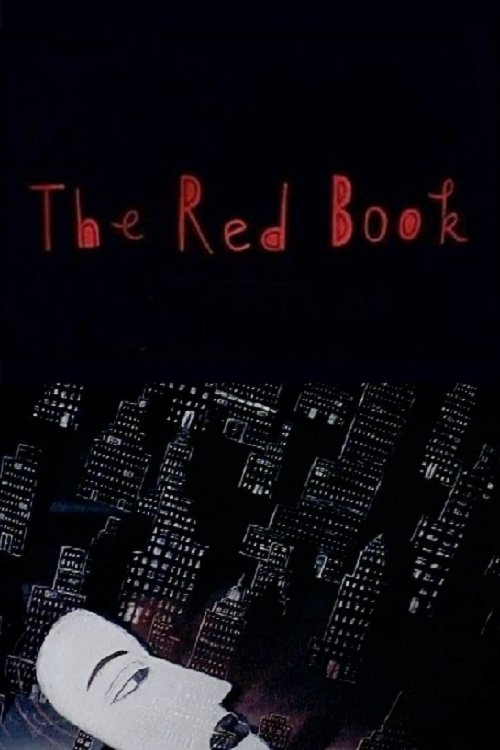
An elliptical, pictographic animated film that uses flat, painted figures and collage elements in both two and three dimensional settings to explore the realms of memory, language and identity from the point of view of a woman amnesiac.
The Red Book
In her recent films, Geiser has been exploring the possibilities found in merging video texture with film, creating a kind of deep, ambiguous space, a suggestion of “the floating world”. In ULTIMA THULE, gravity fails, land and sky lose their historical meaning. A small silver plane navigates an ultramarine storm, flying over barely-glimpsed hills, an unlikely ferry to ”Ultima Thule”: the farthest point north, the limit of any journey. The seduction of immersion in blue is too strong to avoid, the land fills with water, and time loses its line.
Ultima Thule
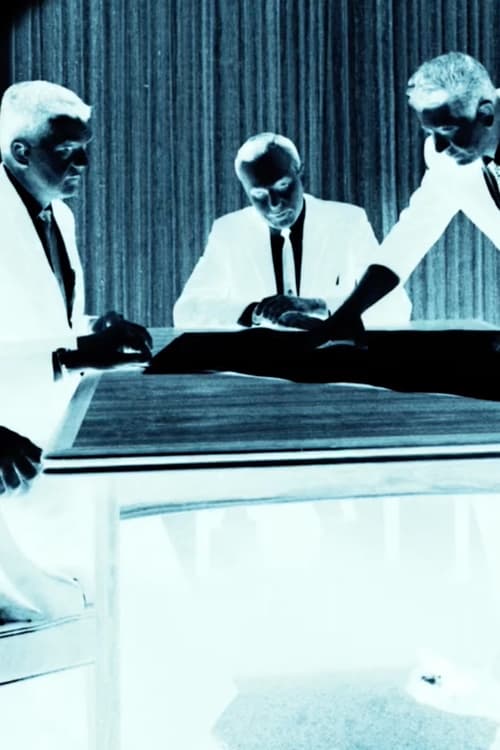
Initiated by an unearthed photograph of her father and his colleagues around a conference table in a generic mid-century office, Geiser’s evocative collage film charts a personal-political path through the recesses of America’s industrial ecosystem. Using animation and re-photography effects, Geiser presents an array of images (geometric diagrams, blueprints, live-action landscape shots) in a prismatic reflection on power structures in the workplace.
Valeria Street
A girl escapes from a house where parental conflicts seem to hammer down the roof. Gliding through a dream-like environment, in her newfound freedom she encounters dangerous hurdles. Returning home, she discovers she has undergone an Alice in Wonderland-like change in scale and no longer fits in the confined boxes of family security. Her parents watch their now giant daughter through the window.
Babel Town
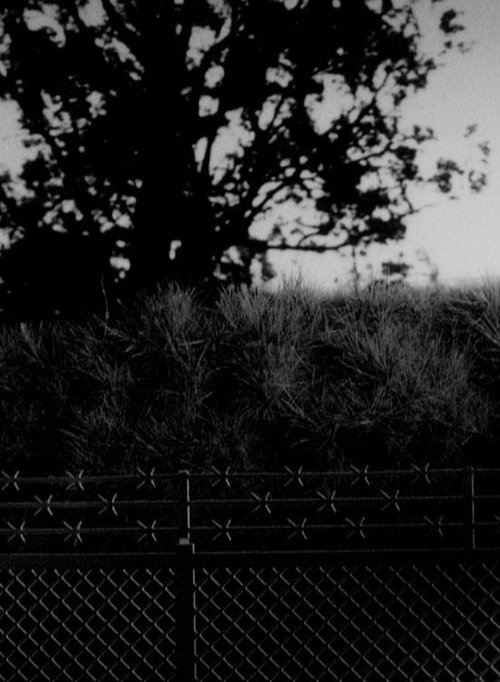
From a set of photographs found in a thrift store, Geiser creates a liminal space between representation and abstraction, figure and landscape, fiction and memory. ARBOR suggests the fragility and ephemerality of memory and its artifacts through subtle manipulations of the photographs: reframings, layerings, inversions, and the introduction of natural elements, including flowers and leaves. The photographs’ subjects rarely engage the camera; they are glimpsed, rather than seen. They look elsewhere, and wait for something inevitable. Gathering on a hillside, lounging on the grass beyond now-lost trees, the inhabitants of ARBOR cycle through their one elusive afternoon, gradually succumbing to time or dissolving into landscape, reserving for themselves what we can’t know---and becoming shadows in their own stories.
Arbor
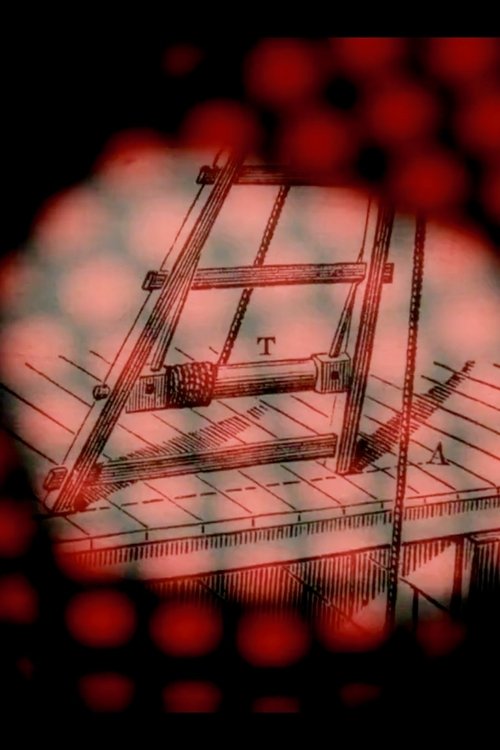
Evidence is scientifically arranged and catalogued, suggesting a corridor to knowledge. Elusive. Crimson.
Kriminalistik
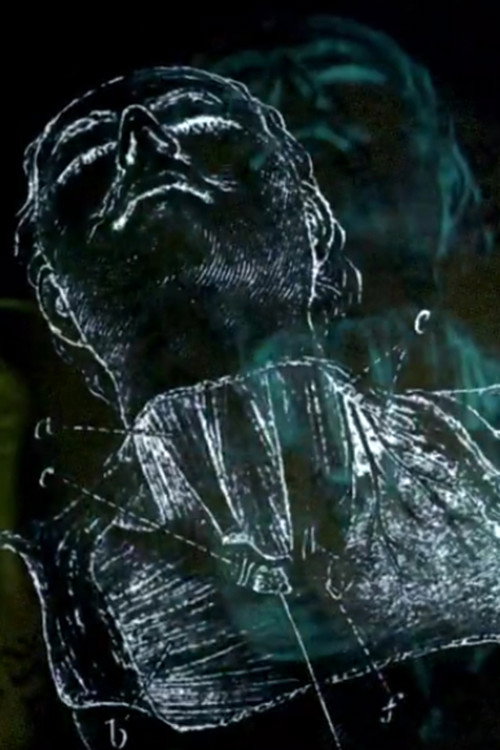
Medical illustrations of bodies, with model paper buildings and images of cultivated and wild plants in an elliptical journey toward ephemerality. These bodies lose their volume and exist, somehow, without flesh. They are mere outlines, traveling through indeterminate space, domestic and otherwise. Cut open, but not bleeding, what do we see when we no longer have eyes?
Sudden Tourniquet
The realms of childhood, war, and loss echo through Ricky. Double vision illuminates, and simultaneously obfuscates, what can be remembered, lost, or retrieved. A found sound recording forms the spine of the film . . . a scratched audio letter from father to son.—Janie Geiser
Ricky

Slideshow reveals moments in time in the lives of strangers. Strangers to me, but maybe not to each other. Found in a Berlin flea market in the 1990's, these slides originated in the DDR (East Germany):an embossed DDR decorates the top of many of the vivid plastic slide frames. The slides' photographic images were made of ephemeral materials. As objects, they have a certain graphic power, especially when illuminated on a light table. Scattered among the boxed-up slides were also a few educational slides highlighting working sites. Additionally, there seem to be a few commercially produced images of soldiers, the border---these were in cardboard slide frames and may have been produced by West German companies. Time and place are suggested---sometime before 1989, when the wall came down. Working with the slides, I came to feel that I knew some of the people. Many emerged across multiple slides. But I can only know their traces.
Slideshow
In the early part of the 20th Century, Los Angeles, with its warm, dry climate, was a haven for the chronically ill. Working from archival images of pre-suburban Los Angeles, medical illustrations, charts, photographs of abandoned hospitals and miniatures, Silent Sister centers on the intersection of landscape and the body; both become the location of narrative, memory, erasure, history and loss.
Silent Sister
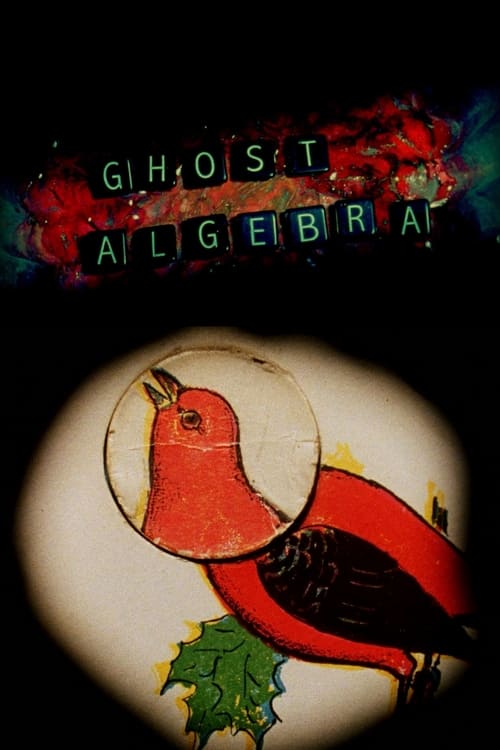
Janie Geiser takes us along on her search for the original meaning of the word 'algebra' with the help of a remarkable series of found objects, medical illustrations and a rich variety of animation techniques.
Ghost Algebra
Seeking and grasping at what is hidden from our eyes. Haunting moments of surrealism that extract us from the everyday into a realm of magic and music.
The Hummingbird Wars

A subterranean unraveling, seeds fall to the ground with nowhere to land. The only witness is blindfolded, and she, too, falls at some point. The underground factory operates day and night, the burrowing continues, in a long slow attempt to fabricate what could actually make itself.
Heliotrope

“A young woman moves between light and dark, life and death; a latter-day Persephone. The natural world responds accordingly. Neglected negatives, abandoned envelopes, botanical and anatomical illustrations, and found recordings reorder themselves, collapsing and reemerging in her liminal world.”—Janie Geiser
Cathode Garden
In a shifting landscape of dirt and sky, excavation and construction merge. Figures move back and forth between life and death, and possibly somewhere else. The ephemerality of existence is a mundane question in this world, where numbers mark the way. The floor of the world turns out to be easily pierced, liquid, permeable.
The Floor of the World
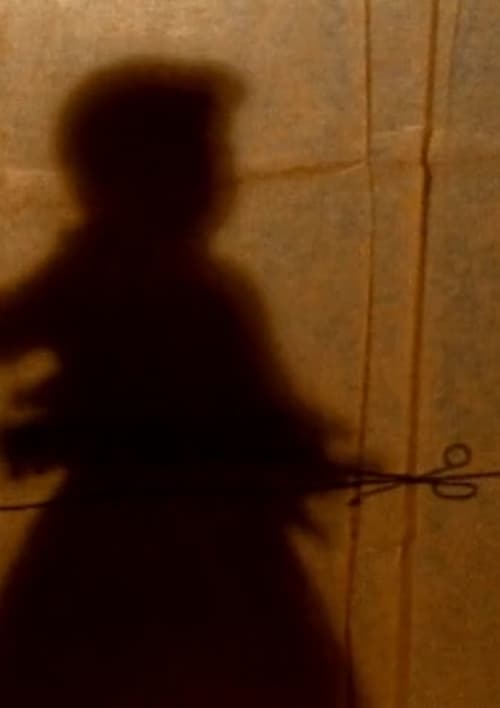
THE SECRET STORY arose as a response to several beautifully decayed toy figures from the 1930s that were given to me as a gift. These figures, and other toys, objects, and illustrations that I found from the period between the world wars, suggested a kind of unearthed hidden narrative which I have attempted to re-piece together, as if these figures were the hieroglyphics of a just-forgotten tongue. THE SECRET STORY revolves around the central figure of the woman, and her girl-double, who look somewhat like a versions of Snow White. She wanders through landscapes of rivers and floods, home and war, and memory and illness, culminating in an ecstatic walk in the forest, suggesting both the dark and cathartic trajectories of the richest fairy tales.
The Secret Story

In Flower of the Sky, Janie Geiser elegantly submits two thrifted photographs to superimpositions and masking techniques in order to trouble and recast histories of the early 20th century.
Flowers of the Sky

Shots of empty photo albums.
Absent Objects
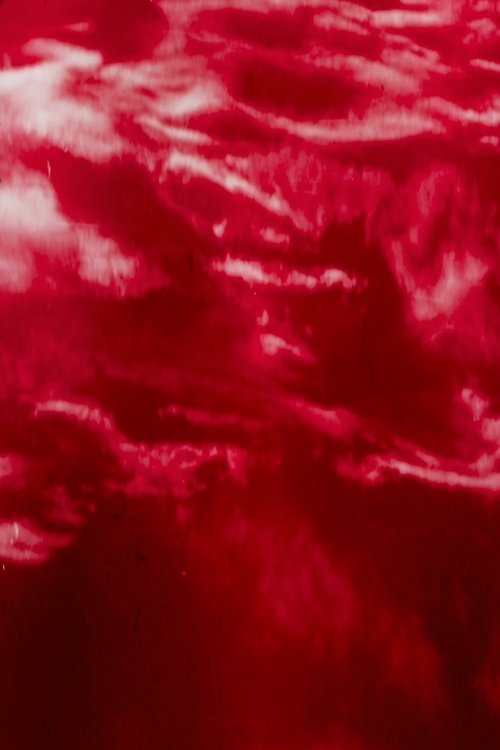
A found faded set of vermillion 35mm slides—evidence of time and change. Their red hues transform the slides’ subjects—mountain landscapes of the West, long-span bridges, tourists and tourist sites—into simultaneously sublime and corrosive views. In Chameleon Law, these time-altered images, alternately depleted and extreme, suggest a heated landscape of the past and future.