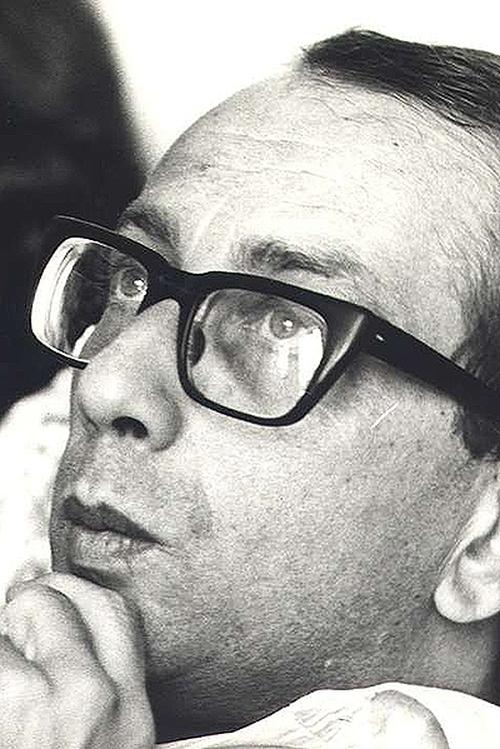
Mário Carneiro
Camera
Biography
Mário Carneiro (Île de France, Paris, France, 1930 — Rio de Janeiro, September 2, 2007), was a Brazilian director of photography, painter, engraver, architect and filmmaker.
Known For

A deep investigation, in the way of a poetic essay, on one of the main Latin American movements in cinema, analyzed via the thoughts of its main authors, who invented, in the early 1960s, a new way of making movies in Brazil, with a political attitude, always near to people's problems, that combined art and revolution.
Cinema Novo
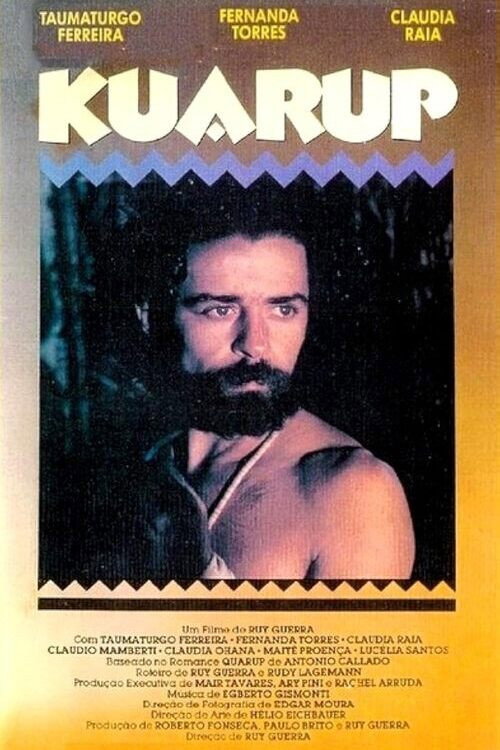
This epic Brazilian film was based on the equally epic novel by Antonio Callado. Set between 1954 and 1964, the film's focus is the saga of Jesuit priest Nando. Fed up with civilization, he ventures deep into Amazon country to live with and work among the Xingu Indians.
Kuarup
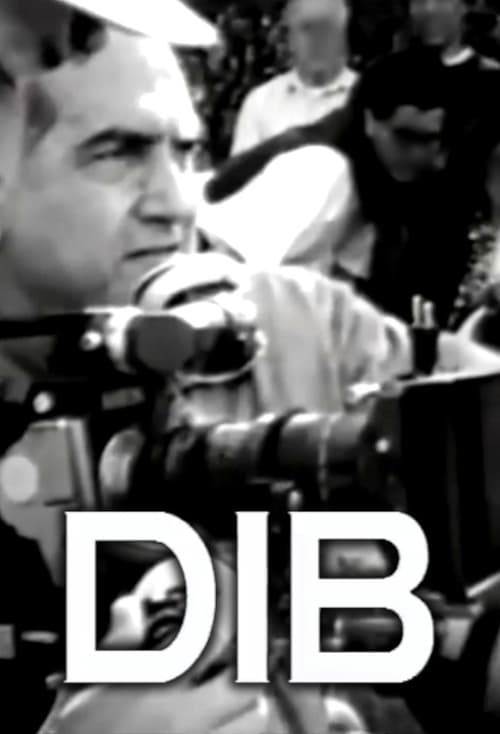
Documentary that addresses, through the testimony of directors and actors, the work of Dib Lutfi, considered one of the greatest photographers of Brazilian cinema.
Dib
Helena, married to decorator Bruno, is a woman dissatisfied with the futility of social life. She rekindles her relationship with her former boyfriend, Clóvis, and discovers how difficult the struggle for happiness is by seeing the example of the less fortunate. After saving herself from the rough seas on the beach, Helena finds herself possessed by a mystical fear. On New Year's Eve, while the people celebrate Iemanjá, Helena and Bruno throw a lavish party. Their employee, Luiz, is arrested as a suspect in the death of a woman found on the beach. Having a disagreement with her husband, Helena leaves the party and throws herself into the sea. She is saved by Umbanda followers and welcomed by Bruno, who tries in vain to comfort her.
Mar Corrente

In a fictitious country, a civil servant receives the greatest inheritance in history (ten trillion dollars) and is confined by authorities to prevent a collapse of the world economy. But he manages to escape.
The Man Who Bought the World

Documentary about Brazilian filmmaker Glauber Rocha, one of the most important names in the Cinema Novo, with interviews with some of his friends and colleagues.
Glauber Rocha - The Movie, Brazil's Labyrinth
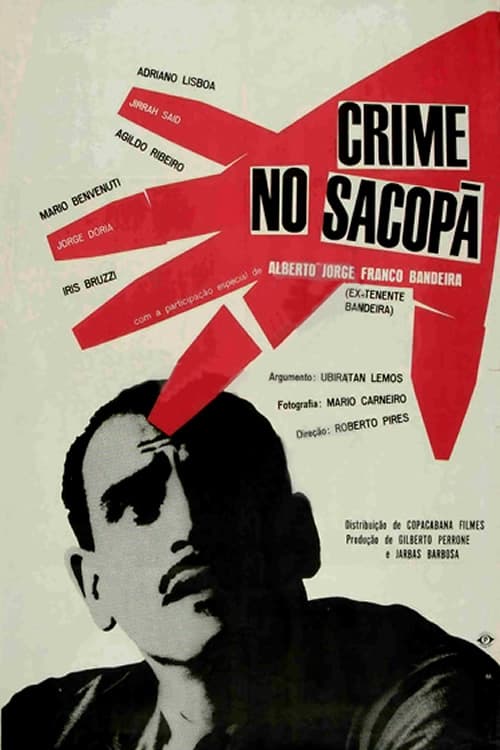
No description available.
Crime no Sacopã
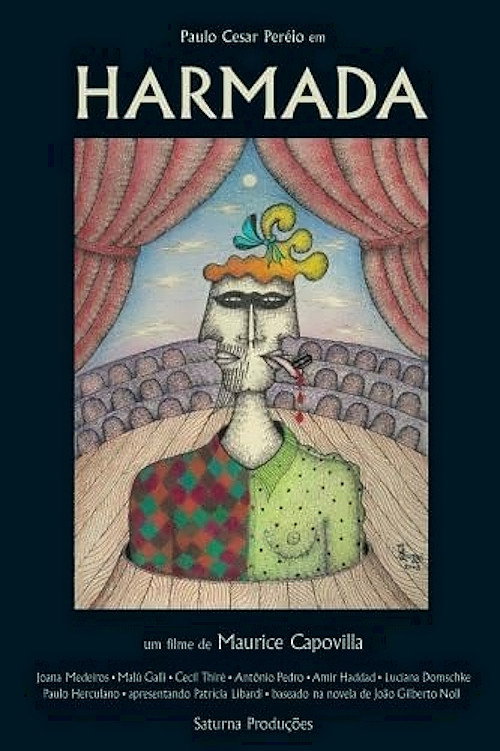
A failed artist searching strength to move ahead. By a young lady, who might be his daughter, he develops a project that changes his destiny.
Harmada
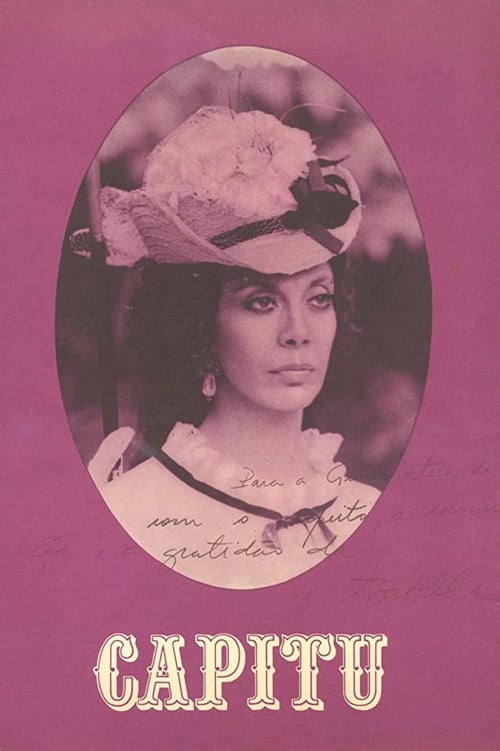
Adaptation of Machado de Assis’s classic novel “Dom Casmurro”. Bentinho and Capitu are friends since childhood and end up marrying. But Bentinho destroys his life when he starts suspecting Capitu has an affair with his best friend and that his son is not really his.
Capitu
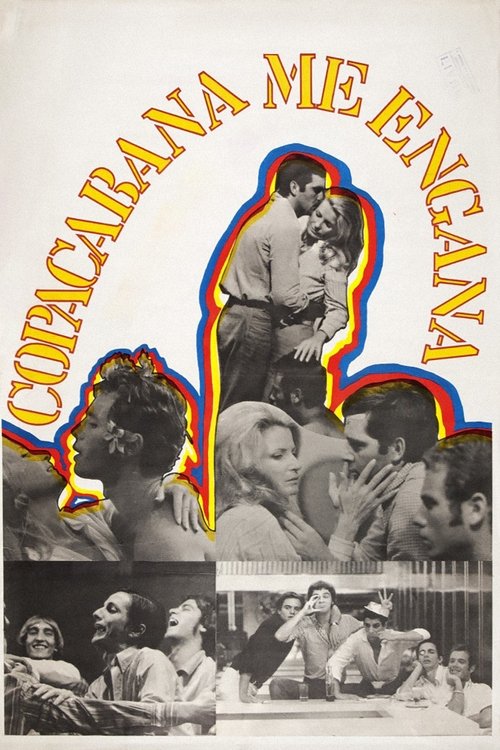
Marquinhos is in his early 20s and lives in Copacabana with his petits bourgeois parents and older brother. He doesn't have a job, he doesn't go to school, he just lives on the spur of the moment, watches TV, plays soccer on the beach by day and goes out with his mates by night. He meets Irene, a 40 year-old woman and they have a love affair that is going to change his life - for a while.
Copacabana Fools Me

Follows the story of Opinião, a theatre group created in 1964 during the early Brazilian dictatorship period to oppose the government through artistic performances. Considered the first left-wing response to the dictatorship, the group gathered now famous Brazilian artists such as Nara Leão, Maria Bethânia, João do Vale and Millôr Fernandes.
Memórias do Grupo Opinião
No description available.
Gimba, Presidente dos Valentes
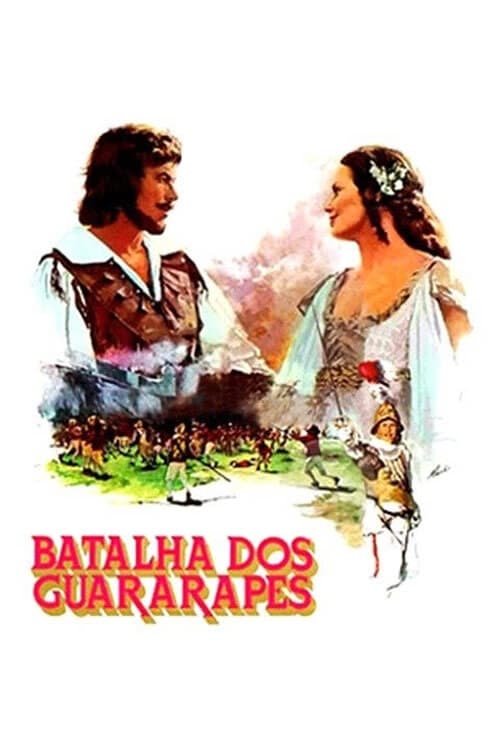
In the early 17th century, the Dutch have occupied Bom Jesus village, the last native stronghold in the Pernambuco captaincy. An adventurer, João Fernandes Vieira, sees himself in the middle of a conflict, torn between joining his friend Mauricio de Nassau alongside the ruling Dutch and siding with his lover Ana Paes in the fight to free his homeland.
Batalha dos Guararapes
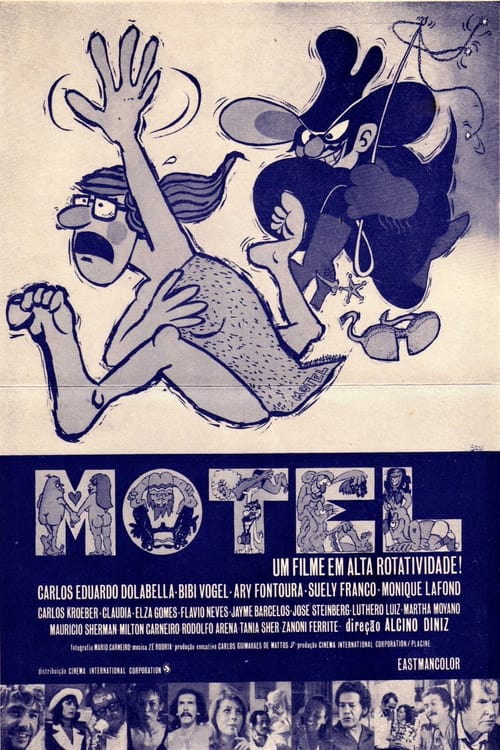
Caseli, a young writer and teacher, creates in his imagination characters who would frequent a motel, the subject of the book he is writing. He and Dilma, his student, decide to spend a night in a motel in Rio, where eight couples meet: - Fábio, visual artist and Stefânia, fashion editor of a magazine; - Ferraz, flirtatious dentist and his secretary Cleonice, shy and virgin; - Vera, wife of Ferraz and Kiko, big boy from Ipanema; - Leopoldo and his wife, an elderly couple celebrating their golden anniversary; - Detective Camilo and his assistant Dorô, who try to catch Vera in the act of adultery; - Renato, on vacation from São Paulo and Cláudia, a woman he recently met in Rio; - Gustavo and Lazinha, a couple who use extravagant artifices to achieve sexual fulfillment. In the middle of the night, the corpse of an unknown man appears, and the arrival of the police determines the most diverse outcomes for those who were looking for just one night of love.
Motel
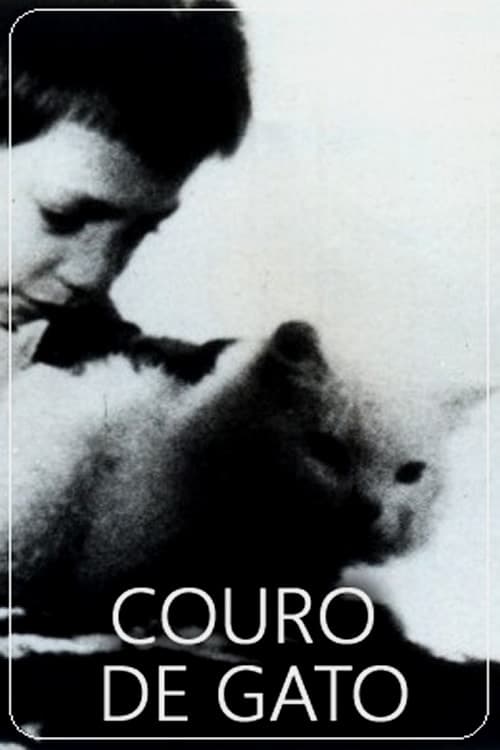
A few weeks before Carnival, slum boys organize huntings for stray cats, whose leather can be used in Samba percussion instruments, like the Tamborim, a small drum.
Cat Skin
The story of one of the greatest stars of Brazilian cinema, Glauce Rocha.
Glauces: Estudo de um Rosto
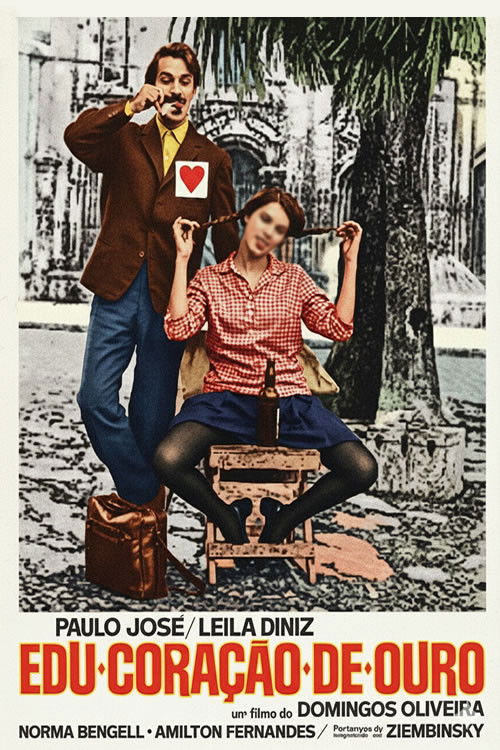
A volatile young man, Edu is a typical Rio de Janeiro middle-class kind, who flirts with multiple women at the same time. None of them, however, had managed to make him fall in love, until he met with mysterious Tatiana.
Edu, Coração de Ouro

In the city of Porto das Caixas, a woman seeks help from multiple lovers to murder her dirty husband. Desperate to free herself, she decides to put her plan into practice alone.
Porto das Caixas
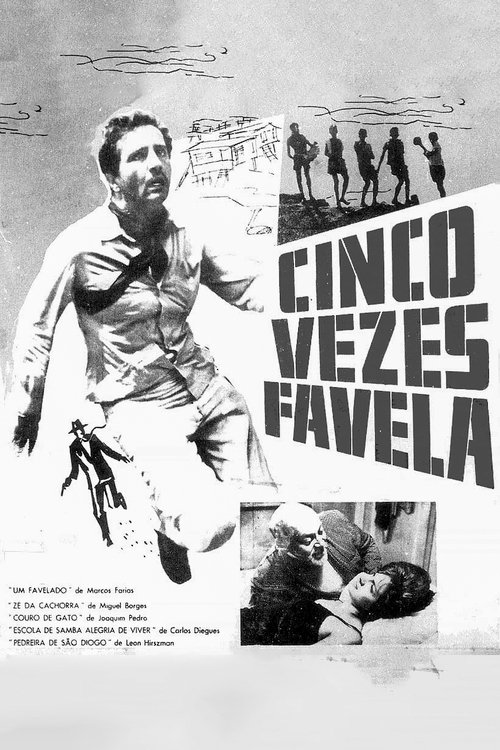
Five segments about the hardships faced by people living in slums on hills in Rio de Janeiro.
Five Times Favela
No description available.