Nana Mouskouri
Acting
Biography
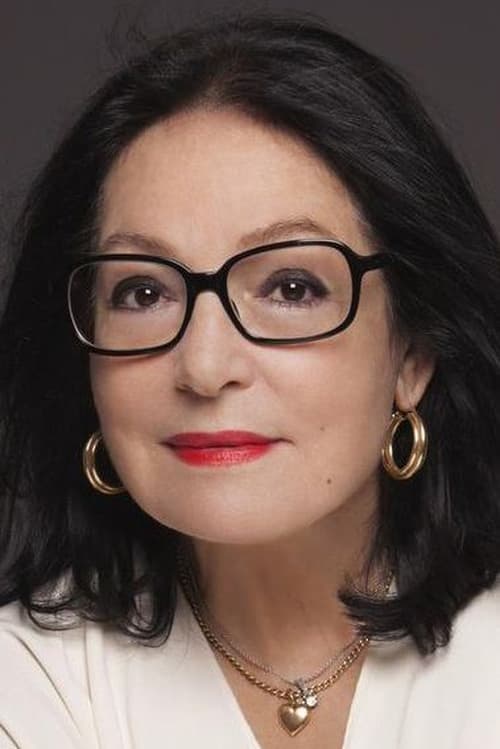
Ioanna "Nana" Mouskouri OQ (Greek: Ιωάννα "Νάνα" Μούσχουρη [i.oˈana ˈnana ˈmusxuri]; born 13 October 1934) is a Greek singer and politician. Over the span of her career, she has released an estimated 450 albums in at least thirteen languages, including Greek, French, English, German, Dutch, Portuguese, Italian, Japanese, Spanish, Hebrew, Welsh, Mandarin Chinese and Corsican. Mouskouri became well known throughout Europe for the song "The White Rose of Athens", recorded first in German as "Weiße Rosen aus Athen" as an adaptation of her Greek song "Σαν σφυρίξεις τρείς φορές" (San sfyríxeis tris forés, "When you whistle three times"). It became her first record to sell over one million copies. Later, in 1963, she represented Luxembourg at the Eurovision Song Contest with the song "À force de prier", finishing eighth. Her friendship with the composer Michel Legrand led to the recording by Mouskouri of the theme song of the Oscar-nominated film The Umbrellas of Cherbourg. From 1968 to 1976, she hosted her own TV show produced by BBC, Presenting Nana Mouskouri. Her popularity as a multilingual television personality and distinctive image, owing to the then unusual signature black-rimmed glasses, turned Mouskouri into an international star. "Je chante avec toi Liberté", recorded in 1981, is perhaps her biggest hit to date, performed in at least five languages – French, English as "Song for Liberty", German as "Lied der Freiheit", Spanish as "Libertad" and Portuguese as "Liberdade". "Only Love", a song recorded in 1984 as the theme song of TV series Mistral's Daughter, gained worldwide popularity along with its other versions in French (as "L'Amour en Héritage"), Italian (as "Come un'eredità"), Spanish (as "La dicha del amor"), and German (as "Aber die Liebe bleibt"). It became her only UK hit single when it reached number two in February 1986. Mouskouri became a spokesperson for UNICEF in 1993 and was elected to the European Parliament as a Greek deputy from 1994 to 1999. In 2006, she was a special guest on Eurovision Song Contest 2006's final, presented as the best selling artist of all time. In 2015, she was awarded the Echo Music Prize for Outstanding achievements by the German music association Deutsche Phono-Akademie. Nana Mouskouri was born on 13 October 1934 in Chania, Crete, where her father, Constantinos, worked as a film projectionist in a local cinema; her mother, Aliki, worked in the same cinema as an usher. When Mouskouri was three, her family moved to Athens. Mouskouri's family sent her and her older sister Eugenía (Jenny) to the Athens Conservatoire. Although Mouskouri had displayed exceptional musical talent from age six, Jenny initially appeared to be the more gifted sibling. Financially unable to support both girls' studies, the parents asked their tutor which one should continue. The tutor conceded that Jenny had the better voice, but Nana was the one with the true inner need to sing. Mouskouri has said that a medical examination revealed she has only one functioning vocal cord and this could well account for her remarkable singing voice (in her younger years ranging from a husky, dark alto, which she later dropped, to a ringing coloratura mezzo), as opposed to her breathy, raspy speaking voice. ... Source: Article "Nana Mouskouri" from Wikipedia in English, licensed under CC-BY-SA.