FEEL IT.STREAM
?

André Gide

Writing

Biography

André Paul Guillaume Gide (22 November 1869 – 19 February 1951) was a French author whose writings spanned a wide variety of styles and topics. He was awarded the 1947 Nobel Prize in Literature. Gide's career ranged from his beginnings in the symbolist movement, to criticising imperialism between the two World Wars. The author of more than fifty books, he was described in his obituary in The New York Times as "France's greatest contemporary man of letters" and "judged the greatest French writer of this century by the literary cognoscenti." Known for his fiction as well as his autobiographical works, Gide expressed the conflict and eventual reconciliation of the two sides of his personality (characterized by a Protestant austerity and a transgressive sexual adventurousness, respectively). He suggested that a strict and moralistic education had helped set these facets at odds. Gide's work can be seen as an investigation of freedom and empowerment in the face of moralistic and puritanical constraints. He worked to achieve intellectual honesty. As a self-professed pederast, he used his writing to explore his struggle to be fully oneself, including owning one's sexual nature, without betraying one's values. His political activity was shaped by the same ethos. While sympathetic to Communism in the early 1930s, as were many intellectuals, after his 1936 journey to the USSR he supported the anti-Stalinist left; during the 1940s he shifted towards more traditional values and repudiated Communism as an idea that breaks with the traditions of the Christian civilization. From Wikipedia.

Known For

Armchair Theatre
6.0

Armchair Theatre is a British television drama anthology series of single plays that ran on the ITV network from 1956 to 1974. It was originally produced by Associated British Corporation, and later by Thames Television from mid-1968.

Armchair Theatre

1956
Return of the Prodigal Son
6.4

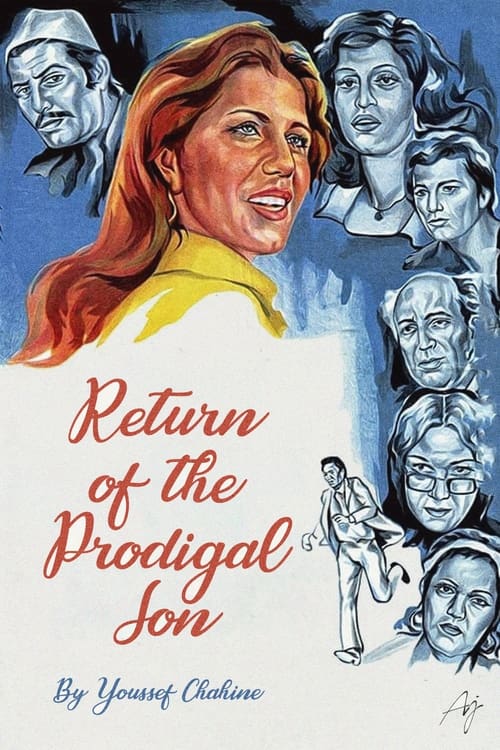
Freed after spending years in prison, an activist's homecoming turns into a dark affair as his disillusion clashes with his family's expectations. Demonstrating Chahine’s eclecticism, this is an elegant melodrama, exuberant musical, layered allegory, and profound portrait of personal and political disillusionment.

Return of the Prodigal Son

1976
Paris 1900
5.7

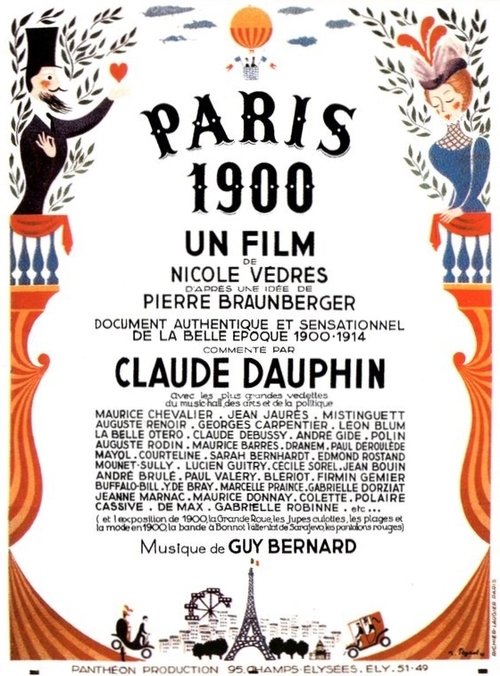
Nicole Védrès' chronicle of Paris from 1900 to 1914 is brought to life through the use of original material, all authentic, secured from more then 700 films belonging to public and private collections. A few of the celebrities of the time shown are Enrico Caruso, Sarah Bernhardt, and Maurice Chevalier.

Paris 1900

1948
Fanny
7.5

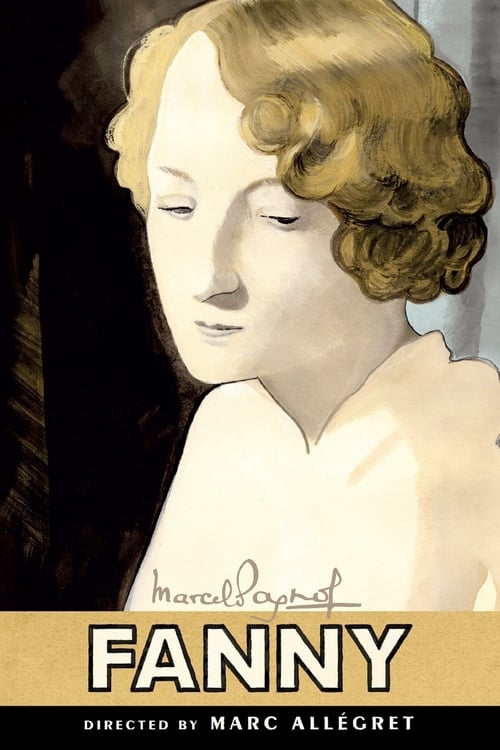
Soon after Marius's departure, Fanny learns that she is pregnant with his child, to the disappointment of her mother and of Marius's father, César. To secure a better life for her unborn child, she accepts a marriage proposal from the aging widower Honoré Panisse.

Fanny

1932
Pastoral Symphony
9.0

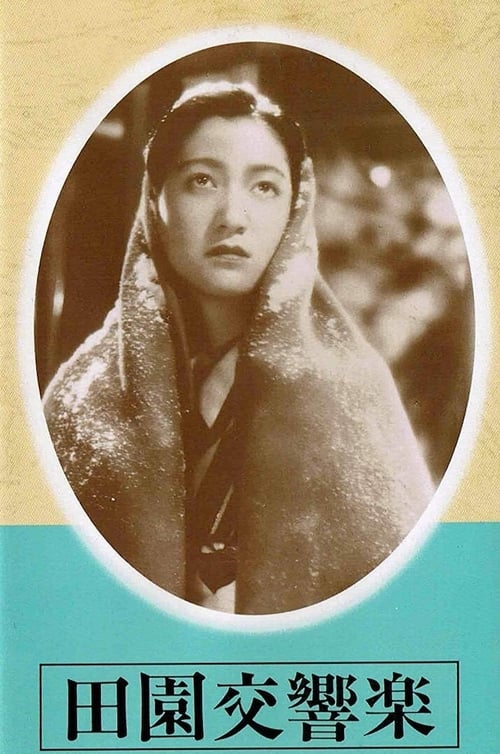
A priest in Hokkaido adopts a blind orphan girl, and as she grows up he finds himself falling in love with her.

Pastoral Symphony

1938
Life Begins Tomorrow
6.6

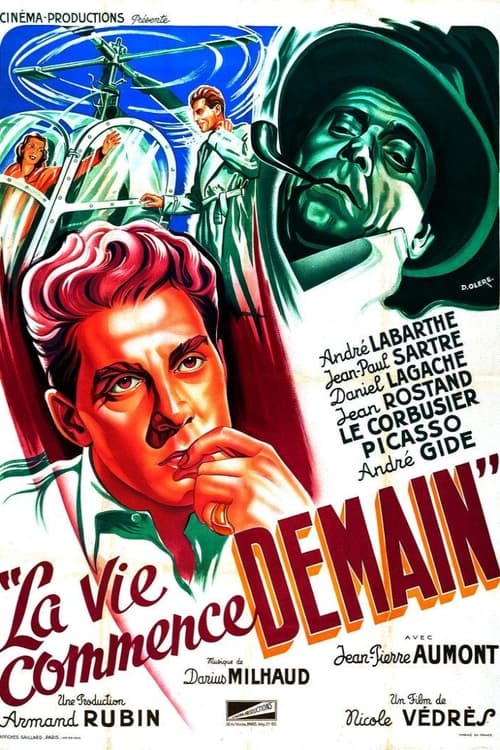
Documentary filmmaker Védrès' first semi-fictional feature was released in France in 1949 as La Vie Commence Demain. The film made it to the U.S. in 1952 as Life Begins Tomorrow. Made in cooperation with UNESCO, the film speculates on the future of mankind after the advent of Atomic Energy. Many prominent French artists and intellects contribute to the narration: Jean-Pierre Aumont plays The Man of Today, Andre Labarthe is the Man of Tomorrow, and Jean-Paul Sartre, Daniel Agache, Jean Rostand, Le Corbusier, Pablo Picasso and Andre Gide are respectively seen as "The Existentialist," "The Psychiatrist,' "The Biologist," "The Architect," "The Artist" and "The Author". Film clips of hospitals, schoolrooms, scientific laboratories, and even nightclubs are woven into Védrès' fascinating tapestry.

Life Begins Tomorrow

1950
No image
N/A

Adaptation of Kafka’s famous novel for Norwegian TV. Joseph K. discovers two policeme in his appartment, while in the middle of the morning routine. These men lead him into a nonsensical labyrith of a legal system.

Prosessen

1962
I Close My Eyes
N/A

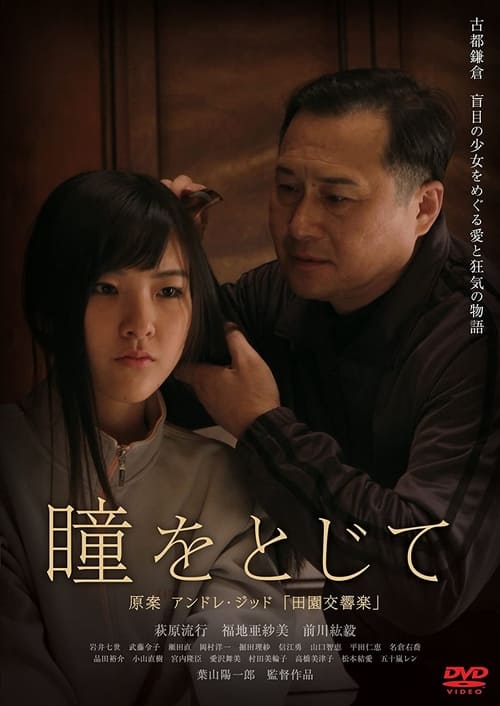
A former teacher, who reforms dropout students with Confucian teaching, decides to take care of a blind girl, who has been abused by her parents.

I Close My Eyes

2013
Pastoral Symphony
6.2

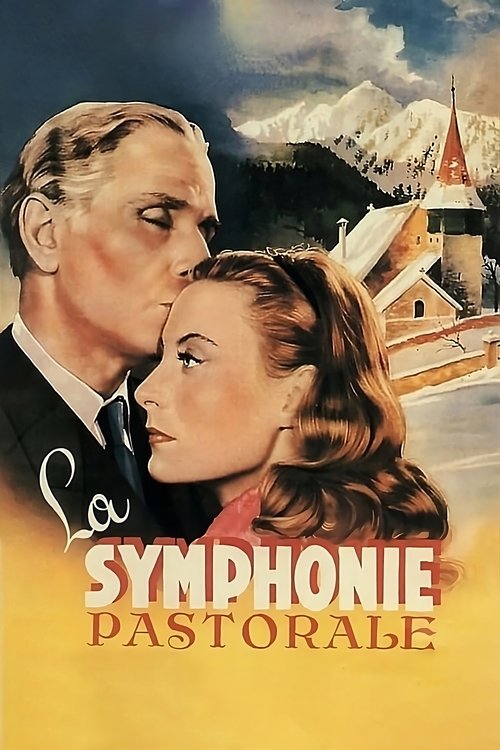
A minister falls in love with a blind young woman he sheltered, but so does his son.

Pastoral Symphony

1946
The Counterfeiters
4.7

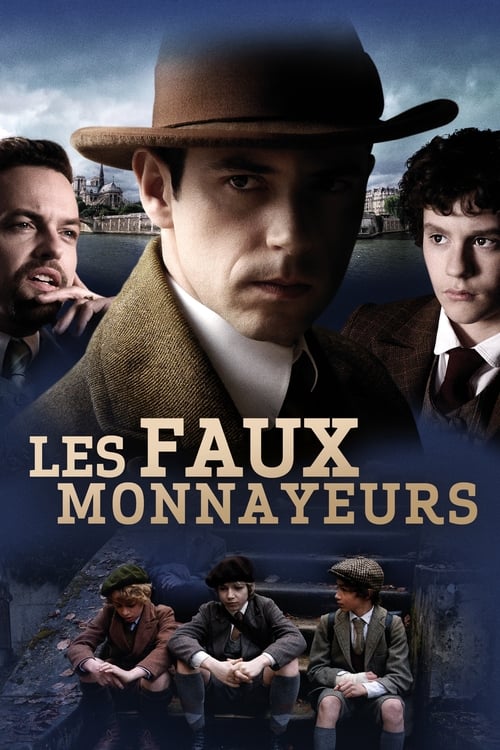
The plot revolves around Bernard – a schoolfriend of Olivier's who is preparing for his bac – discovering he is a bastard and taking this as a welcome pretext for running away from home. He spends a night in Olivier's bed (where Olivier describes a recent visit to a prostitute and how he did not find the experience very enjoyable). After Bernard steals the suitcase belonging to Edouard, Olivier's uncle, and the ensuing complications, he is made Edouard's secretary. Olivier is jealous and ends up in the hands of the cynical and downright diabolical Comte de Passavant, who travels with him to the Mediterranean.

The Counterfeiters

2010
L'affaire Matzneff
N/A

About the Gabriel Matzneff affair and pedophilia in French culture and society from the 1950s to the present day. "It was not very difficult to know who Matzneff was at the time." Vanessa Springora denounces thus, in an interview with the Parisian , the support which benefited the writer Gabriel Matzneff , in the years 1970 and 1980. The author fifties then maintains an affair with the young girl, aged 14 years. A relationship under control that the editor tells in Le Consentement (éd. Grasset), published Thursday. "After having analyzed the work " , the Paris public prosecutor's office announced Friday January 3 the opening of an investigation for "rapes committed on the person of a minor of 15 years".

L'affaire Matzneff

2020
With André Gide
3.0

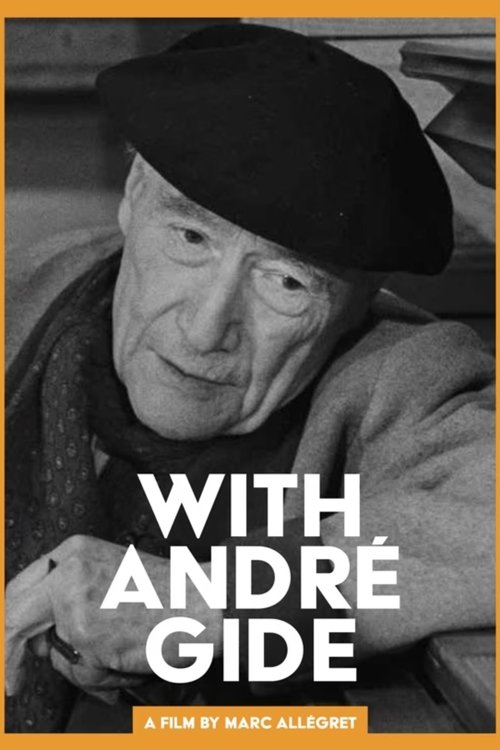
Nobel-prize-winning author, social justice crusader, anti-colonialist, adventure traveler, musician, and one-time Communist: André Gide was a larger-than-life character who dominated French letters from the turn of the 20th century to his death in 1951. Directed by Marc Allégret, with whom Gide traveled extensively in French Equatorial Africa, the film was made in the year leading up to the writer’s death.

With André Gide

1952
Voyage au Congo
8.0

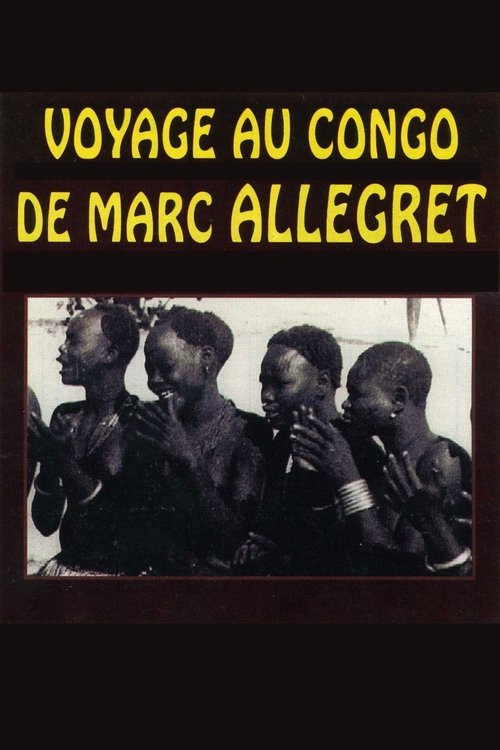
Cinema has long fed our fascination with other cultures, and appears to be just one facet of what is a fundamentally visual fascination. One of the most elaborate manifestations of this was the 1931 Exposition Coloniale Internationale, held in Paris to celebrate ‘la France des 5 continents’. This exhibition sought to represent to the people of France their colonial world by reordering and reconstructing it into scenes or tableaux of everyday indigenous life. This entailed shipping over scores of indigènes and forcing them to act out the gestures of their ‘everyday lives’ under the eyes of 1930’s Parisian society. A slightly less elaborate, although equally controversial at the time, visual representation of The Other was one of the first film documentaries to be made which sought to represent the lives of a colonised people, Marc Allégret’s Voyage au Congo.

Voyage au Congo

1927
You Were the One I Loved
7.0

A film adaptation of André Gide's book The Pastoral Symphony.

You Were the One I Loved

1955