Norman McLaren
Directing
Biography
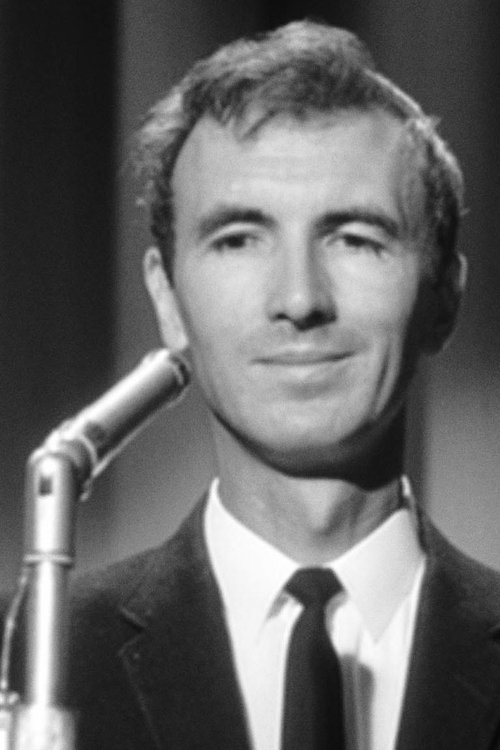
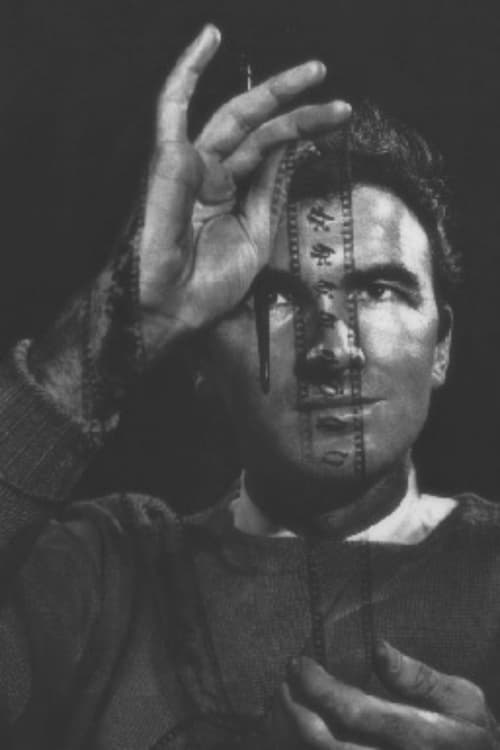
Norman McLaren, CC, CQ (11 April 1914 – 27 January 1987) was a Scottish-born Canadian animator and film director known for his work for the National Film Board of Canada (NFB). He was a pioneer in a number of areas of animation and filmmaking, including drawn-on-film animation, visual music, abstract film, pixilation and graphical sound. His awards included an Oscar for the Best Documentary in 1952 for Neighbours, a Silver Bear for best short documentary at the 1956 Berlin International Film Festival Rythmetic and a 1969 BAFTA Award for Best Animated Film for Pas de deux.
Known For

"Fly too high and you will burn, go too low and you won't breathe." A 7 day vlog during the summer of 2023, a story of dreamers and drowners.
Daedalus

Taking "Isle of the Dead," a work by the Swiss symbolist painter Arnold Böcklin as his starting point, Norman McLaren creates a deeply disturbing surrealist dream.
A Little Phantasy on a 19th-century Painting

In this short film by Norman McLaren, dancers enact the Greek tragedy of Narcissus, the beautiful youth whose excessive self-love condemned him to a trapped existence. Skilfully merging film, dance and music, the film is a compendium of the techniques McLaren acquired over a lifetime of experimentation.
Narcissus

A playful exercise in intermittent animation and spasmodic imagery. Playing with the laws relating to persistence of vision and after-image on the retina of the eye, McLaren engraves pictures on blank film creating vivid, percussive effects.
Blinkity Blank

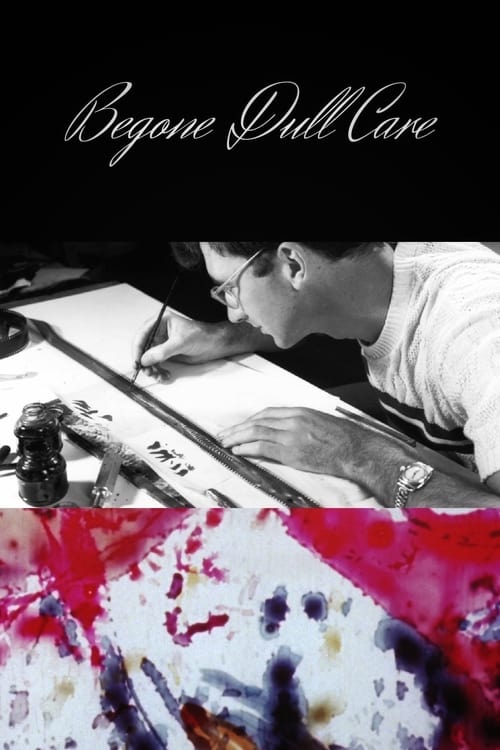
In this extraordinary short animation, Evelyn Lambart and Norman McLaren painted colours, shapes, and transformations directly onto their filmstrip. The result is a vivid interpretation, in fluid lines and colour, of jazz music played by the Oscar Peterson Trio.
Begone Dull Care

Early abstract 3D film by animation master Norman McLaren and collaborator Evelyn Lambart.
Around Is Around

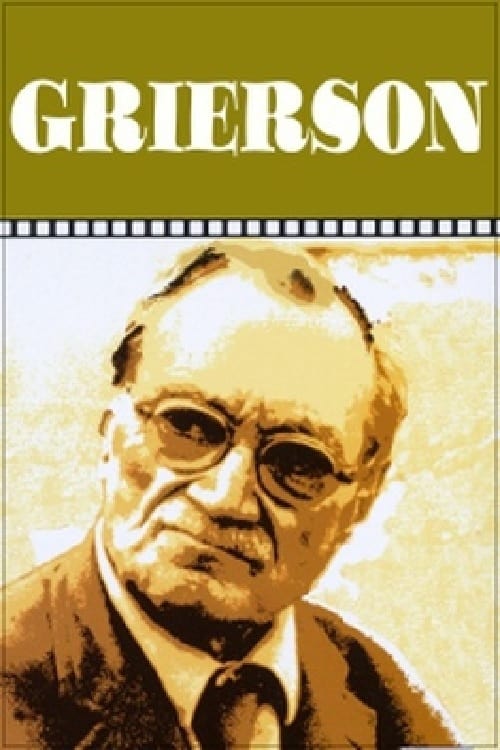
A portrait of John Grierson, the first Canadian Government Film Commissioner and founder of the National Film Board in 1939. Interweaving archival footage, interviews with people who knew him and footage of Grierson himself, this film is a sensitive and informative portrait of a dynamic man of vision. Grierson believed that the filmmaker had a social responsibility, and that film could help a society realize democratic ideals. His absolute faith in the value of capturing the drama of everyday life was to influence generations of filmmakers all over the world. In fact, he coined the term 'documentary film'.
Grierson
This animated short is a play on motion set against a background of multi-hued sky. Spheres of translucent pearl float weightlessly in the unlimited panorama of the sky, grouping, regrouping or colliding like the stylized burst of some atomic chain reaction. The dance is set to the musical cadences of Bach, played by pianist Glenn Gould.
Spheres

Norman McLaren attempts to give the opening speech for the first Montreal International Film Festival, but his microphone won't cooperate.
Opening Speech

An animation film, made without the use of a camera, in which "boogie" played by Albert Ammons and "doodle" drawn by Norman McLaren combine to make a rhythmic, brightly colored film experiment. The main title is in eight languages.
Boogie-Doodle

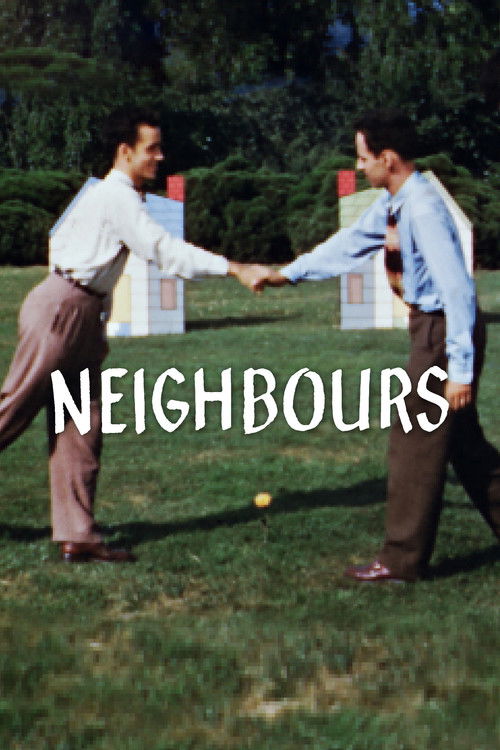
In this Oscar-winning short film, Norman McLaren employs the principles normally used to put drawings or puppets into motion to animate live actors. The story is a parable about two people who come to blows over the possession of a flower.
Neighbours

A slow-motion study by Norman McLaren of the pas-de-deux adagio, one of the most exacting and difficult dances of classical ballet. A ballet originally choreographed by the Russian ballet master Asaf Messerer is performed for this film by the internationally known Canadian pair, David and Anna Marie Holmes, to the music of Albinoni’s Adagio. A film to heighten the aesthetic appreciation of classical ballet and to afford observation of the technique and mechanics of the adagio movements.
Ballet Adagio

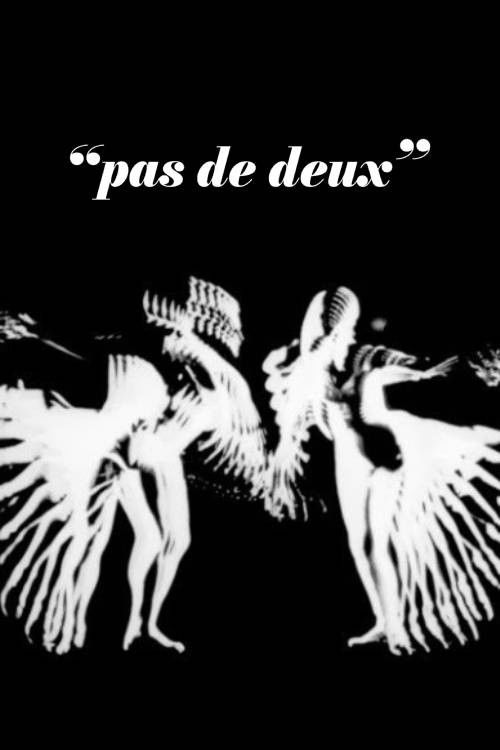
Two ballet dancers perform a dance enhanced with surreal after-image visuals.
Pas de Deux
The first part of this series by Norman McLaren deals only with tempo. It starts by showing the disc travelling in one move (1/24 of a second) from A to B, and progressively demonstrates slower and slower tempos.
Animated Motion: Part 1

An experimental film in which both sound and visuals were created entirely by Norman McLaren drawing directly upon the film with ordinary pen and ink. The main title is in eight languages. Rereleased with multilingual titles in 1949.
Dots

An abstract animation by Norman McLaren, who was born in Scotland in 1914. His interest in filmmaking began early in life after he became acquainted with works by the great Russian filmmakers Eisenstein and Pudovkin and the German animator Oskar Fischinger.
Stars and Stripes
For all who enjoy ballet, this English-language film presents an insight into the dance that only dancers ordinarily see. It is an engaging film portrait of the famous Canadian husband-and-wife team, Anna Marie and David Holmes. We see their busy lives as international dance stars, their private interests and, above all, their dedication to the absolute refinement of ballet movement.
Tour en l'air

An opening address, a tribute and highlights of a long and productive career--McLaren on McLaren is Norman McLaren on camera. The occasion is the opening of a prestigious festival in Arnhem, the Netherlands, in November, 1983, marking the tenth anniversary of Holland Animation. The renowned animator pays homage to those who merged their arts with his, and to the National Film Board, which gave him forty-two years of artistic freedom.
McLaren on McLaren
Norman McLaren instructs Grant Munro on the movements he is to make. The film technique for Two Bagatelles is pixillation, where the actor is animated frame by frame, as in the film Neighbours/Voisins.
Two Bagatelles
Norman McLaren was a cinematic genius who made films without cameras, and music without instruments. He produced sixty films in a stunning range of styles and techniques, collecting over 200 international awards, and world recognition. In Creative Process, director Donald McWilliams demystifies the process of artistic creation. Drawing on McLaren's private film vaults, a gold mine of experimental footage and uncompleted films, McWilliams explores McLaren's methods, including his celebrated "pixillation" technique, and his daring forays into animated surrealism.