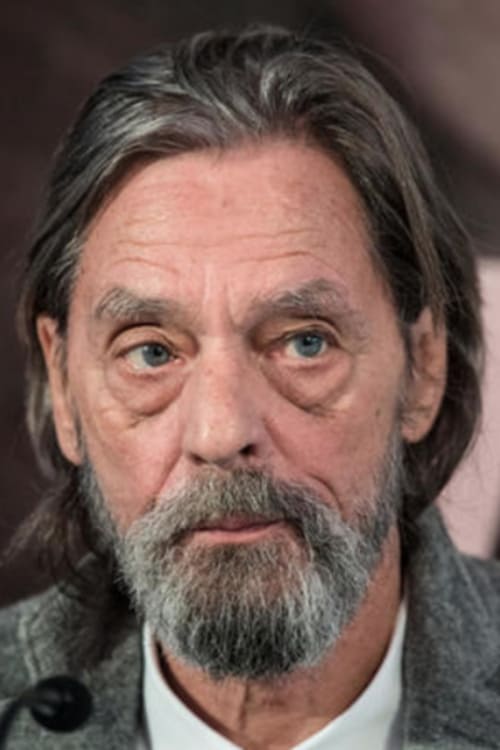
Ulay
Acting
Biography
Ulay, born Frank Uwe Laysiepen, 1943 is a German artist, actor, and photographer, now based in Amsterdam, Holland, and Ljubljana, Slovenia. Ulay received international recognition for his work as a photographer, mainly in Polaroid, from the late 1960s, and later as a performance artist, including his collaborative performances with Marina Abramovic from 1976 to 1988.
Known For
Performance artist Marina Abramovic prepares for a major retrospective of her work at the Museum of Modern Art in New York.
Marina Abramović: The Artist Is Present
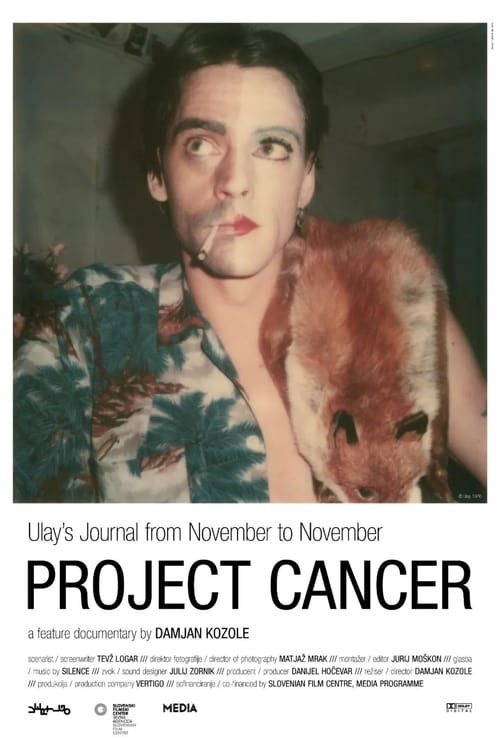
Ulay is a conceptual artist whose photography pushed boundaries, and whose love affair with Marina Abramovic produced some of the best pieces of performance art. Diagnosed with cancer shortly after agreeing to film the documentary, Ulay's illness informs Project Cancer, which is part-retrospective, part-visual document of the year he believed could be the last of his extraordinary life.
Ulay
Thirty years after their separation, performance artists Marina Abramović and Frank Uwe 'Ulay' Laysiepen (1943-2020) agree to meet, for the first time on camera, for a raw and honest conversation about their life, art and legacy.
Marina Abramović & Ulay: No Predicted End
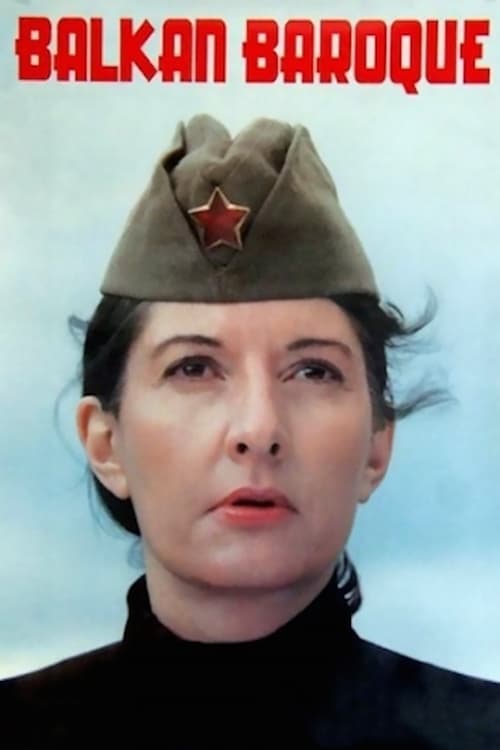
Balkan Baroque is a real and imaginary biography of the Yugoslavian performance artist Marina Abramovic. Rather than a mechanical reproduction of the artist's work, the film tries to create a new reality by translating the performances into cinematographic images that intensify the fictional context of the film. Abramovic plays herself, but ,appearing in multiple forms, blurs her own identity. Memories and fantasies intermingle with day to day rituals. The chronological narrative often breaks to reflect the interior voyage of the protagonist from the present to the past and back to the present. The result is a visually impressive film. Balkan Baroque had its world premiere at the International Film Festival Rotterdam, 1999.
Balkan Baroque
A documentation of the live Action Ulay performed in Berlin in 1976. It shows step by step his arranged "art theft" of Carl Spitzweg's painting "The Poor Poet" from the Neue Nationalgalerie and his reception in commentaries and reactions from the press.
There Is a Criminal Touch to Art
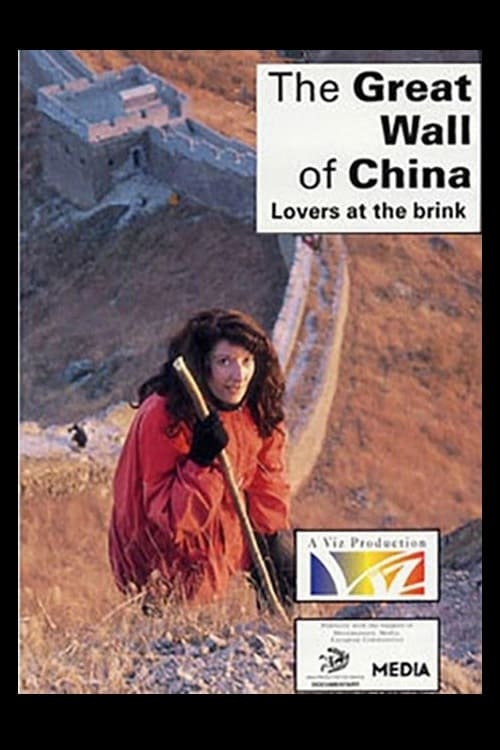
In the twilight years of the Cultural Revolution, a Chinese filmmaker slowly becoming blind tours the country screening her last film to peasants. In it, the woman imagines two "alien" lovers walking from end-to-end along the Great Wall to join each other in the middle, one last time. This documentary is an adaptation of Ulay and Marina Abramovic's final collaborative project, the 1988 performance "The Lovers: The Great Wall Walk."
The Great Wall: Lovers at the Brink
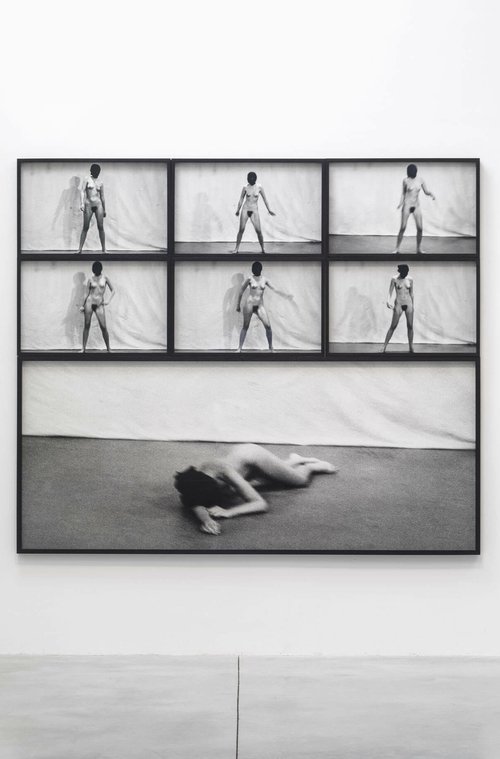
Marina Abramović Freeing the Body was performed at the Künstlerhaus Bethanien in Kreuzberg, where Abramović began dancing frantically to the sounds of a bongo player. During the early part of the performance, she still has plenty of energy, and she rocks her hips and upper body vigorously to and fro. Over the course of the six hours, exhaustion sets in. Abramović falls back on a single monotonous movement, now and then visibly exerting herself in an attempt to reivigorate her body. After a final convulsive movement, in which she tries to give her all for one last time, she allows herself to collapse onto the floor and remains lying there, completely exhausted. During the performance, Abramović's head was covered by a black scarf. In this way, the audience was not distracted by Abramović as a person or personality, and attention can be focused on the body, which, due to its anonymity, has become an abstraction.
Freeing The Body
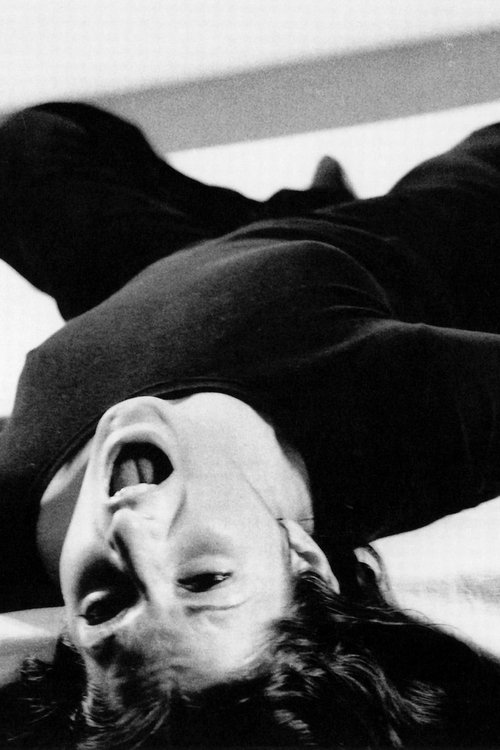
Serbian artist Marina Abramovic is lying on her back on the floor and screaming until her voice is lost.
Freeing the Voice
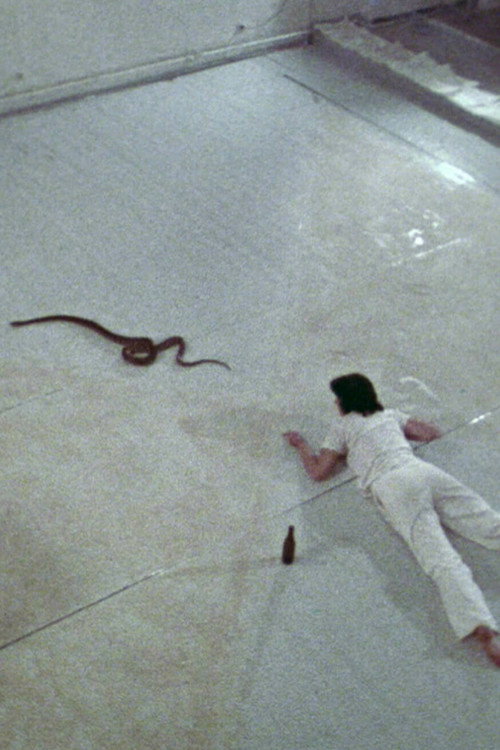
Documentation of the 2-hour performance by Marina Abramović and Ulay, performed in 1978 at Harlekin Art in Wiesbaden. In this piece, the two artists and a live snake triangulate the performance space. By blowing across the mouths of empty bottles, Abramović and Ulay produce sounds meant to rouse the snake, attempting to charm it and alter the physical geometry of the arrangement.
Three
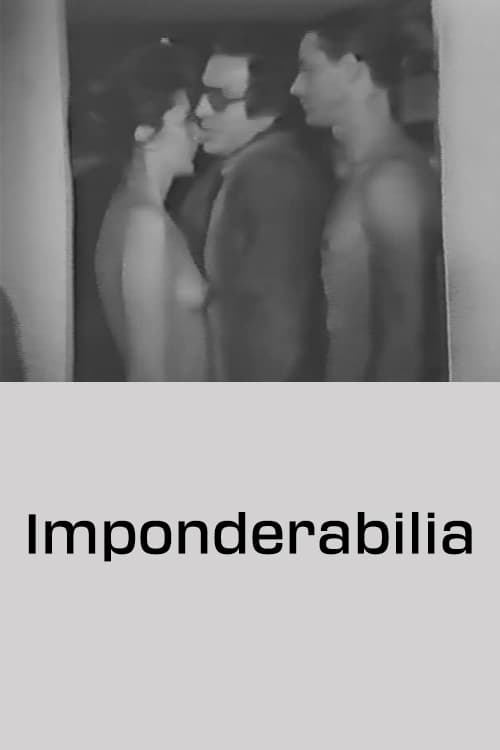
"Naked we stand opposite each other in the museum entrance. The public entering the museum has to turn sideways to move through the limited space between us. Everyone wanting to get past has to choose which one of us to face" – Marina Abramovich
Imponderabilia
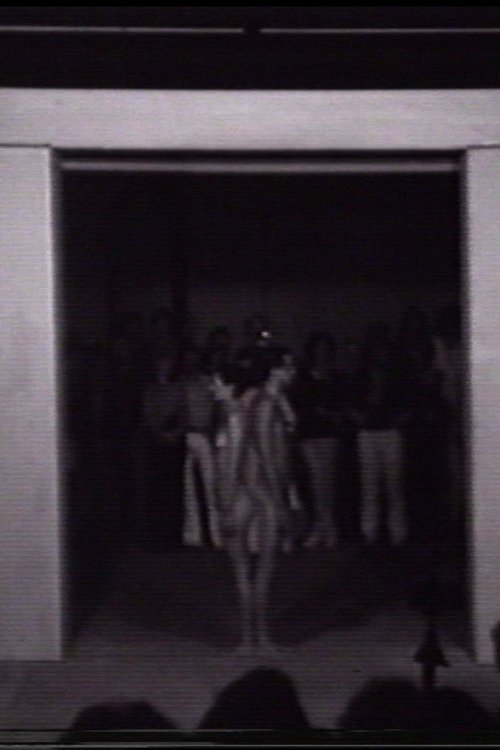
In 'Expansion in Space' (1977, Dokumenta 6, Kassel), Ulay and Abramovic do not collide with each other, as they did in Relation in Space (1976), but with two free-standing pillars twice their individual body weight. Their goal is to make the pillars move by means of their naked bodies, and in this way to expand the space of action
Expansion in Space
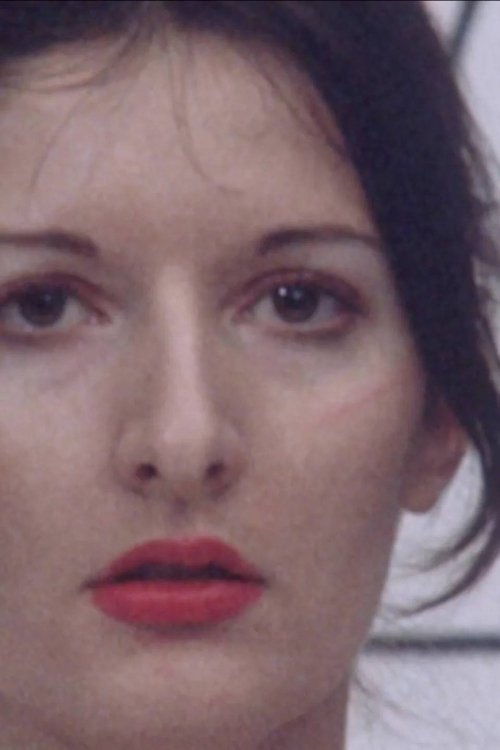
Compilation film consisting of material from various artists who are involved in body art
Body Art
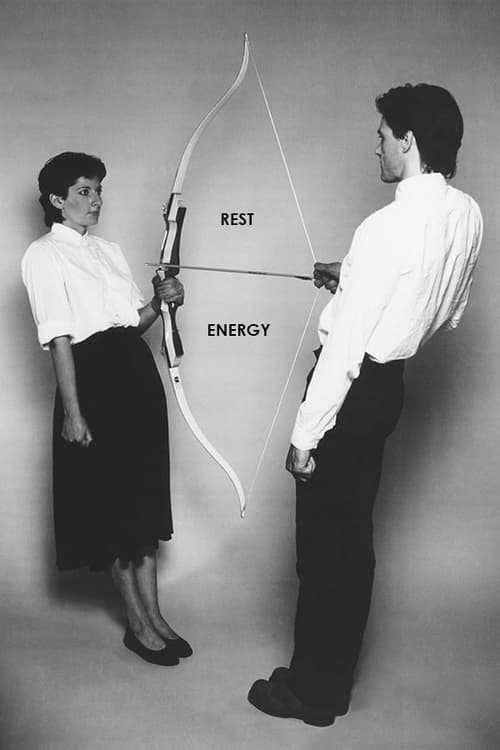
Ulay and Abramovic draw a large bow and arrow, one holding each side. The arrowhead is pointing at Abramovic's heart. The slightest movement could be fatal. Microphones on their clothes pick up their quickening heart beats and Ulay's irregular breathing
Rest Energy
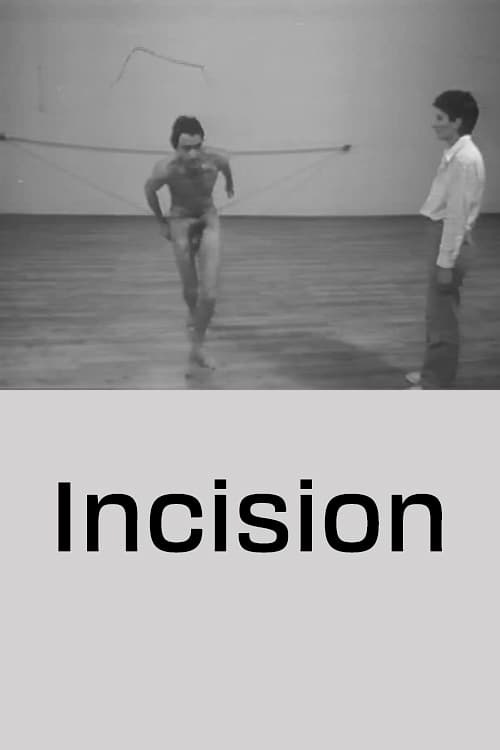
Ulay is fixed to a wall by a fixed rubber cord, while Marina stands at the limit of Ulay's expansion.
Incision
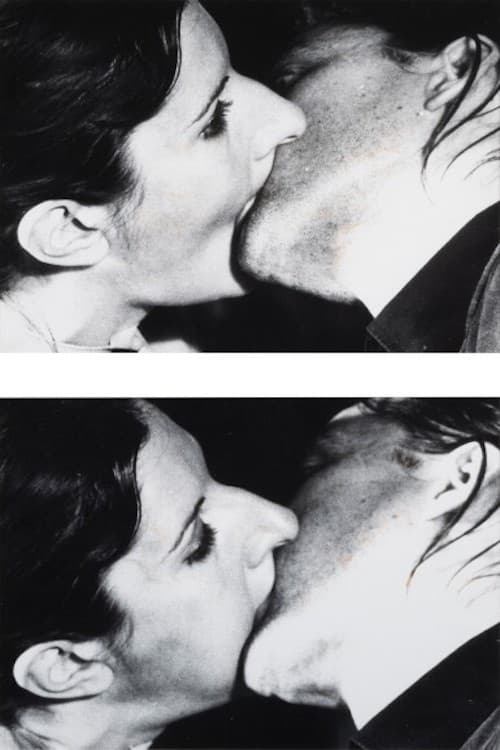
For this performance the two artists blocked their nostrils with cigarette filters and pressed their mouths together, so that one couldn’t inhale anything else but the exhalation of the other. As the carbon dioxide filled their lungs, they began to sweat, move vehemently and wear themselves out; the viewers could sense their agony through the projected sound of breathing, which was augmented via microphones attached to their chests. It took them 19 minutes in the first performance and 15 in the second to consume all the oxygen in that one breath and reach the verge of passing out.
Breathing In/Breathing Out
China Ring is an "unedited video notebook" that documents the artists' journey to the Great Wall of China in preparation for their final collaborative project.
China Ring
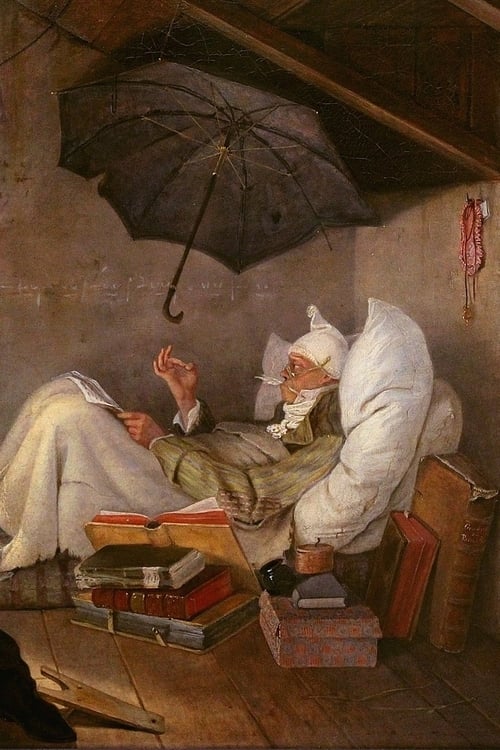
The story of one of the most radical performances in art history told by German artist Ulay, who in 1976 decided to steal Hitler's favorite painting from Berlin's national museum and hang it in the home of a Turkish immigrant family. "This particular painting you could say was a German identity icon." In 1976 Ulay decided to steal the painting 'Der arme Poet' (The Poor Poet) (1839) by Carl Spitzweg, which was said to be Hitler's favorite painting. By stealing the painting from the Neue Nationalgalerie (New National Gallery) in Berlin, Ulay broke away from what he had done previously, aiming "to give a strong signal about what I was about as an artist at the time."
How I Stole a Painting
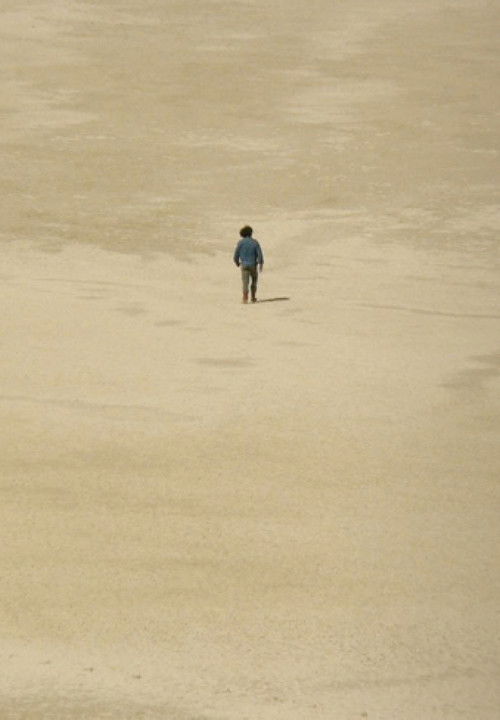
El camino entre dos puntos (The way between two points) investigates Patagonia’s tainted nature. Here, where throughout the 20th century ever enhanced methods of oil recovery, have transformed an amorphous, ambivalent and hardly populated landscape into an uncanny site of man’s supposed mastery of nature, the film traces the ways of a man, who wanders the scenes aimlessly, bound by his own implication in the menacing mechanics of oil production but drawn physically to their coevally proceeding erasure by the rough and untamed nature of this seemingly self-subsisting land.
The Way Between Two Points
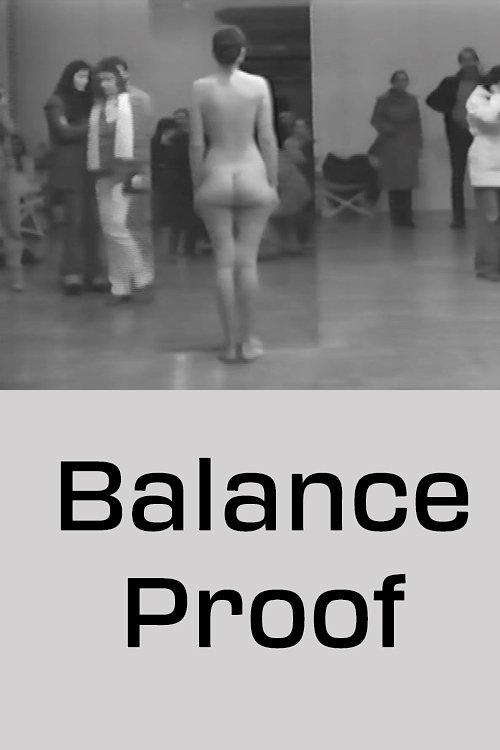
Ulay and Abramović are standing holding a double-sided mirror between their bodies.
Balance Proof
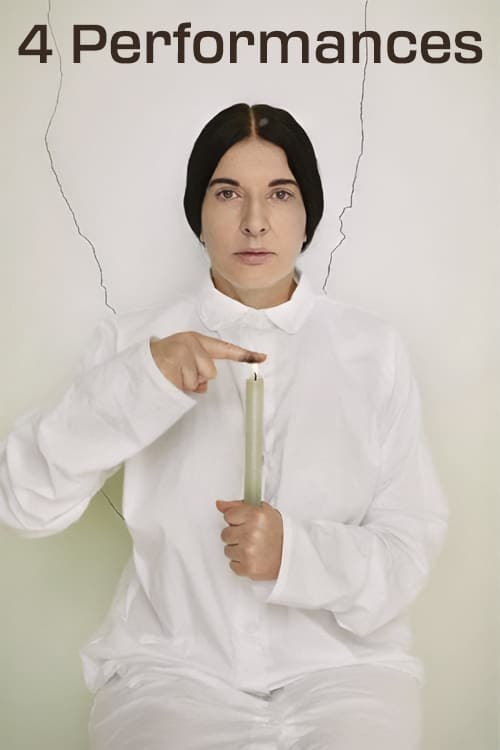
Documents four of Abramovic's solo works, exercises in which her body is the vehicle for a rigorous testing of the self — violently brushing her hair and her face, vocalizing until she can no longer breathe, intoning a stream-of-consciousness flow of memories, moving to a drumbeat until she literally drops from exhaustion.