Sound
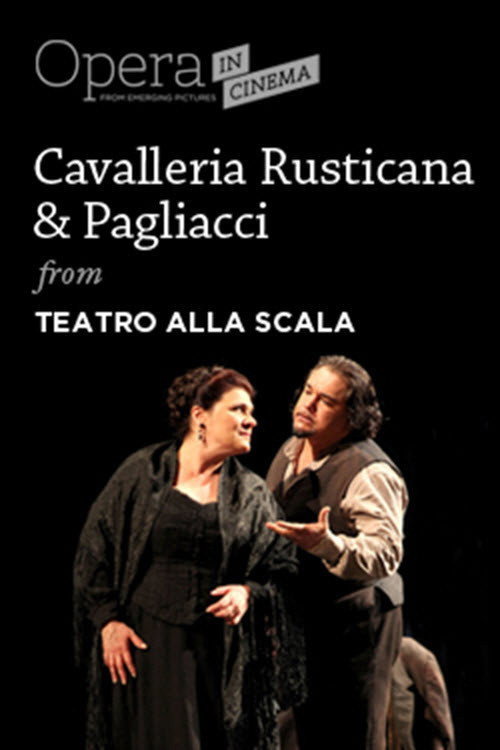
The famos Double Feature of Verismo at La Scala with Daniel Harding conducting from February 2011
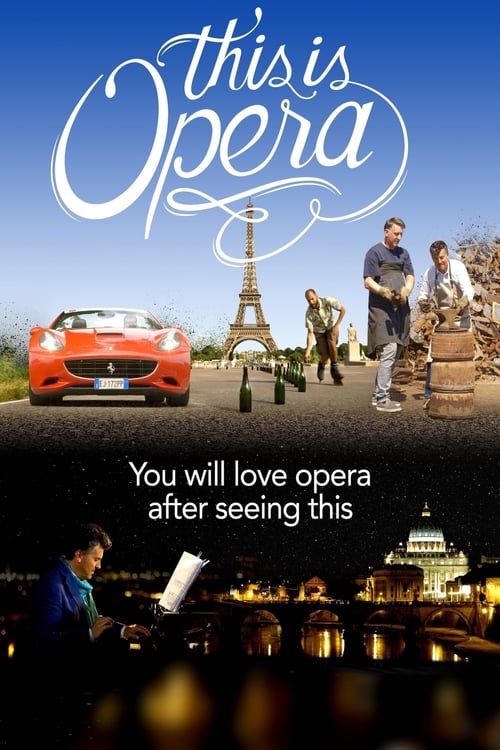
An exploration of opera in unconventional ways attempting to attract not just existing opera fans, but also those less familiar with the art form. The host guides the viewer to the places of origin of each opera, and explores the culture, history—and modern and current trends and how they apply to opera.
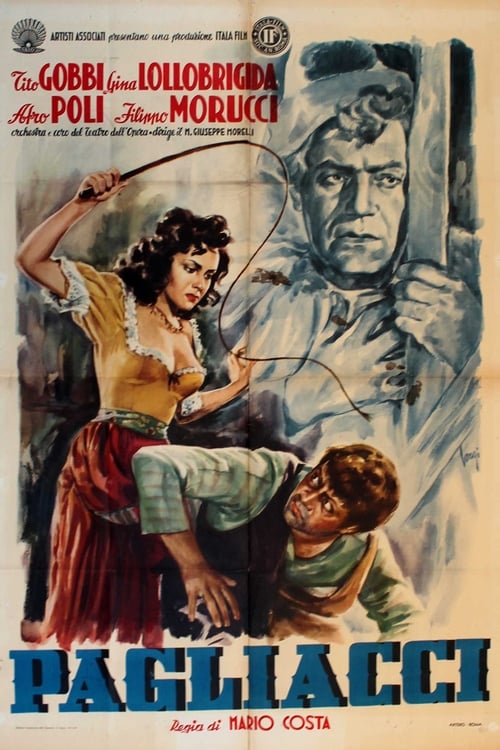
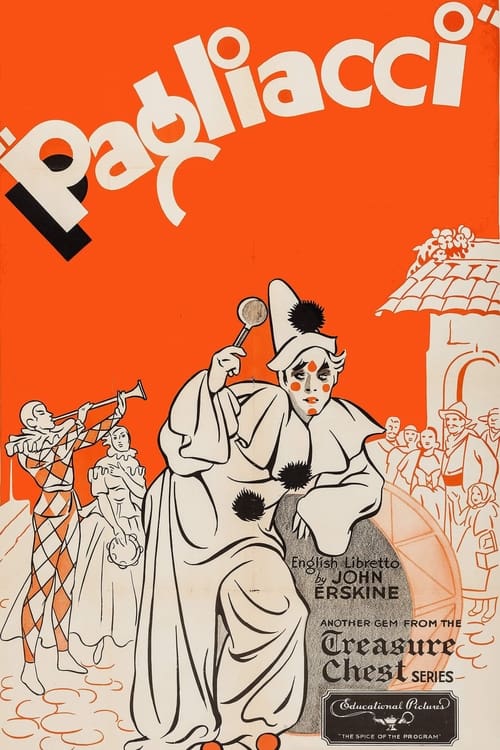
Based on Ruggero Leoncavallo's opera Pagliacci. The film recounts the tragedy of Canio, the lead clown (or pagliaccio in Italian) in a commedia dell'arte troupe, his wife Nedda, and her lover, Silvio. When Nedda spurns the advances of Tonio, another player in the troupe, he tells Canio about Nedda's betrayal. In a jealous rage Canio murders both Nedda and Silvio. The only actor in the cast who also sang his role was the celebrated Italian baritone, Tito Gobbi, but the film is largely very faithful to its source material, presenting the opera nearly complete.
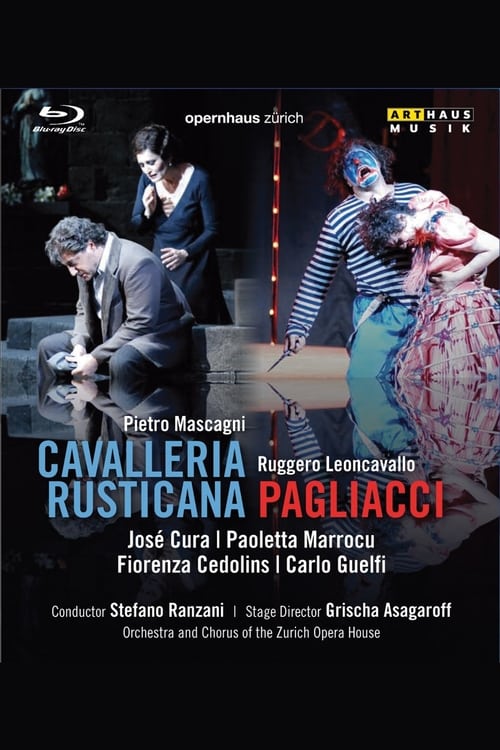
Ruggero Leoncavallo's opera recorded in 2009. Conductor Stefano Ranzani leads the orchestra and chorus of the Zurich Opera House, with performances by Argentinian tenor Jose Cura, Carlo Guelfi and Fiorenza Cedolins.
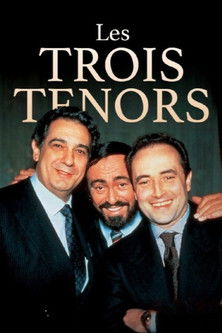
On the eve of the 1990 World Cup final, Plácido Domingo, José Carreras, and Luciano Pavarotti sang together for the first time. A look behind the scenes at a musical event whose phenomenal success lasted for more than a decade.
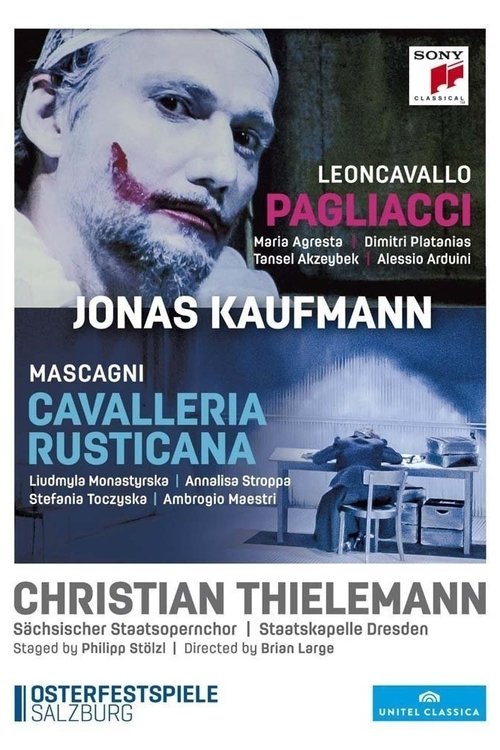
As comparably short operas, Cavalleria Rusticana and Pagliacci are often billed together, but seldom is the lead tenor making his double role debut as Turiddu and Canio on the same evening. At the 2015 Salzburg Easter Festival, Jonas Kaufmann did just that to rapturous praise. Universally hailed as a coup for Kaufmann, the plaudits were also showered on Philipp Stölzl for his innovative staging which includes live video projections while referencing the era of black-and-white movies.
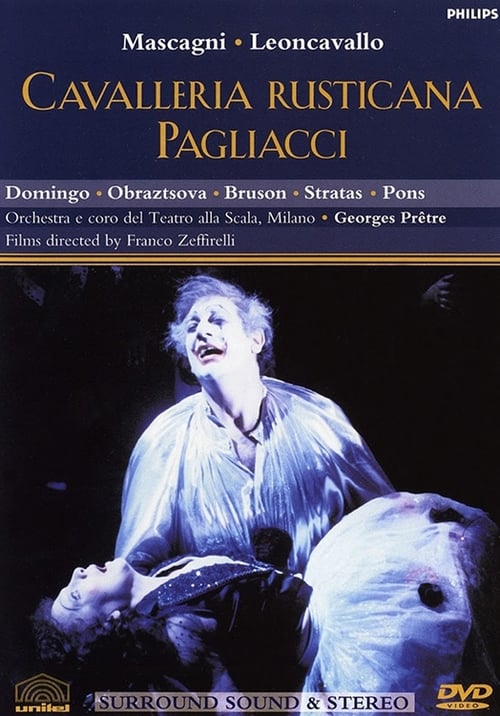
The story is set in southern Italy and recounts the tragedy of Canio, the lead clown (or pagliaccio in Italian) in a commedia dell'arte troupe, his wife Nedda, and her lover, Silvio. When Nedda spurns the advances of Tonio, another player in the troupe, he tells Canio about Nedda's betrayal. In a jealous rage Canio murders both Nedda and Silvio. Although Leoncavallo's opera was originally set in the late 1860's, Zeffirelli's production is updated to the period between World War I and World War II.
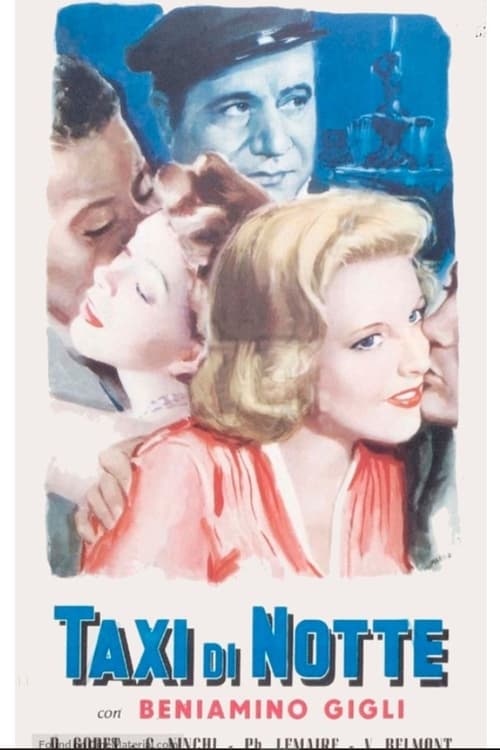
A taxi driver, with singing ambitions, finds an abandoned baby in his cab and begins to look for his mother. He doesn't find her but succeeds in finding two people who want to adopt the child.
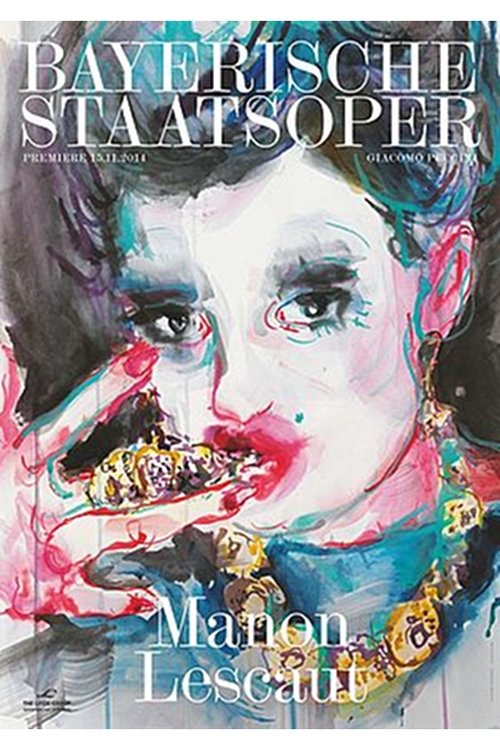
The French tale of a beautiful young woman destroyed by her conflicting needs for love and luxury.
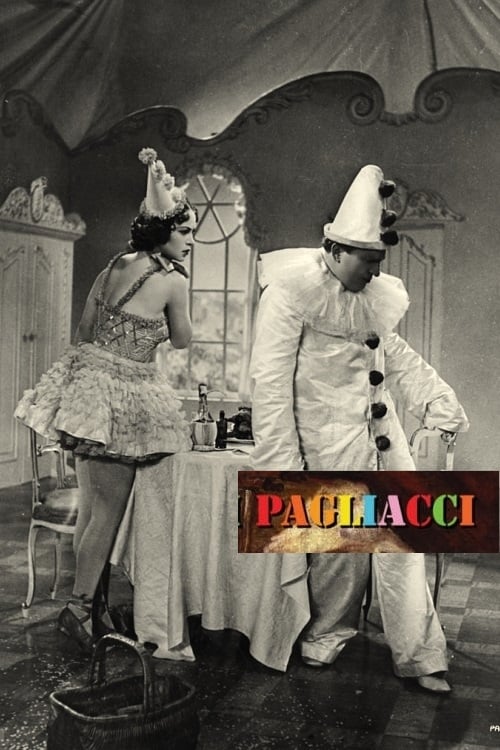
Franco Corelli is featured in this 1954 filmed version of Leoncavallo's opera, along with Tito Gobbi. The film also features opera arias from "The Rose of Stambul," "Aida," "Cavalleria Rusticana," "Igemisco" and "Il Trovatore." 104 minuts, black & white.
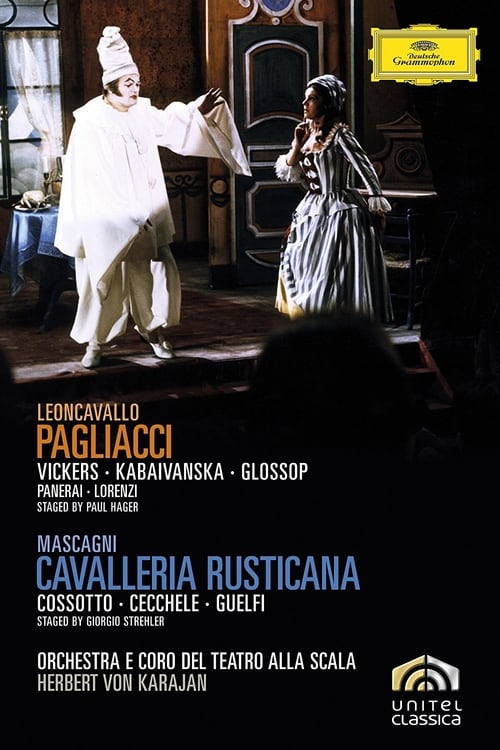
Opera's most popular double bill, fondly known as Cav and Pag, conducted by Herbert von Karajan. In 'Cavalleria rusticana', Turiddu returns from military service to find that his fiancée Lola had married the carter Alfio while he was away. In revenge, Turiddu seduces Santuzza, a young woman in the village. In 'Pagliacci', the drama unfolds as Canio (Pagliaccio) struggles with rage, despair, and desire on learning of his wife Nedda's intended infidelity with Silvio. Canio's tragic conflict increasingly mirrors the comedy of Pagliaccio.
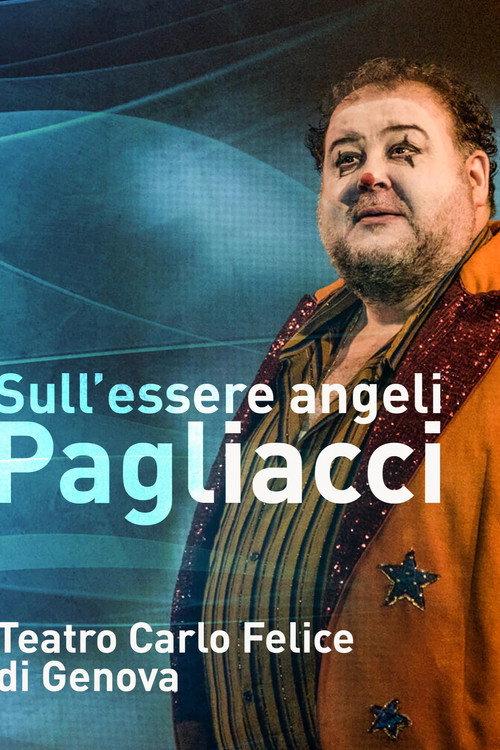
From the Carlo Felice Theater in Genoa, the double bill featuring Francesco Filidei’s “Sull’essere angeli,” choreographed by Virgilio Sieni, and Ruggero Leoncavallo’s “Pagliacci,” directed by Cristian Taraborrelli. Orchestra, Chorus, Children’s Chorus, and technical staff of the Carlo Felice Theater; conducted by Andriy Yurkevych.
Canio and his Comedia dell'Arte troupe tour Italy. His wife Nedda meets a young cadet and they plan to elope. He tries to leave her when he finds how important she is for his husband, but a rejected trouper interferes. As jealous Canio suspects the truth the tragedy approaches. The film was partly made in Ufacolor.
Movie adaptation of the Leoncavalo's famous opera. A troupe of traveling actors is being welcomed by villagers in Calabria in the summer of 1866.
Scenes from Ruggero Leoncavallo's opera with Canio, the clown, introducing actors who are seen in pantomime while the operatic voices are heard off-screen. Canio discovers his wife has been unfaithful but carries on with his performance.
Plácido Domingo accomplishes the rare feat of singing both leads on the same night at the Met in 1978 on opera's most popular double-bill.
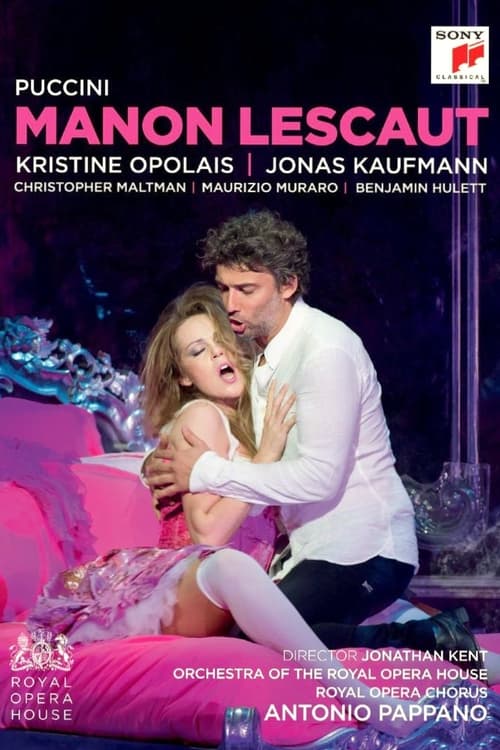
Kristine Opolais is the young woman whose conflicting desires for love and luxury lead to her tragic end, and Roberto Alagna plays the man who falls for her in Puccini’s early hit. Richard Eyre’s elegant production, which sets the action in 1940s occupied France, was one of the highlights of the Met’s 2015–16 season. Massimo Cavalletti as Manon’s brother and Brindley Sherratt as her aging admirer co-star, and Principal Conductor Fabio Luisi is on the podium.
Director David McVicar’s new production brings opera’s favorite double bill to new life, setting the two operas in the same Sicilian setting, separated by two generations. Marcelo Álvarez takes on the rare feat of singing both leading tenor roles. In Cavalleria, he is Turiddu, the young man who abandons Santuzza (Eva-Maria Westbroek) in his pursuit of the married Lola (Ginger Costa-Jackson)—and ends up being killed in a duel with her husband, Alfio (George Gagnidze). In Pagliacci, Álvarez is Canio, the leader of a traveling vaudeville troupe. Patricia Racette sings Nedda, his unfaithful young wife, whose plans to run away with her lover are foiled by her spurned admirer Tonio (George Gagnidze)—with equally tragic consequences. Met Principal Conductor Fabio Luisi is on the podium.
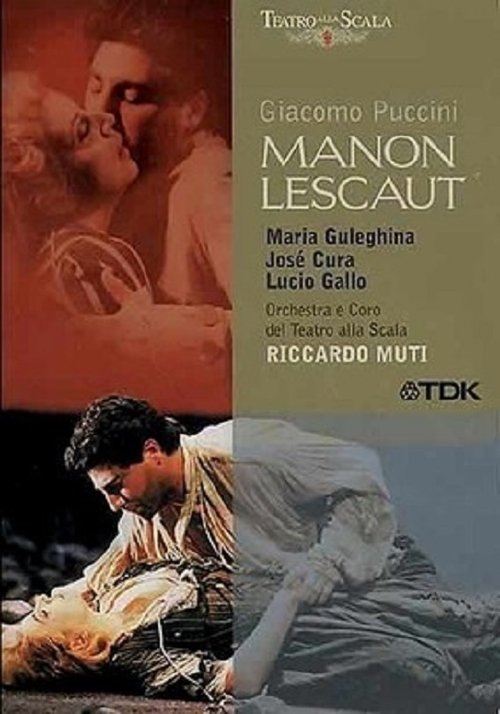
TDK presents a recording of Puccini’s heart-breaking opera from one of the best opera houses of the world featuring star tenor José Cura and remarkable soprano Maria Guleghina as the two inseparable lovers. Riccardo Muti, music director of La Scala at the time of this performance, gives full weight to the alternation of social realism and private amatory psychology, of crowds and intimacy, body and spirit. And the director of this Milan production, the famous Italian film director Liliana Cavani, provides it with a realistic setting. Every scene looks like a genre painting, from which Puccini’s psychograms emerge musically. This forms the background for the two outstanding singer actors, who take the lead roles.
Live from Glyndebourne 1997