Directing
Kick-box champion David Sloan arrives in Rio de Janeiro for an exhibition fight. He and mentor Xian take pity on Brazilian rascal Marcos Coasta, an urchin who offers guide services but routinely steals from tourists for himself and his older sister Isabella. David is shocked when he sees how his Argentinian opponent Marcelo needlessly abuses a courteous local sparing partner. That's the doing of his evil US manager, Lane. He has nasty plans to force David to cheat and runs a white slavery racket.
Every year 288 thousand people attempt suicide in Brazil. The film documents the creative process of actors preparing a play about the re-encounter of a girl who has attempted suicide with her friends from a theatre group. The idea is to give a voice to the young people, those who have attempted, the friends and relatives of those who survive and those who die. The documentary proposes a recovery of self-esteem and hope for those who consider suicide, encouraging all to give a new meaning to their existence, indicating the possibility of new choices and pathways.
Follows a rich family, composed of 4 people, during a trip in which they all start getting disposed of their material goods, personal histories, and maybe even their lives.
It addresses the theme of modern slave labor in Brazil - the last country to abolish slavery - under its various facets (social, economic, political, etc.). The documentary sheds light on the practices of enticement and trafficking in human beings and exposes the precarious working conditions in the countryside and in the city resulting from the migratory dynamics driven by false promises of life improvement. Slave-like work, although illegal, now generates billions of $ 150 billion annually in the world, losing only to that of trafficking in drugs and arms, and is three times more profitable than in the period of legal traffic .
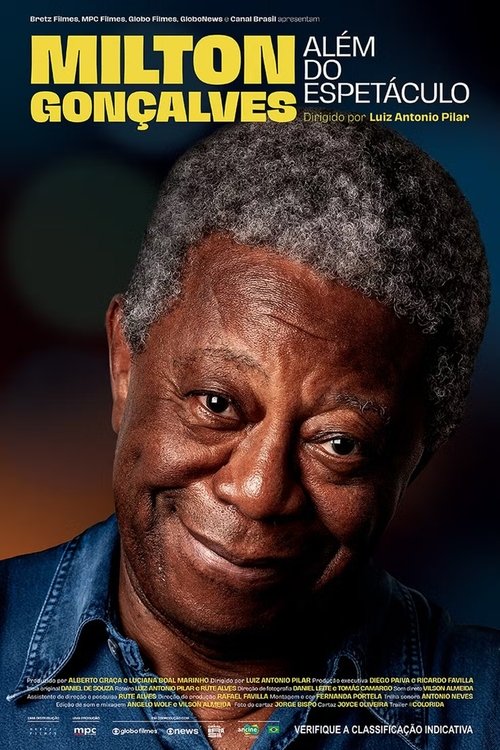
This biopic documents the life and work of one of Brazil’s most prolific artists: Milton Gonçalves. This actor and director are credited with more than sixty television titles, seventy movies and twenty plays. Known from classic full-length features like Macunaíma, They Don't Wear Black Tie and Kiss of the Spider Woman, his dramatic versatility also encompasses major Brazilian soap operas, including O Bem Amado and Roque Santeiro. With his talent, he overcame barriers faced by many Black performers in Brazil. An active on-screen and on-stage presence since the 1950s, his name is synonymous with the history of Brazilian television, theatre and cinema, making him a landmark talent in the performing arts world.
No description available.
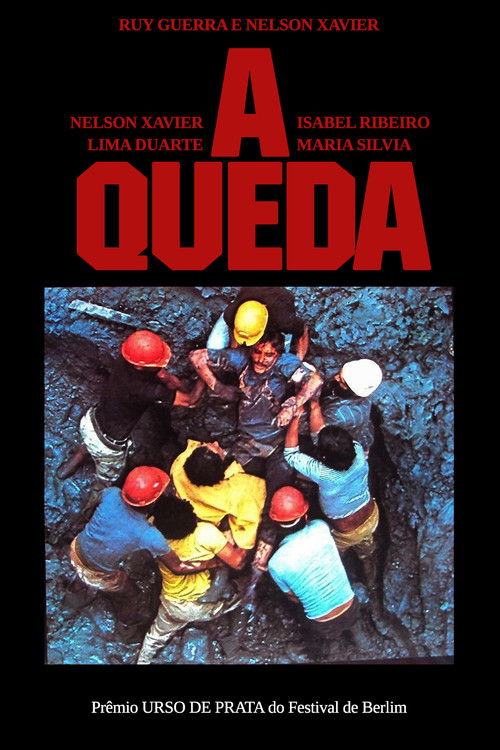
An accident at a construction site, resulting in one death, sets one worker off on a struggle for justice that exposes the mechanisms of exploitation and the class relations of a country that had undergone one decade of fast-paced ‘conservative modernisation’ at the hands of the military. As a sort of sequel to the classic The Guns (1964), following the fate of those characters as they move from enforcers of exploitation to exploited, it offers more than a snapshot of the period: the correspondent time lapses in fiction and reality capture the passage of a chunk of Brazilian history between the two films, and, therefore, also the transformations in cinematographic approaches to the social and political between the two moments. Equally daring in content and form, and in the originality of the adequacy of one to the other, it won the Silver Bear at Berlin.
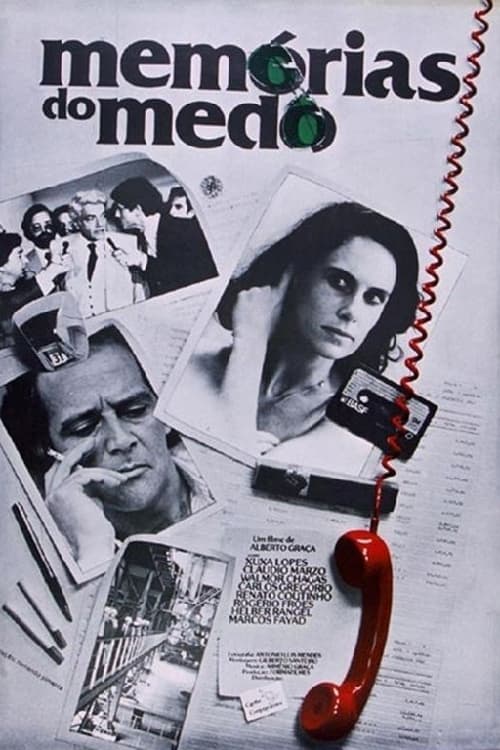
With Brasilia as a setting, the film tries to recreate the political environment in Brazil when civilians were able to found new political parties, after 10 years of strict military rules. In the midst of a nationwide crisis, a group of politicians found an opposition party to the military regime, triggering violent denunciation against multinationals operating in the country. The explorer of the Seesaw deposit, United Mining, an American multinational that is being accused of several irregularities, sees in the internal struggle that divides the opposition party its only chance to silence the nationalist campaign that denounces it. Thus, a game is developed that ends up leading the characters to a tragic plot of corruption and fear.
Although Fatima, Brandy, Ana and Cecilia have never met, their life stories seem connected. Despite their difference in age, origin and skin color, they are all Latin American women affected by violence. Set in Mexico, Honduras, Brazil and Argentina, this full-length documentary recounts their stories of vulnerability and strength. Despite all these contrasts, their stories align and rhyme with each other.
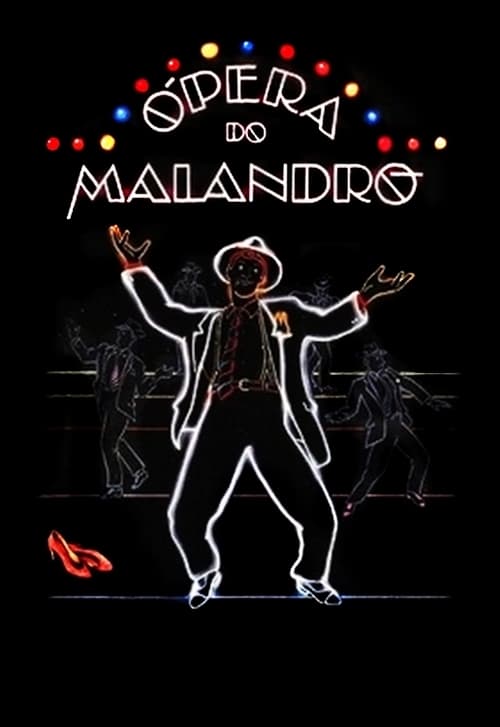
In Rio de Janeiro's bohemian district called Lapa, during the '40s, a stylish and popular scoundrel exploits a cabaret singer, and earns his living by means of petty swindles. But then he meets Ludmila, the cabaret owner's daughter, who wants to get rich smuggling goods in times of war.
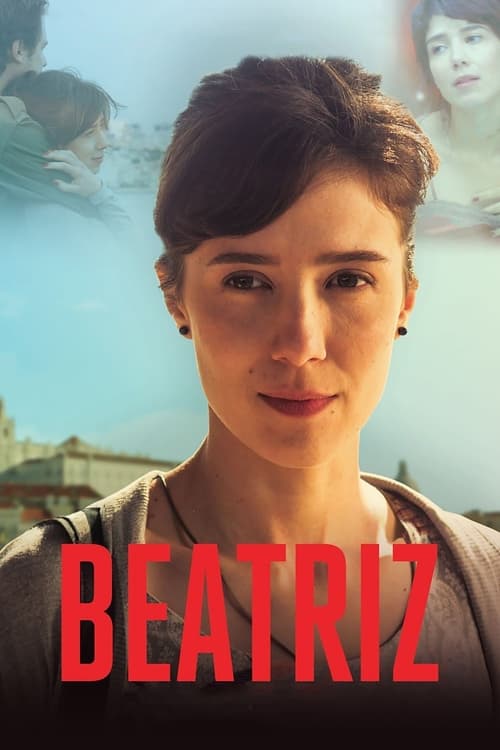
In Lisbon, Marcelo writes a novel, using the life of his own wife, Beatriz, as the main inspiration to the story. The creative process of the book takes a dangerous path, ultimately compromising the love they feel for each other.
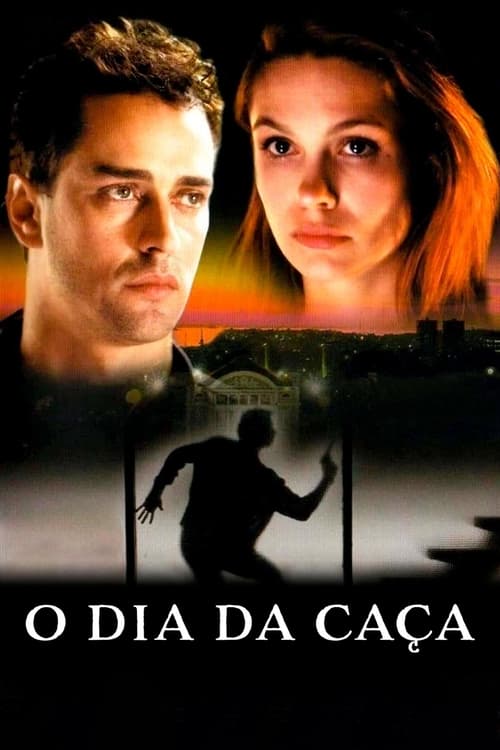
Ex-drug dealer is forced to go back to business by a corrupt policeman. He must go to Colombia and bring back some cocaine, but discovers the whole thing is a set up. He then devises a suicidal plan for revenge.
Hortência is a dedicated, dreamy TV reporter, who hopes to stop doing boring reports and become an anchor of the local news. When she learns that the newspaper's anchor is about to be fired, she is excited about the big opportunity, but Vanessa also wants the job. Needing to find a way to secure her new post, Hortência invents a serial killer and starts "investigating" the case.
João is an adult passionate about films and superheroes who is about to fulfill his childhood dream: spend his holidays in Orlando and visit the Universal parks. On the eve of the trip, his boss asks him for a small favor: to take his son Cacá, a ten-year-old boy who behaves like a middle-aged executive, on the same flight and hand him over to his father. What was supposed to be just a ride to Orlando turns into a problem when Cacá's father doesn't show up to pick him up. Now, João will have to play babysitter and learn to live with differences to save his job and also overcome his great childhood trauma: the roller coaster.executive, on the same flight and hand him over to his father. What was supposed to be just a ride to Orlando turns into a problem when Cacá's father doesn't show up to pick him up. Now, João will have to play babysitter and learn to live with differences to save his job and also overcome his great childhood trauma: the roller coaster.
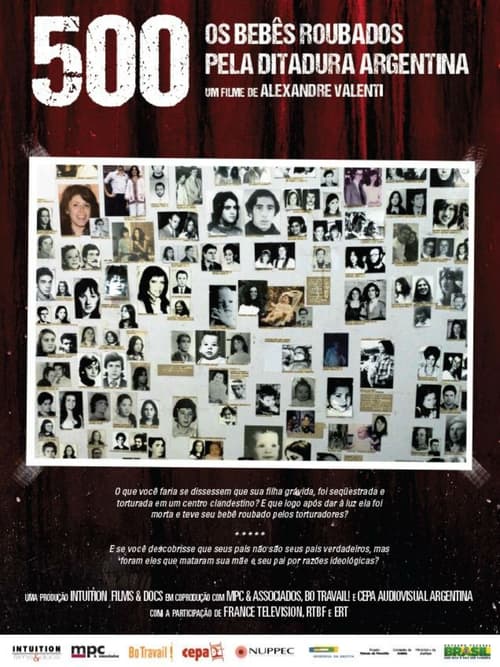
During the bloody dictatorship in Argentina, the military regime kidnapped pregnant women, forced them to give birth, murdered them, and took the babies. Thirty-five years later, a single trial for "Baby Theft, State Crime, and Crime Against Humanity" begins in Buenos Aires, the fruit of a 30-year struggle by the grandmothers of Paz de Mayo to find the 500 stolen babies, their grandchildren.
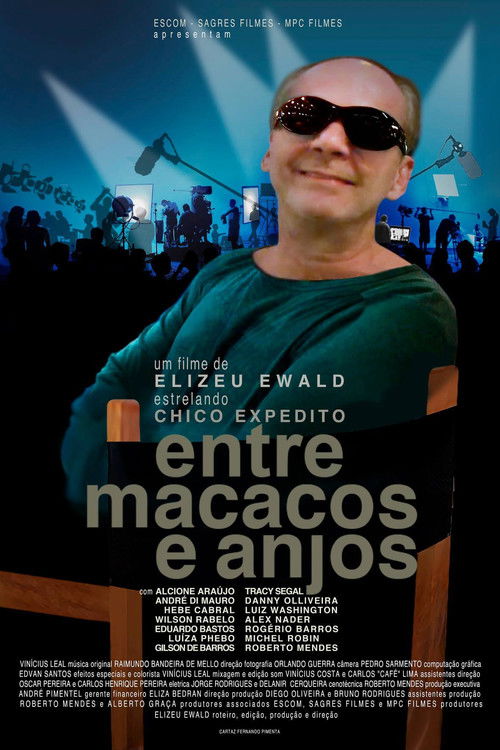
Max, controversial and cult filmmaker, go into crisis after knowing the diagnosis about your photophobia, that points to possible blindness. Trans- developed, undertakes a complete overhaul of their artistic, philosophical and affective postures, projecting them on the film he makes.
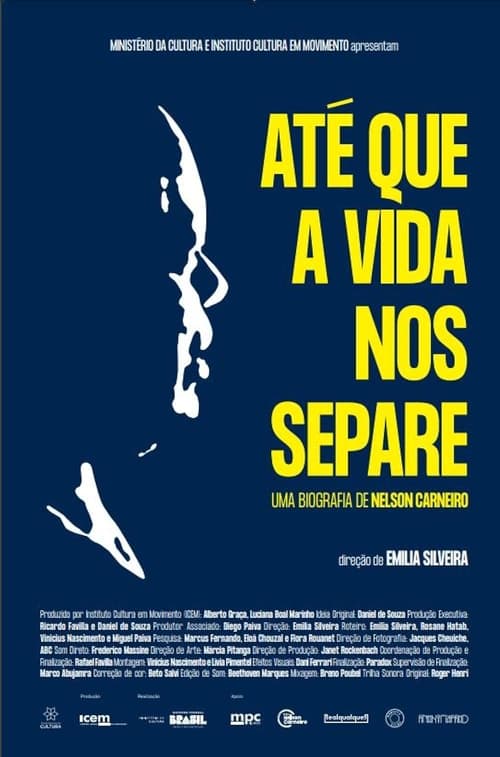
In 2018, Brazil’s 1988 Constitution turned thirty. Known as the Citizen Constitution, it was a landmark in the history of Brazil, the outcome of across-the-board engagement of society in its preparation. In Congress, the parliamentarians best known for their involvement in this initiative were names that are still familiar today in Brazil’s political history: Ulysses Guimarães, Teotônio Vilela, Tancredo Neves and Nelson Carneiro.
It is the first film produced at the extinct ICA (Instituto Central de Artes), in a co-production between UnB (Universidade de Brasília) and the also extinct INC (Instituto Nacional de Cinema). Held at the Festa do Culto ao Mito do Divino Espírito Santo in Pirenópolis, state of Goiás, in 1968, it was completed in 1969, in Rio de Janeiro. The film is extremely important for the memory of Brazilian popular culture and the state of Goiás, as it is a work of art about this popular festival, and not just a documentary record, as it reflects its cultural character. Today the party is considered Cultural Heritage of Brazil by IPHAN.
The film portrays the power of the collective that transforms people marked by the barriers imposed by HIV and follows six HIV-positive characters in different social contexts.