Sound
No description available.
The life of a family from a working-class neighborhood, that after the success of their car wash business, they move to an apartment in the wealthiest neighborhood in the country.
The adventures of an irreverent private detective, while he is dealing with economic problems.
Stories centered around the last hours of someone's life. Each episode takes place in one place and with no more than three or four characters.
Known for their ranching abilities and their endurance under extreme weather conditions, both Joaquín and Victor leave their families behind to pursue their dreams of earning enough money to buy land of their own back in Chile.
"L'Escale", a small Latin American cabaret on rue Monsieur Le Prince in Paris, welcomed people of all nationalities in a festive and committed atmosphere during the 1960s. They shared their dreams and their music there for entire nights. While he was writing his second book, Gabriel García Márquez even played maracas there… In Antoine Sextier's documentary, the last witnesses of this era look back on this golden age of Latin American music in France. A golden age that allowed them to fulfill their Bolivarian dream: to unite Latin America through music.
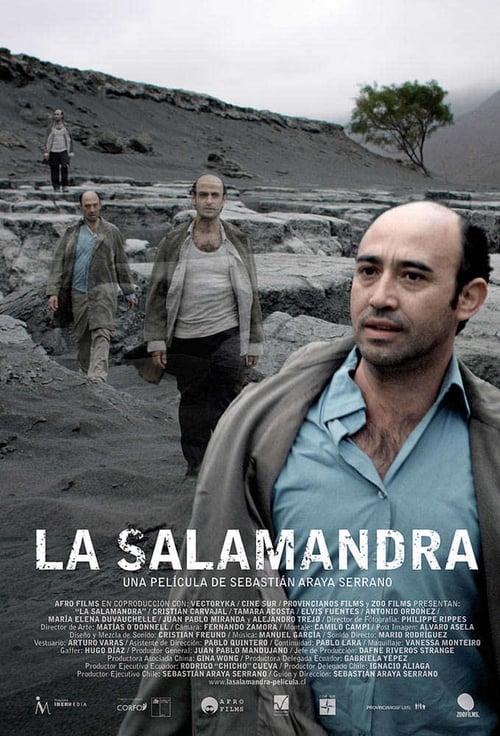
This was a man. He lived with his mother. He cared a manor house in the countryside of Chile. One day the man found a bone in the garden. The bone was bored. That was a bone flute. The man with the flute music play. And music song became. The voice of the song begging to seek the other bones of his scattered body. The man and his mother were in those ways of God and hell, looking for the bones that make up the skeleton of that Christian. And give him a Christian burial. And they saw what they saw, they lived what they lived. Many stories lived. And although they did not tell anyone, others told them.
The film is about Eloy, a Chilean bandit and companion of Joaquín Murieta, who is wanted by the justice system on the border with Argentina. Although an escape seems impossible, in desperation he flees without a fixed destination.
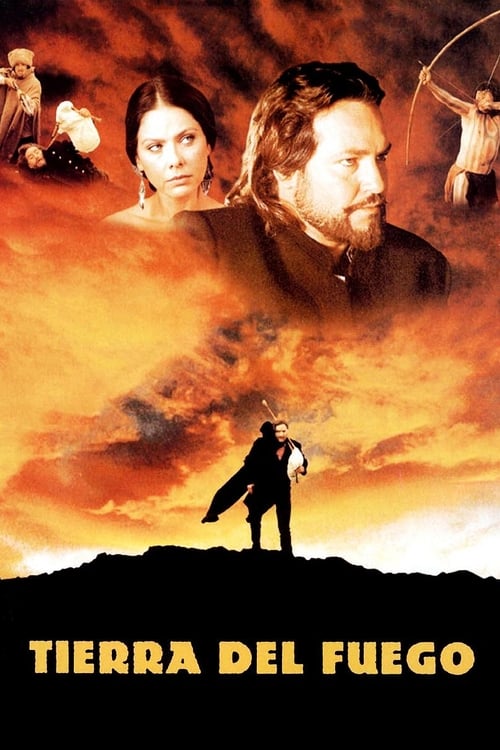
The film is based on the novel (of the same name) by the Chilean writer Francisco Coloane, and on the chronicles of the Romanian engineer Julius Popper, a nationalized Argentine and one of the principle actors in the genocide of the Selk'nam, one of the indigenous peoples who inhabited the Tierra del Fuego Archipelago.
As a funeral procession advances through a dusty town in the Paraguana peninsula, a young man rides his bicycle through the crowd. A beautiful woman stands apart from the crowd and gazes in wonder as the young man rides away. A child, the town's fool and the woman go after the Bicycle, each character with his own motivation. Enraged with indignation, the men also follow the cyclist through the town and onto the desert seeking to kill him.
A collage of images showing the two faces of a society. That of poverty and that of wealth. Throughout the documentary, this antagonism is shown: populations in unhealthy conditions, and on the other hand, large showcases with mannequins.
In 1985, exiled director Miguel Littín secretly reentered Chile to film this sweeping documentary portrait of the country under the dictatorship of Augusto Pinochet. Shot clandestinely and later released as a four-part television series, the film combines interviews, historical reflection, and on-the-ground footage to examine Chile’s political climate more than a decade after the 1973 coup.
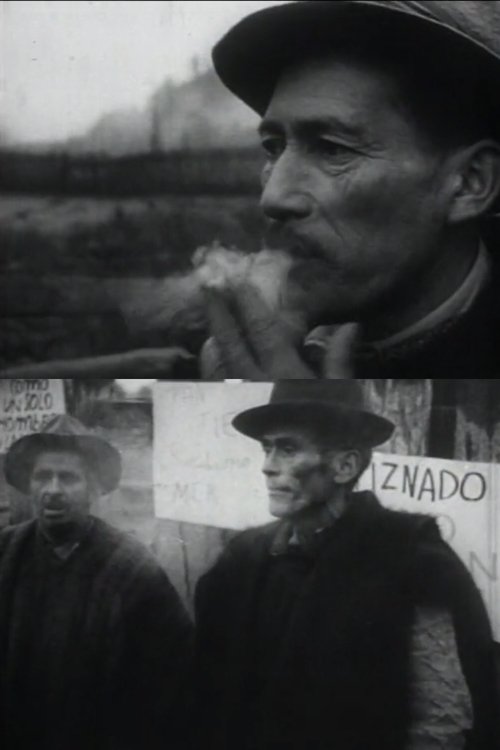
Overview of the forestry workers of Valdivia and Panguipulli. Their testimonies reveal the abuse to which they are subjected.
Chile 1985, the repression of the Chilean people by the dictatorship and the resistance, accompanied by the music of the exiled composer Angel Parra.
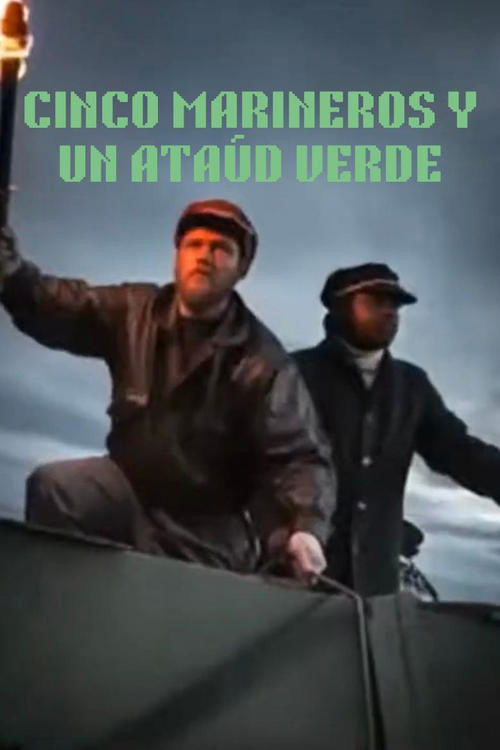
In the seas of southern Chile, where the known world ends, in dangerous waters and ghost ports, a space where everything is possible, a group of sailors dare still to dream in mysteries and enchantments...
In a violent city where a man succumbs to the loneliness and delirium of his unfulfilled desires. He wishes to belong somewhere. And the only way to achieve this goal is projecting in his own mind another version of himself, a "second man", someone -who will be accepted.