Editing
An art film by Per Arnoldi about a wide range of things with redundant, non-functional ornamentation and banal beauty: Cakes, candies, lollipops, mechanical toys, slot machines, paper hats, masks, noses, fireworks, streamers, artificial flowers, pranks, flags and much more more. It is terrific that such ornate things are produced, on top of that by machine, and add appetizing and purchase-promoting properties to them. And in terms of beauty, this very banality can be accepted as fully as anything else. (DFI)
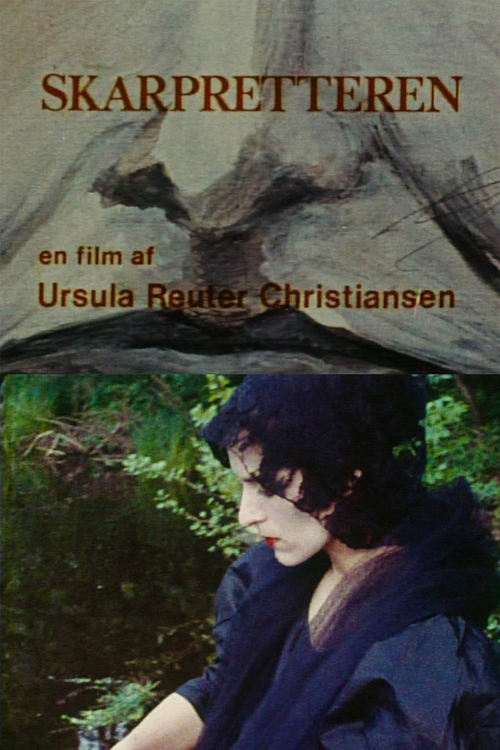
Starring Reuter Christiansen herself and shot in the lush landscape of Møn, the Danish island where she has lived since 1970, THE EXECUTIONER uses a fragmented narrative to tell “a story of woman’s degradation and exaltation,” as its subtitle indicates. A landmark of Danish feminist art, the film was also Reuter Christiansen’s first major collaboration with Henning, who composed the film’s lyrical, subtly experimental music.
Lisa is 6 1/2 years old and goes to kindergarten. One day she gets lice. The film shows how the peers and the adult environment react.
A woman, Ilse Brehmer, finds the body of a dead man, a journalist. He has been murdered, and later when the body turns up in the harbor, the woman denies everything, even though witnesses has seen her nearby the crime scene. She simply can’t remember anything, but the detective on the case, Mørck, knows how to smell a lie and soon start to unravel this bloody mess.
A crime-series in six parts. A woman has been killed in a apartment. The murder squad are on the case.
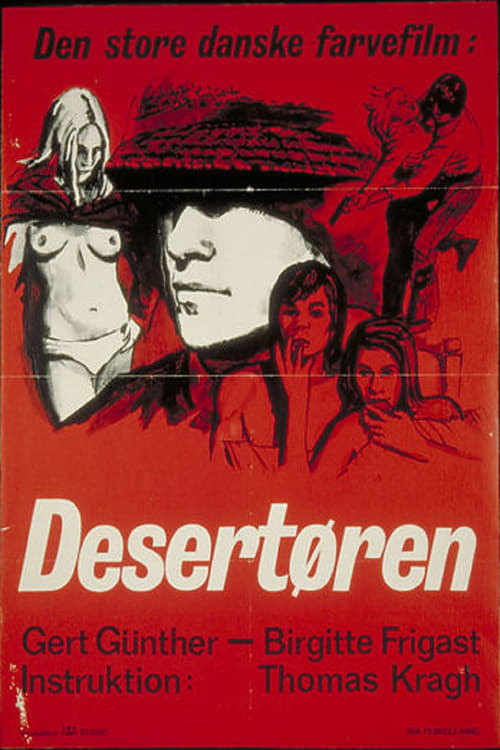
Martin deserts from the barracks with one of the army's pistols. He wants to go home to his girlfriend Sussie, who, however, has found someone else while he has been away. Martin is a lively and energetic guy, but he's rootless and provocative, and can't seem to settle down anywhere. He is on the run from the military and, more or less unconsciously, in the process of destroying himself. He doesn't really know what to do with the revolver, but he doesn't want to get rid of it, and only when he is hit by a shot from it does he realize what he has messed up.
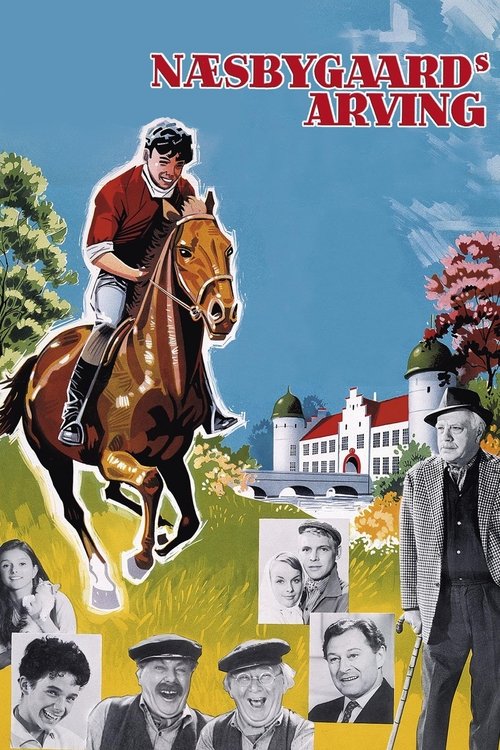
Olaf Ussing is the old chamberlain who lives in the castle with his three unmarried daughters – Malene Schwartz, Lone Hertz and Mimi Heinrich. On the neighbouring estate lives Poul Reichhardt, a wealthy bachelor with a butler – festively played by Ole Monty. A couple of dubious suitors for the lovely young ladies are Preben Neergaard and Preben Mahrt – and a former admirer is Henning Palner.
The mysterious Mr. Steinmetz has acquired the ability to create things and beings by will alone. Only, after a while his creations invariably disappear. He therefore approaches a famous brain surgeon, Max Holst, who he hopes can help him with this problem. When Max refuses, Steinmetz brings his doppelgänger into being to replace him.
Seeking revenge against the rival clan responsible for the killing of his father, Hagbard calms down long enough to establish a truce. During a peaceful interlude, he falls in love with Signe, the daughter of the king of the rival clan. However, Hildegisl, who desires Signe's hand in marriage, disovers the young lover's plans to wed and sets out to bring about the end of Hagbard.
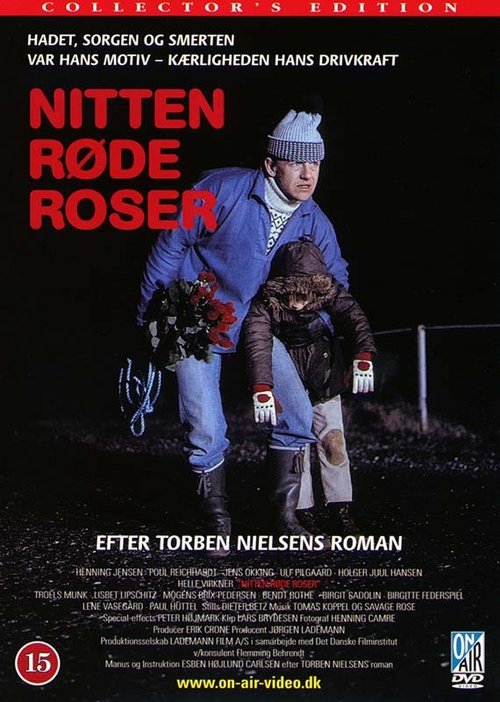
After his girlfriend is killed in an automobile accident, a man decides the best revenge on those responsible is to murder their loved ones.
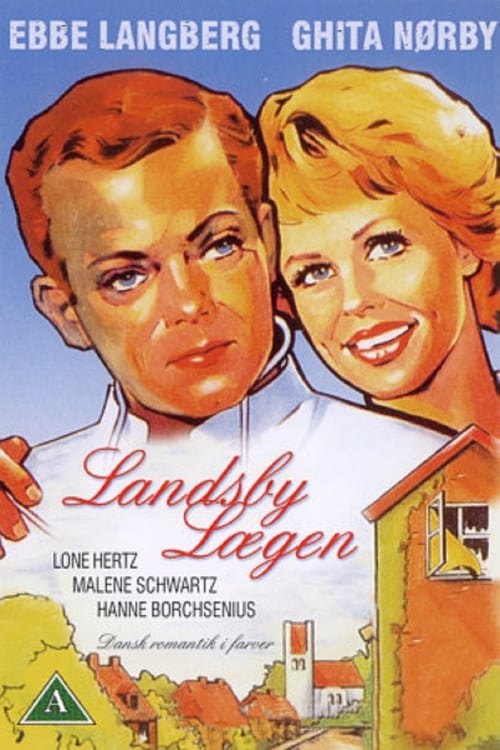
The old doctor, Dr. Bonnesen, is a tired old man. He wants to sell his practice and has been corresponding with the young doctor Jens Winther. Jens arrives in Fjorslev to discuss a possible takeover of Bonnesen's practice and his patients. Bonnesen's beautiful young housekeeper, Anne Mette Krogh, welcomes him. Bonnesen takes a liking to Jens Winther and makes him an offer he cannot refuse.
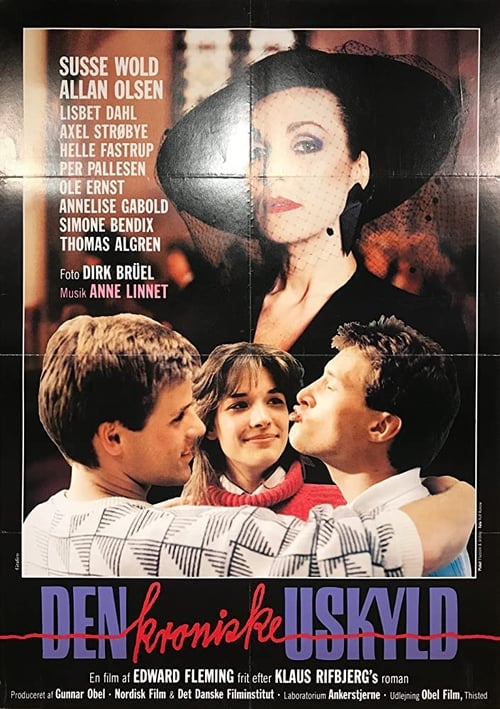
For Janus his friend Tore is his big ideal: pretty, intelligent and self-confident. Janus is grateful for his friendship even though he is considered the court jester. When Tore falls in love with the beautiful and sweet girl Helle, Janus accepts his role as their highly loved third party. Helle's fashionable mother, however, is a bit too interested in Tore. Written by Allan Simonsen
Jeppe is a bedraggled day laborer whose great vice is brandy. And when he falls down drunk in the field, a passing baron is tempted to play a prank on Jeppe. The baron's lackeys carry the sleeping Jeppe up to the castle, dress him in the baron's finest bedclothes, and lay him in the baron's bed. When Jeppe wakes up, he thinks he is dead and has gone to heaven. But gradually, the baron's persistent lackeys manage to convince him that he is actually the baron himself. Jeppe soon takes advantage of this to take revenge on old enemies and indulge in old vices...
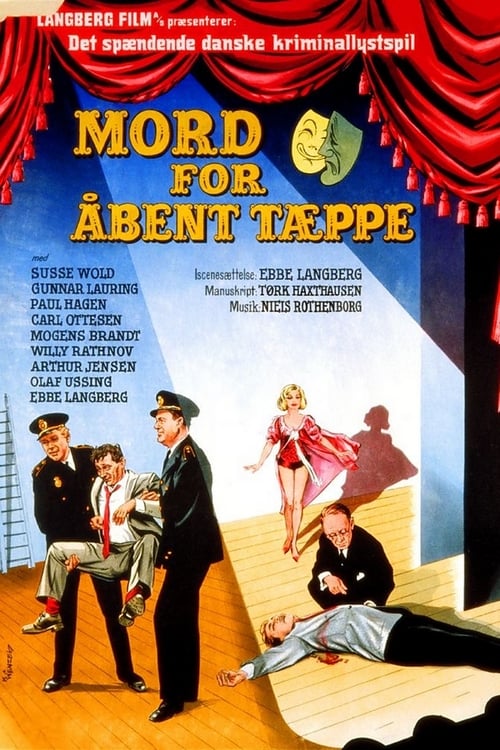
The action takes place in a theater, where actor and theater director Poul Bech is shot by his co-star Eva Berthelsen in the middle of a premiere. The script says he should be shot, but not with real bullets! Everyone at the theater seems to have a reason to want him dead. However, another murder must be committed before the killer can be found.
Landowner Martin Kaas lives with his grandson Martin at Næsbygård. Martin is an avid horseman. One day, his horse loses a shoe, so Martin goes to see the village blacksmith Mortensen, where he meets the blacksmith's foster daughter Elise. The blacksmith is known to be an honest and religious man, but no one but Elise knows how brutal and cruel he really is. Elise discovers that her foster father, together with the estate's manager Hermansen, is involved in many shady deals that are not in the best interests of the estate. Martin, who often feels lonely, forms a warm friendship with Elise. One day, Martin disappears, and a letter left on his bed reveals that he has been kidnapped and that only a large ransom can bring the boy back.
A short documentary about a man named Martin who lives on what used to be the Danish King’s meadow garden but is now the city of Copenhagen’s largest rubbish tip.
No description available.
A mother whose child is taken by Death, forces her on a desperate journey to get it back, inspired by Hans Christian Andersen's famous fairy tale.
In May 1974, the Israeli Air Force carried out an extermination operation against the Palestinian refugee camp Nabatiyeh. With this as a starting point, it is reviewed how the last 50 years of Zionist colonization of Palestine have partly led to the establishment of the state of Israel, partly to the expulsion of a people, the Palestinians, from their land. The film shows scenes of daily life in Palestinian refugee camps. We hear various of the inhabitants talk about their desire to return to their country, and we follow how the resistance movement works to free women from their traditional backward role. At the same time, the emergence of the armed resistance struggle is analysed, and the significance of the latest military technological developments for guerilla wars in the 3rd world is explained.
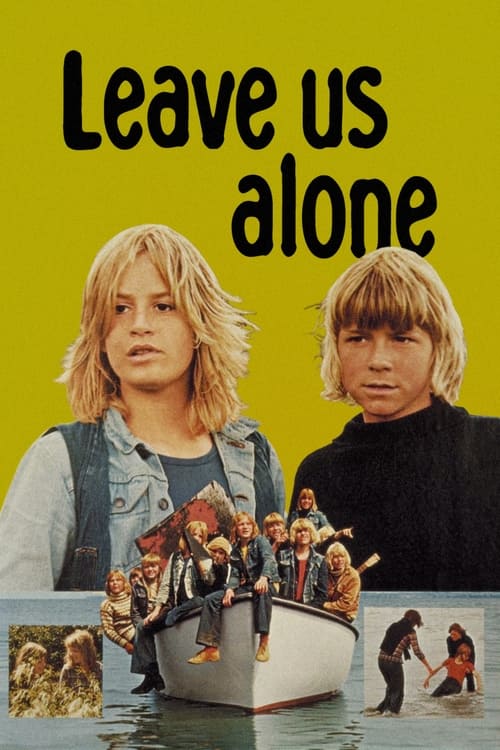
A group of summer camp kids, left to their own devices when their teachers stage a strike, go on a rampage of stealing and looting. A stolen boat brings them to an uninhabited island. When their boat drifts away, the marooned kids must fend for themselves.