FEEL IT.STREAM
Martha Rosler

Martha Rosler

Directing

Biography

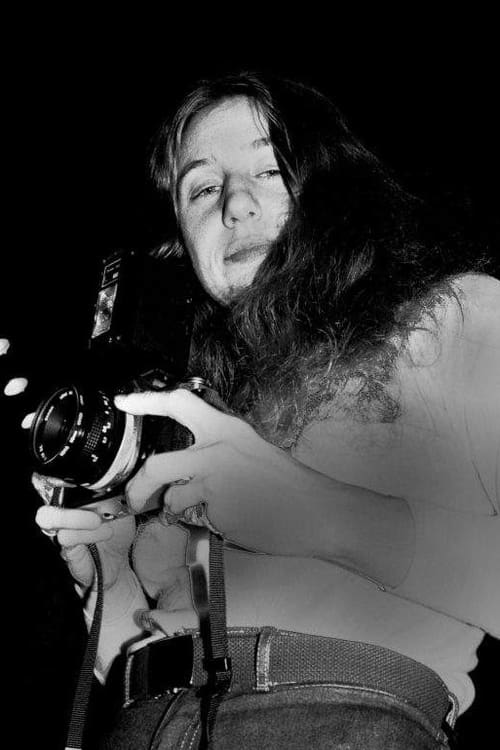
Martha Rosler (born 1943) is an American artist. She is a conceptual artist who works in photography and photo text, video, installation, sculpture, site-specific and performance, as well as writing about art and culture. Rosler's work is centered on everyday life and the public sphere, often with an eye to women's experience. Recurrent concerns are the media and war, as well as architecture and the built environment, from housing and homelessness to places of passage and systems of transport. Since the early 1970s, Martha Rosler has used photography, performance, writing, and video to deconstruct cultural reality. Describing her work, Rosler says, “The subject is the commonplace — I am trying to use video to question the mythical explanations of everyday life. We accept the clash of public and private as natural, yet their separation is historical. The antagonism of the two spheres, which have in fact developed in tandem, is an ideological fiction — a potent one. I want to explore the relationships between individual consciousness, family life, and culture under capitalism.” Avoiding a pedantic stance, Rosler characteristically lays out visual and verbal material in a manner that allows the contradictions to gradually emerge, so that the audience can discern these disjunctions for themselves. By making her ideas accessible, Rosler invites her audience to re-examine the dynamics and demands of ideology, urging critical consciousness of the individual compromises exacted by society, and opening the door to a radical re-thinking of how cultural “reality” is constructed for the economic and political benefit of a select group.
Known For

Martha Rosler Reads "Vogue"
N/A

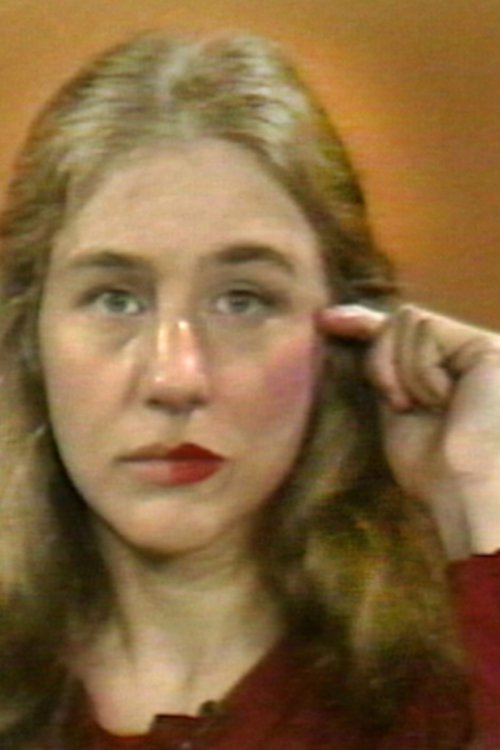
In this live performance for Paper Tiger Television's public-access cable program in New York, Rosler deconstructs the messages in Vogue and its advertising. Rosler looks at the institutional slants of the magazine industry and the fashion industry's reliance on sweatshops.

Martha Rosler Reads "Vogue"

1982
Reading the Media
N/A

Founded by a collective of radical media makers in 1981, Paper Tiger Television pioneered edutainment. Broadcast on public access television, the collective took a grassroots, DIY approach to media production that showcased how television was made through television, while critiquing corporate media and attempting to build a more equitable form of moving image. As one of the founders put it: “It is one thing to critique the mass media and rail against their abuses. It is quite another to create viable alternatives.” Punk and experimental, Paper Tiger Television was such an alternative. The series, Reading the Media, featured all manner of intellectuals, artists, and activists analyzing, and satirizing newspapers, magazines, and even cigarette ads to decipher their hidden codes, messages, and ideologies.

Reading the Media

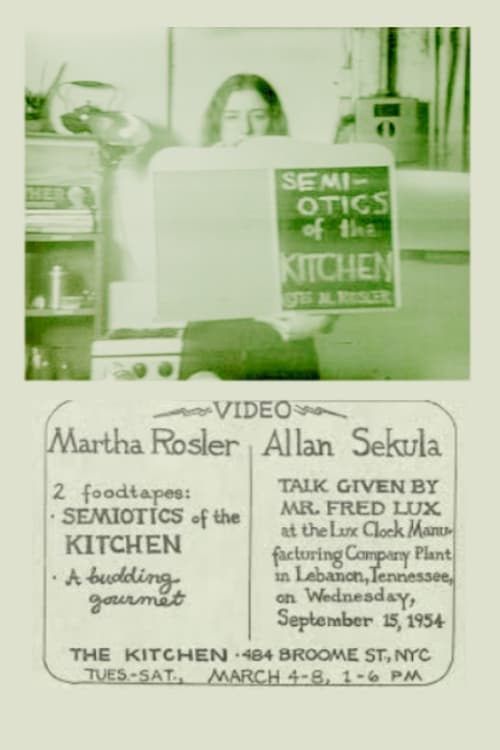
Semiotics of the Kitchen
5.9

Martha Rosler explores kitchen utensils by alphabet.

Semiotics of the Kitchen

1975
Backyard Economy 2 (Diane Germain Mowing)
N/A

short of a woman mowing a lawn

Backyard Economy 2 (Diane Germain Mowing)

1974
Martha Rosler: An Interview
N/A

In this interview with Craig Owens the artist discusses her early family influences and her time at the University of California. "There was a tremendous amount of alternative culture that completely took place... without any relation to the high art world of New York,” she remembers. A historical interview originally recorded in 1984 and re-edited in 2005 with support from the Lyn Blumenthal Memorial Fund.

Martha Rosler: An Interview

1984
Flower Fields
N/A

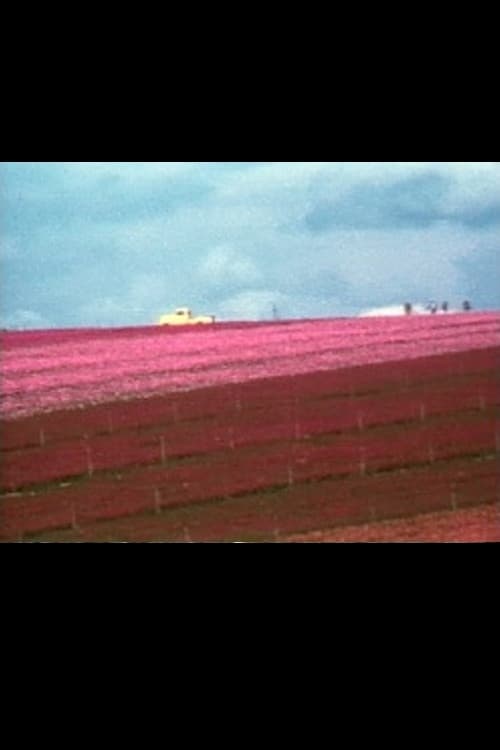
"This short film was intended to create a colour field painting based on the flower fields that provided the living for so many, mostly undocumented, workers in the area. When the camera closes in on the beautiful colour-striped hillside, the laborers in the field can be seen. Later, in a run up Highway 5, we see the immigration police at their mobile roadblock."

Flower Fields

1974
No image
N/A

In an inquiry into the relation between the corporation, the state and the family, Domination and the Everyday presents a fractured barrage of simultaneous sound tracks, film stills and a crawling text. Questioning the privatized existence of a woman and child, and the role of media information in daily life, this non-narrative tape is structured around the sounds of a woman feeding her small son and readying him for bed, while a radio interview with an art dealer plays in the background. Photographs of family life and corporate ads are juxtaposed with a written text that crawls across the screen, comparing life in Chile with life in the United States. Rosler refers to this layered juxtaposition of fragmented sound, images and text as an "artist-mother's This Is Your Life."

Domination and the Everyday

1978
Chile on the Road to NAFTA, Accompanied by the National Police Band
N/A

A bouncy music-video burlesque shot in and around Santiago, Chile, entwines reminders of U.S. corporate presence and of past political terror, with national and international musical strains. Chile, at the southernmost end of South America, was in 1997 on the fast track to admission into the economic alliance known as the North American Free-Trade Agreement (NAFTA). Chile was enjoying its reputation abroad as a free-market success — a reputation promulgated by those who aided or supported the fascist coup led by General Augusto Pinochet, which had violently overthrown the elected government and led to the deaths of the President, Salvador Allende, and thousands of others, and the exile of tens of thousands of political refugees.

Chile on the Road to NAFTA, Accompanied by the National Police Band

1997
No image
N/A

Secrets From the Street examines the intersection of cultures and classes as exemplified by the street life of San Francisco's Mission District. This videotape, produced for an exhibition held jointly at San Francisco's City Hall and its Museum of Modern Art, argues — against the show's theme and title, Public Disclosure: Secrets from the Street — that accounts of cultural life that omit the question of social power are mythical: The real "secret" is the obscured relation of economic and political domination exercised by one's own culture over the observed subculture. Or, as Rosler states in the tape's voiceover, "The secret is that to know the meaning of a culture you must know the limits of meaning of your own."

Secrets From the Street: No Disclosure

1980
How Do We Know What Home Looks Like? The Unité d’Habitation of Le Corbusier at Firminy, France
N/A

Shot in Firminy-Vert, a Le Corbusier Unité, or housing project, in south-central France, this work traces the building’s history through an engagement with the lives of its residents and traces of its past. Called “Le Corbu” after its renowned architect, the complex was built after his death. Here is the space for an unspoken text about architecture and the warring interpretations of Le Corbusier’s idea of what might constitute a human, humane, humanizing space.

How Do We Know What Home Looks Like? The Unité d’Habitation of Le Corbusier at Firminy, France

1993
No image
5.0

In a fusion of text and image, Rosler re-presents the NBC Nightly News and other broadcast reports to analyze their deceptive syntax and capture the confusion intentionally inserted into the news script. The artist addresses the fallibility of electronic transmission by emphasizing the distortion and absurdities that occur as a result of technical interference. Stressing the fact that there's never a straight story, Rosler asserts her presence in a character-genererated text that irolls over the manipulated images, isolating excerpts from her sources. In Rosler's barrage of media information, the formal structure is inseparable from her political analysis.

If it's too bad to be true, it could be DISINFORMATION

1985
Seattle: Hidden Histories
N/A

A series of one-minute interview-based spots Martha Rosler made with the American Indian community during her residence in Seattle from 1991 to 1995. Rosler reveals lost languages, unrecognized tribes, and the experiences of contemporary Native Americans living not on reservations but in the city.

Seattle: Hidden Histories

1995
No image
N/A

Treating the problem of anorexia nervosa from the parents' perspective, Rosler presents a mother and father speaking about the tragedy of their daughter's death as a result of dieting. The conversation turns toward the irony of self-starvation in a land of plenty and toward the international politics of food, where food aid is used as a negotiating tool. Confronting a serious issue, Rosler simultaneously sets into play the confessional form and the ghoulish staginess of talk show dramatics.

Losing: A Conversation with the Parents

1977
Vital Statistics of a Citizen, Simply Obtained
9.0

Taking aim at the social standardization enforced particularly on women's bodies, Rosler critiques the politics of "objective" or scientific evaluation that result in the depersonalization, objectification, and colonization of women and Others.

Vital Statistics of a Citizen, Simply Obtained

1977
Semiotics of the Kitchen: An Audition
N/A

In 2003, Rosler announced an open call for a live re-staging of her 1975 video Semiotics of the Kitchen, to be held at the Whitechapel Gallery in London, for A Short History of Performance, Part II. Twenty-six women — actors, artists, curators, and museum staff among them — participated in a rotating performance of the work. On three sets stocked with kitchen utensils, the participants enacted the work in front of an audience, while their performances also appeared on monitors throughout the gallery. At the end of the performance, the three groups of women came together to present the last few gestures of the video — including its final shrug. Semiotics of the Kitchen: An Audition documents the preliminary rehearsals with Rosler and the public event, the “audition.”

Semiotics of the Kitchen: An Audition

2011
Museums will eat your lunch
N/A

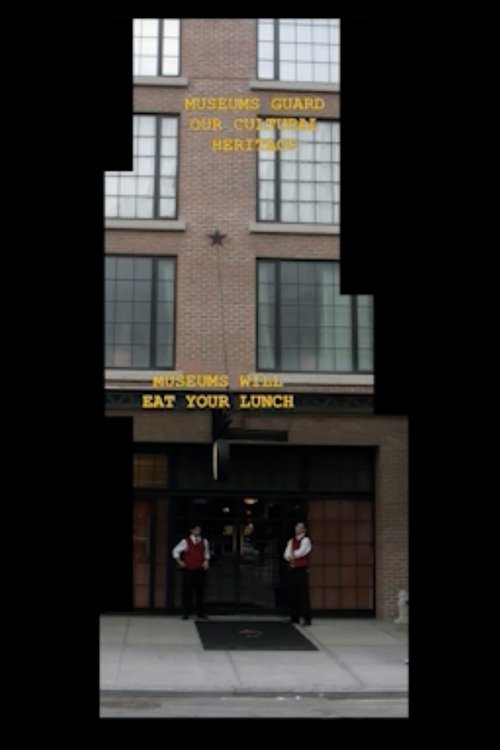
In this silent video, still images of stores and residential buildings in New York City appear within a cutout template, based on the “giftbox heap” formed by the New Museum silhouette. As these shiny storefronts, dwellings, and official documents of occupancy of the new Bowery in the 21st Century go by, set phrases relating to the merits and demerits of museums roll desultorily down from above to below.

Museums will eat your lunch

2013
A Budding Gourmet
N/A

‘A cook can’t just mix things up’, says a woman with a typical Brooklyn accent while the camera shows sophisticated images from food and travel magazines. In this black-and-white video, her first in this format, Martha Rosler explores the relationship between gastronomy, class and breeding. A silhouetted woman hiding her face from the camera describes her efforts to improve her status and that of her family through gastronomy. With a deadpan voice and accompanied by the strains of a violin concerto, the woman explains why she wants to become a gourmet. The text comes from one of Rosler’s ‘postcard novels’ entitled Budding Gourmet – also written in 1974 – in which in eleven chapters the artists tells the story in the first person of a woman wanting to learn haute cuisine to climb the social ladder.

A Budding Gourmet

1974
No image
N/A

Artist Martha Rosler identifies the totalitarian implications of an argument for torture under certain circumstances, as it appears in the editorial pages of Newsweek magazine.

A Simple Case for Torture, or How to Sleep at Night

1983
Born to be Sold: Martha Rosler Reads the Strange Case of Baby $/M
N/A

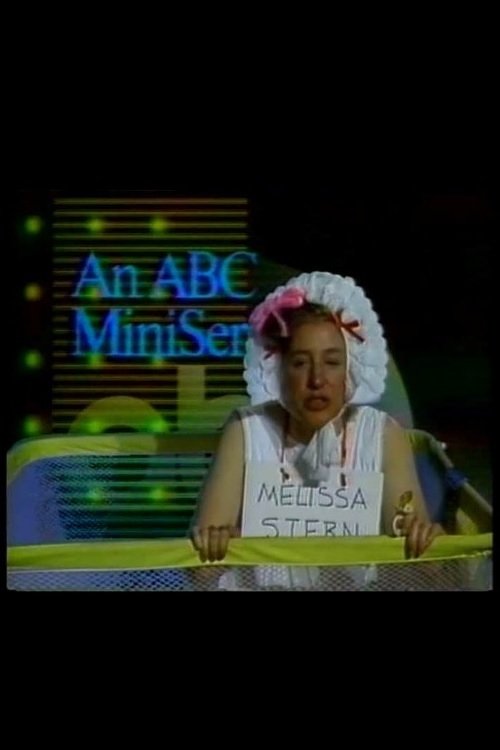
Born to be Sold is Paper Tiger Television and Rosler's acerbic and witty interpretation of the notorious "Baby M" case, in which a natural — "surrogate" — mother and father of a baby fought each other for custody of the child. Rosler assumes various roles of the participants in the controversy, from the baby to the sperm, from the lawyer to the judge, as well as the two women in the case. Reconstructing the story from its trial by media and the court transcripts, Rosler views "surrogate" mother Mary Beth Whitehead's actions as an attempt to defy the identity assigned by her class and gender, and sees the verdict favoring the Sterns as an endorsement of the father's phallic right, his jurisprudential entitlement. Her analysis demonstrates how political, class and ideological systems are played out on the body of the woman.

Born to be Sold: Martha Rosler Reads the Strange Case of Baby $/M

1988
No image
N/A

"Vice President Mike Pence eagerly plays cheerleader in chief for Donald Trump. In accepting the vice-presidential nomination in 2016, Pence proclaimed, 'I'm a Christian, a conservative, and a Republican — in that order,' suggesting how we might understand his role. This ground-breaking, earth-shaking video begins with a pomp-ridden televised press conference, accompanied by uplifting music. Held early in 2017 at the White House Rose Garden, it showcased the president’s announced withdrawal from the historic Paris Climate Accord. As the video proceeds, we witness Pence and other minions enacting pious gratitude on behalf of the president. With the Vice President lurking in the shot, the video finally launches a takeoff. "The renditions of the Battle Hymn of the Republic and the national anthem in this work were part of the Rose Garden broadcast, which both begins and ends the video." — Martha Rosler

Pencicle of Praise