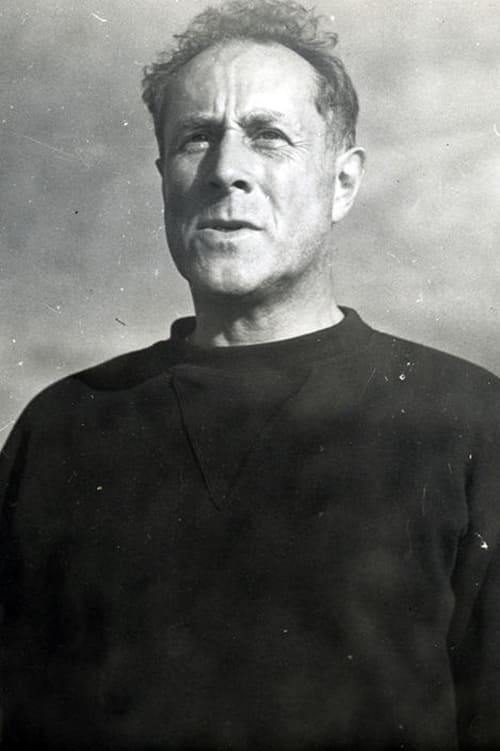
Jean Painlevé
Directing
Biography
Jean Painlevé was a French photographer and filmmaker who specialized in underwater fauna.
Known For

An early example of ultra-realism, this movie contrasts the quiet, bucolic life in the outskirts of Paris with the harsh, gory conditions inside the nearby slaughterhouses. Describes the fate of the animals and that of the workers in graphic detail.
Blood of the Beasts
Alexander Calder created and performed one of the most important and beloved works, his miniature circus (1926-1931). More than twenty years later Jean Painleve made Le Grande Cirque Calder 1927, begun in 1953 and completed in 1955.
Calder's 1927 Great Circus

After a look at some strange creatures, the narrator and camera take us to the Chaco forest, on the borders of Paraguay, Argentina, and Brazil, where a vampire bat lives, desmodus rotondus, attacking wildlife and domesticated creatures, killing small ones by draining all their blood and killing large ones by leaving a parasite in their bloodstream. Four inches long, with a 12-inch wingspread, we see it walk, approach a victim, pull out a patch of fur large enough for it to engage its teeth, then lap six or seven ounces of blood. Its saliva may be an anesthetic keeping its victims from waking. A stub nose and harelip contribute to its efficiency and its hideous look.
The Vampire
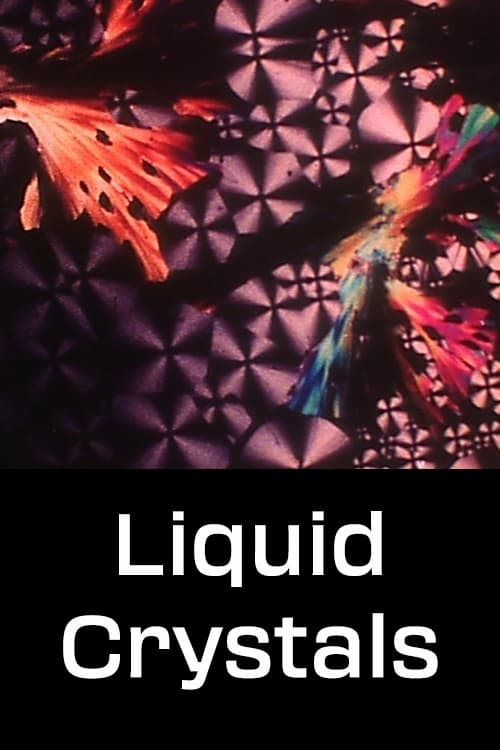
Title cards introduce images we watch without narration; they are displays of shape and color. François de Roubaix's electronic music accompanies these images, photographed under a polarizing microscope. The crystals appear to move like tiny organisms: small four-part fans share the frame with flowing lines of pink. Multiple patterns appear side by side.
Liquid Crystals
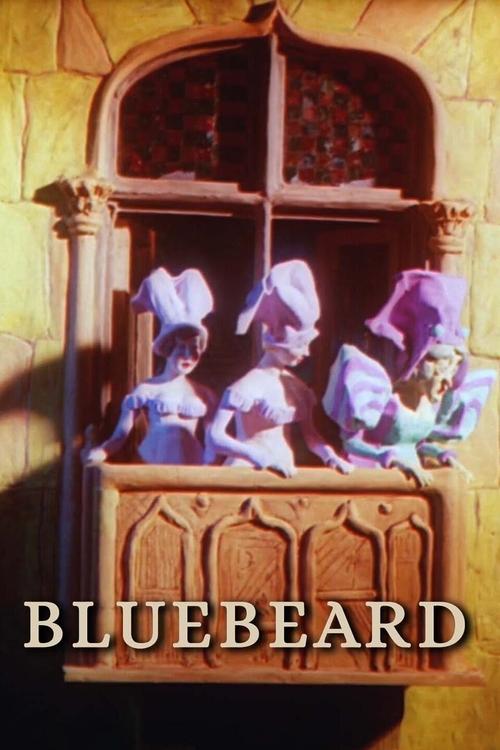
Perrault's fairy tale presented in claymation with choral voices. Bluebeard goes courting, all six of his wives having died. He arrives at the house of a widow with two daughters. He's greatly feared, but he overcomes objections with a generous dowry. One sister (Anne) refuses him; the other accepts. At his castle, the damsel delights in precious minutes away from Bluebeard in the rose garden. The Saracens declare war; Bluebeard goes off to fight them, leaving the keys to the castle in the damsel's hands. He warns her not to enter the forbidden room. As war rages, she discovers riches in the castle and then enters the forbidden room. Will Bluebeard discover her act? Can she escape death?
Bluebeard
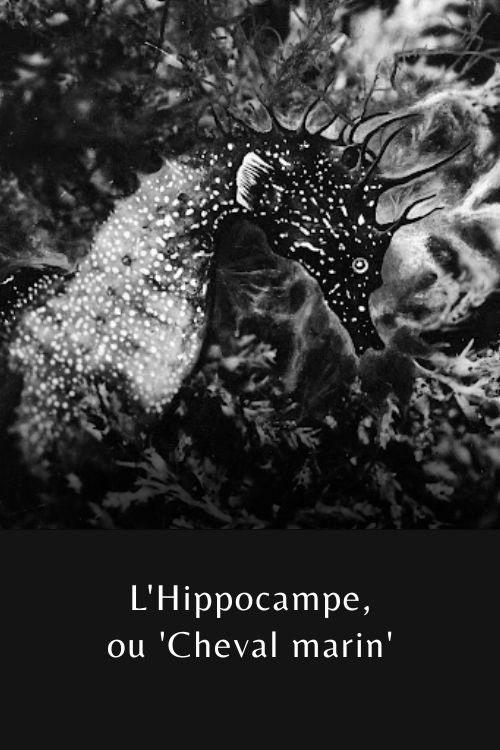
Examines the sea horse, the only fish that swims upright. We watch it use its prehensile tail to wrap around plants and other sea horses. A frontal bulge houses organs including an air ballast. Three fins propel this fish. We see a female place her eggs in a male's pouch where they are fertilized and nurtured until birth in violent contractions. Inside the pouch are nurturing blood vessels. We then follow the growth of an embryo, greatly magnified: we examine its heart beating and its dorsal fin moving. Young sea horses attach themselves to each other. The film ends with images of many sea horses moving on the ocean floor, superimposed on a horse race.
The Sea Horse
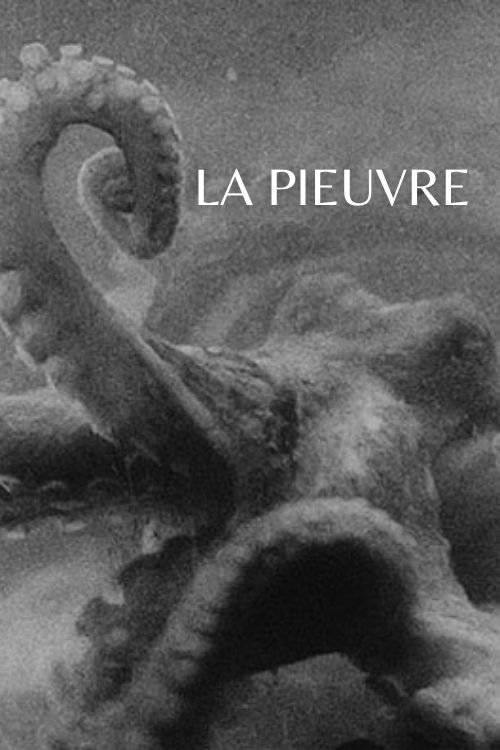
An octopus slithers over objects on land—a doll, a skull—then oozes along the shore into the sea. It secretes its ink. The camera follows it along rocks into deeper water, watching closely as it breathes. Its eye is closed then open. Simple titles, in French and German, suggest what to watch. The octopus alternates the use of breathing tubes on either side. It changes color as cells on its skin contract or dilate. Extreme magnification helps us see these changes. Two struggle, one dies. On shore, fishermen catch them and put them in pails. A single tentacle still has life. Back in the sea, two octopi attack a crab. Soon only a couple of crab legs are visible in the mouth of the victor.
The Octopus
No description available.
Cinéastes de notre temps : Jean Vigo
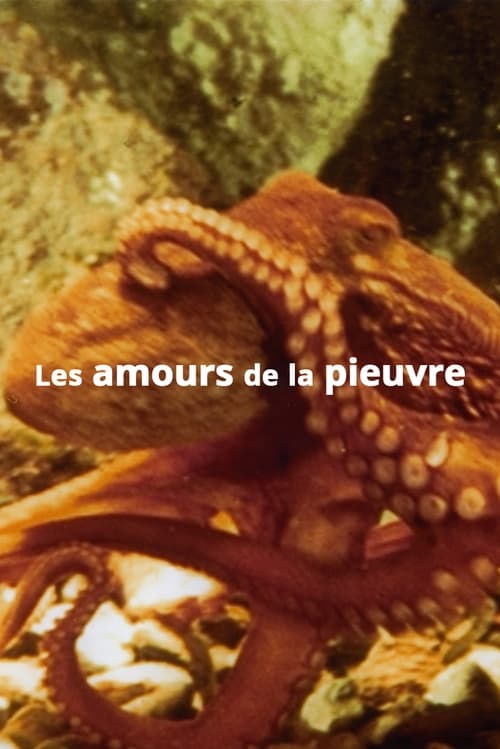
An octopus slithers into a narrow crack near the shore; we see its eye up close. It feeds on a crab. In spring it's time to mate. A male grabs a female; he inserts his third arm in her respiratory cavity. We watch another pair: a larger female is the aggressor here. Mating is repeated over hours and days. The female releases strings of fertilized eggs that hang from the roof of a nest. She guards her spawn for a month, fanning the strings to circulate water for oxygen and cleanliness.
The Love Life of an Octopus
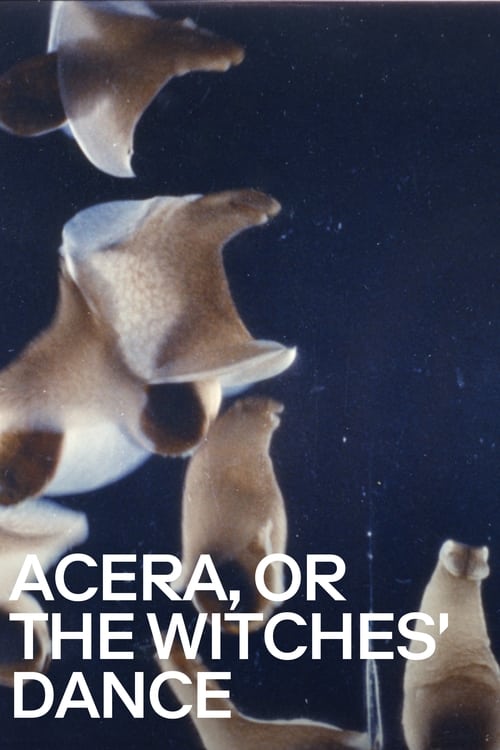
In mud flats along the coast of Brittany we watch acera, small ball-shaped mollusks that are about two inches in diameter. They rest in mud; then, in water, they dance, their skirt-like hood spreading like a dervish's cassock. They spin and spin. The film adds musical accompaniment. We watch them mate and secrete eggs: acera are both male and female, and can form chains with other acera in which they simultaneously mate as a male and as a female. The eggs hatch, and the cycle begins again.
Acera, or the Witches' Dance
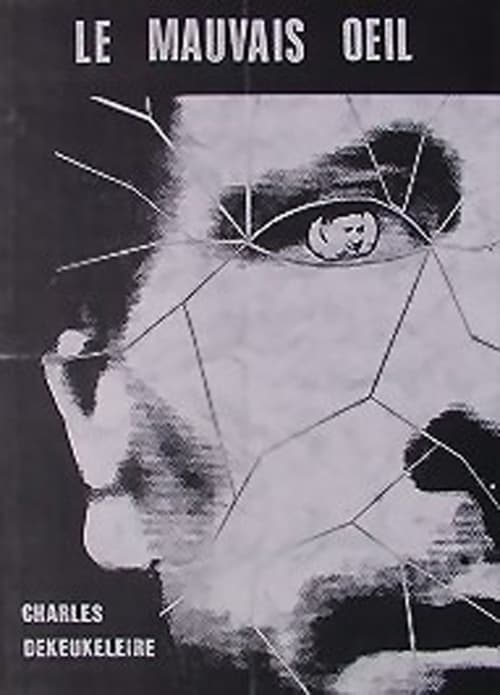
When a wanderer arrives in a village in the East Flanders countryside, strange events begin to unfold. The villagers, unsettled by his presence, come to believe he is an evil spirit. In truth, he is searching for his long-lost lover. Years ago, the two of them had committed a terrible crime: the killing of an illegitimate child. They had then planned to end their own lives by drowning. Yet the wanderer failed to keep his part of the pact and survived the suicide attempt. Ever since, he has been desperately seeking the woman he once loved, haunted by the past that refuses to let him go.
The Evil Eye
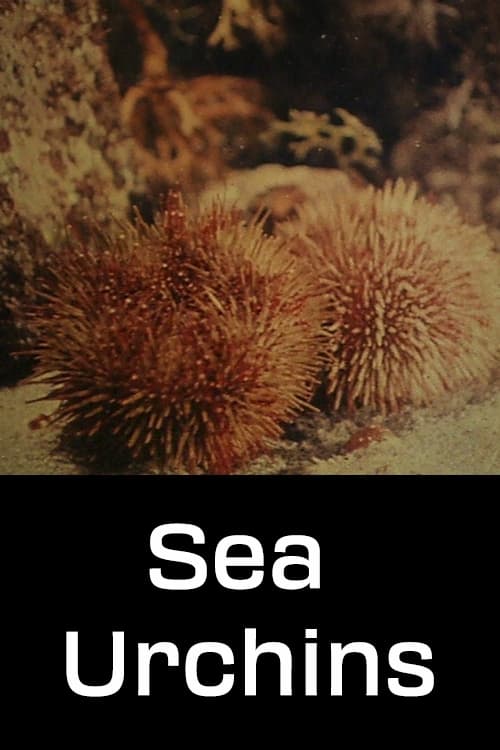
Underwater photography, magnified close-ups, and film through microscope present the sea urchin, a complex creature. We see their mouth and five teeth close and open. After injecting one with gelatin, the shell is removed and we see the muscle structure, digestive tube, and reproductive organs. Magnified stems reveal suction cups; stems lengthen and contract allowing the sea urchin to move. We see microscopic calcareous stems; at their ends are jaws with various uses. Cilia everywhere are in constant motion, stirring up water and debris. African music on the soundtrack suggests a shuffle dance.
Sea Urchins
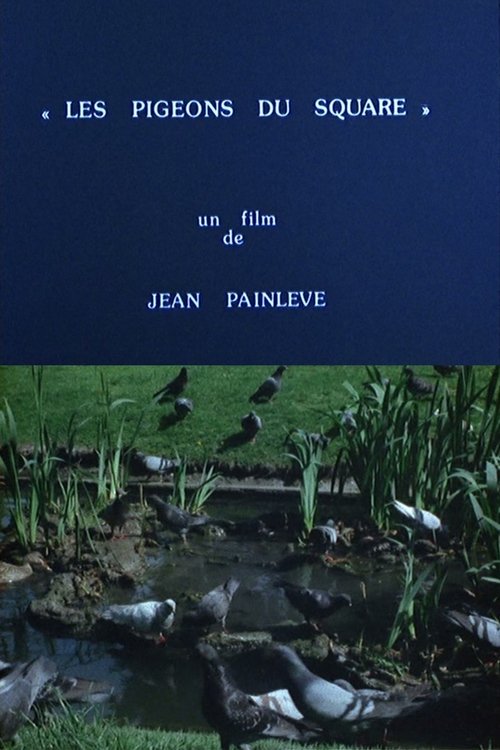
An enthusiastic grandfather sits with children in a Parisian park talking about pigeons. First. their physical appearance—eye, wings and tail, and color—and their varieties. Then, he encourages the children to imitate their walk. He points out courtship and mating rituals, then provides an illustrated discussion of how they eat. This section is punctuated by a flock of pigeons fighting over a small, hard ball each wants to eat; the narrator's describes it as if it were a soccer match. He concludes with a discussion of pigeons taking off, landing, and flying; he uses slow motion and stop-time photography to show his audience.
Pigeons in the Square
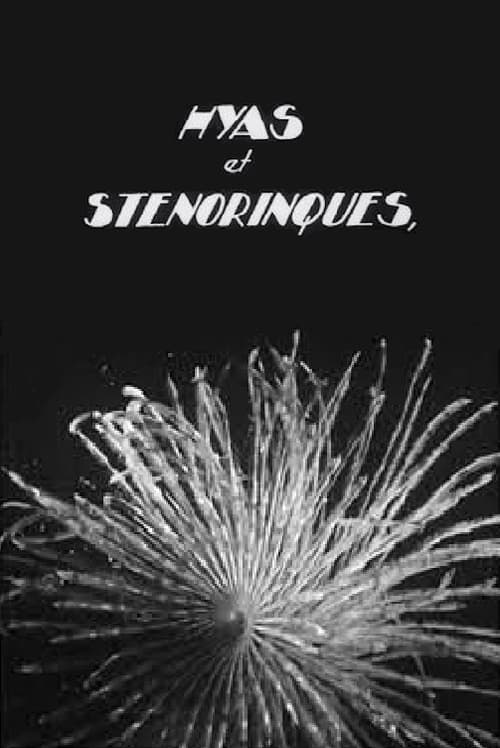
In close-ups and extreme close-ups, we watch two small species of marine crustaceans, the slender long-legged stenorhynchus and the clumsy, short-legged hyas. To blend in, both cover themselves with found objects, such as algae and sponges. We watch them move, eat, greet each other, and fight. They have small mandibles and large claws. Near them are spirograph worms, 6 inches long, with a plume of branchiae that fan out like exploding fireworks. We see vibrating cilia, 0.001 mm long, on the branchiae, sending food toward the mouth at the plume's center. Chopin's music and an off-screen narrator suggest we're watching a ballet.
Hyas and Stenorhynchus

Painlevé’s first film on animal behavior, focusing on the Hermit Crab. On this film we see the Hermit Crab trying to find shelter.
Hermit crab
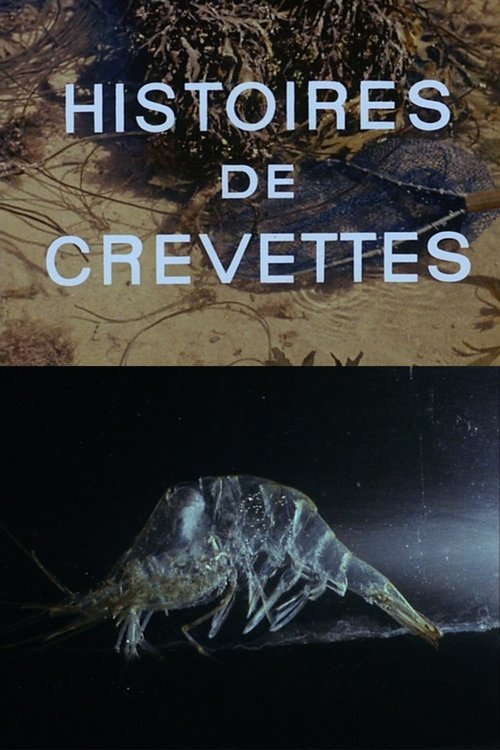
After a comic introduction, we look closely at a shrimp. Eyes on stilts, color patterns, pinchered walking feet, a rostrum. We watch shrimp eat using a strong claw and a fine one; we watch digestion. After eating, shrimp clean themselves. The female lays eggs that cling to her feet. After three weeks, the eggs hatch explosively. Few larvae live to adulthood. We watch an adult shed its carapace with a final leap, leaving it vulnerable; other shrimp attack.
Shrimp Stories
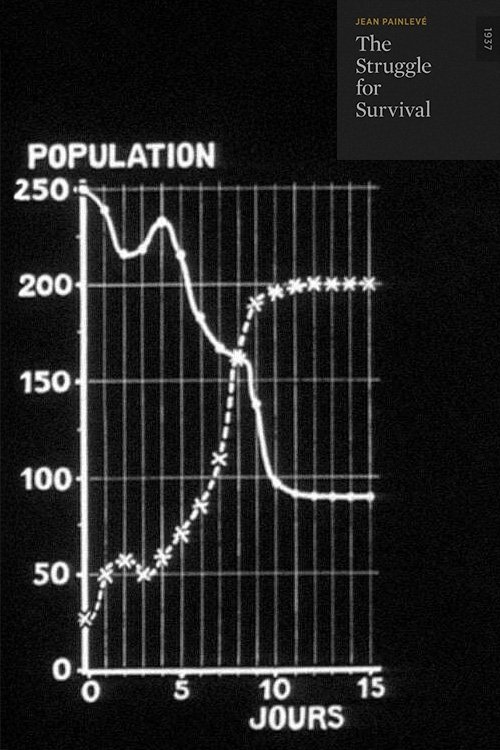
Jean Painlevé short film examining population explosion and decline.
The Struggle for Survival

A close-up look at sand urchins and rock urchins. At the seashore, a man digs up a sand urchin. We look closely. He sets it back in the sand, and it burrows out of sight. Its intestines take nutrients out of sand. Using magnification 200,000 times normal size, we see a rock urchin's spines with suckers on the end; a drawing illustrates how they work. A sea urchin walks toward a rock. We see three-fingered jaws—pedicellaria at the end of flexible stems—take in algae and other bits. We also see cilia less than 0.001 ml in length; their motion constant, creating whirlpools. On the shore again, we watch the setting sun. Occasional titles in French tell us what to watch for.
Sea Urchins
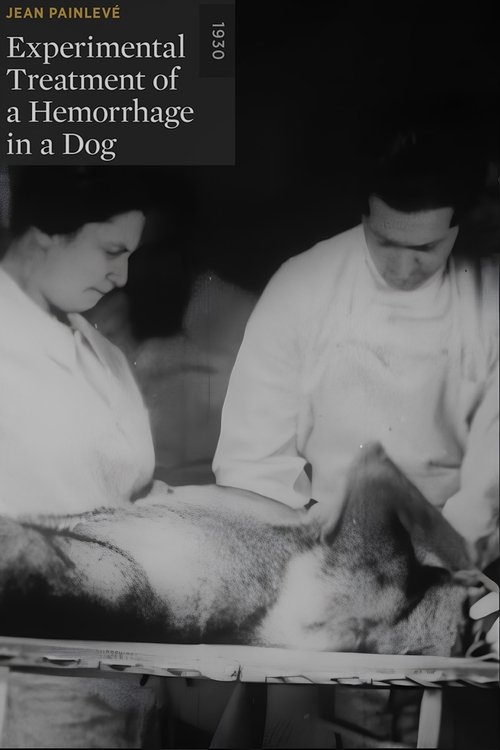
Jean Painleve short about an experimental canine surgery.
Experimental Treatment of a Hemorrhage in a Dog
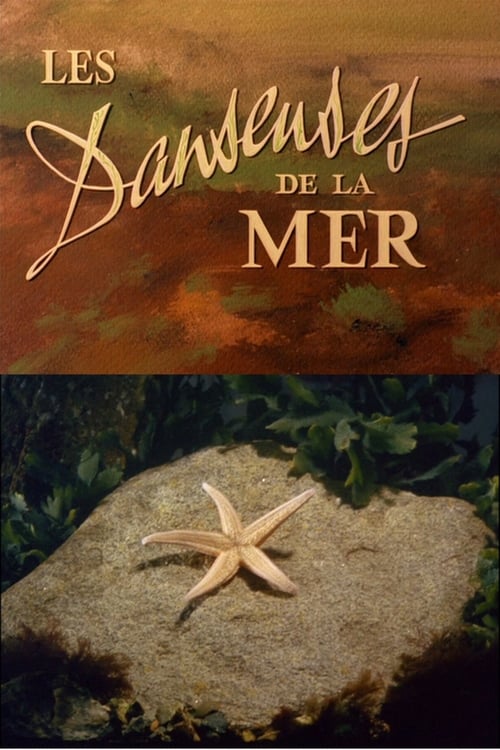
Two kinds of starfish, the brittle and the feather. The brittle star moves its arms alone, without the aid of suckers. Underneath is a single opening. Stalks move food close to the mouth and move waste away. We see vents, used in reproduction and breathing. We watch the hatched young expelled into the water. The camera shows us brittle stars' intricate patters. We observe feather stars in clusters, like ferns. One turns over slowly; arms have branches with stalks for breathing and gathering microscopic food. Reproductive organs are inside branches. We see eggs develop at 1,400 nature's speed. Larvae emerge, 0.1 mm long. They grow. A feather star takes a walk.