Darius Milhaud
Sound
Biography
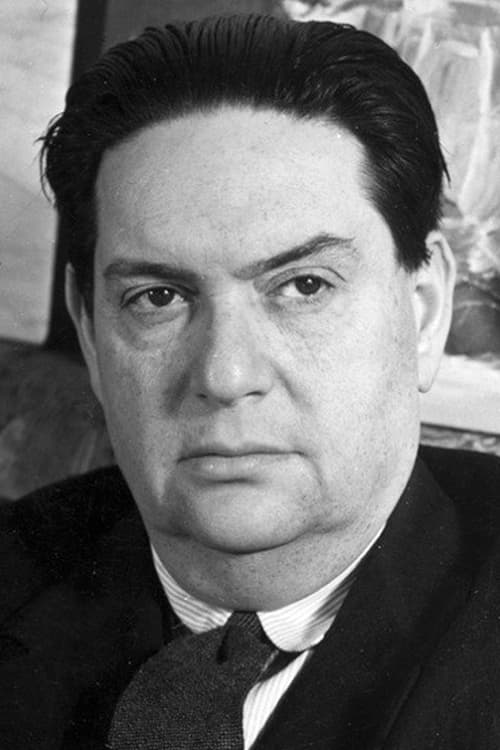
Darius Milhaud (4 September 1892 – 22 June 1974) was a French composer, conductor, and teacher. He was a member of Les Six—also known as The Group of Six—and one of the most prolific composers of the 20th century. His compositions are influenced by jazz and Brazilian music and make extensive use of polytonality. Milhaud is considered one of the key modernist composers. A renowned teacher, he taught many future jazz and classical composers, including Burt Bacharach, Dave Brubeck, Philip Glass, Steve Reich, Karlheinz Stockhausen and Iannis Xenakis among others. Milhaud was born in Marseille, the son of Sophie (Allatini) and Gad Gabriel Milhaud. His father was from an Ashkenazi Jewish family from Aix-en-Provence, and his mother from a Sephardi Jewish family from Italy. Milhaud began as a violinist, later turning to composition instead. Milhaud studied in Paris at the Paris Conservatory where he met his fellow group members Arthur Honegger and Germaine Tailleferre. He studied composition under Charles Widor and harmony and counterpoint with André Gedalge. He also studied privately with Vincent d'Indy. From 1917 to 1919, he served as secretary to Paul Claudel, the eminent poet and dramatist who was then the French ambassador to Brazil, and with whom Milhaud collaborated for many years, setting music for many of Claudel's poems and plays. While in Brazil, they collaborated on a ballet, L'Homme et son désir. On his return to France, Milhaud composed works influenced by the Brazilian popular music he had heard, including compositions of Brazilian pianist and composer Ernesto Nazareth. Le bœuf sur le toit includes melodies by Nazareth and other popular Brazilian composers of the time, and evokes the sounds of Carnaval. Among the melodies is, in fact, a Carnaval tune by the name of "The Bull on the Roof" (in Portuguese, which he translated to French 'Le boeuf sur le toit', known in English as 'The Ox on the Roof'). He also produced Saudades do Brasil, a suite of twelve dances evoking twelve neighborhoods in Rio de Janeiro. Shortly after the original piano version appeared, he orchestrated the suite. Contemporary European influences were also important. Milhaud dedicated his Fifth String Quartet (1920) to Arnold Schoenberg, and the following year conducted both the French and British premieres of Pierrot lunaire after multiple rehearsals. And on a trip to the United States in 1922, Milhaud heard "authentic" jazz for the first time, on the streets of Harlem, which left a great impact on his musical outlook. The following year, he completed his composition La création du monde (The Creation of the World), using ideas and idioms from jazz, cast as a ballet in six continuous dance scenes. In 1925, Milhaud married his cousin, Madeleine (1902–2008), an actress and reciter. In 1930 she gave birth to a son, the painter and sculptor Daniel Milhaud, who was the couple's only child. ... Source: Article "Darius Milhaud" from Wikipedia in English, licensed under CC-BY-SA 3.0.

Known For

No description available.
Discorama

An exploration —manipulated and staged— of life in Las Hurdes, in the province of Cáceres, in Extremadura, Spain, as it was in 1932. Insalubrity, misery and lack of opportunities provoke the emigration of young people and the solitude of those who remain in the desolation of one of the poorest and least developed Spanish regions at that time.
Land Without Bread

A self-serving journalist uses influential women in late-1800s Paris and denies the one who truly loves him.
The Private Affairs of Bel Ami

A short feature film about the last days in the life of the Groningen printer and typographer Hendrik Nicolaas Werkman, who was arrested by the German Sicherheitsdienst in the spring of 1945 and executed. His work is prominently featured in the film, which uses flashbacks to portray Werkman's personal and artistic life.
Ik ga naar Tahiti

Stop-motion photography blends with extreme slow-motion in Clair's first and most 'dada' film, composed of a series of zany, interconnected scenes. We witness a rooftop chess match between Marcel Duchamp and Man Ray, a hearse pulled by a camel (and chased by its pallbearers) and a dizzying roller coaster finale. A film of contradictions and agreements.
Entr'acte

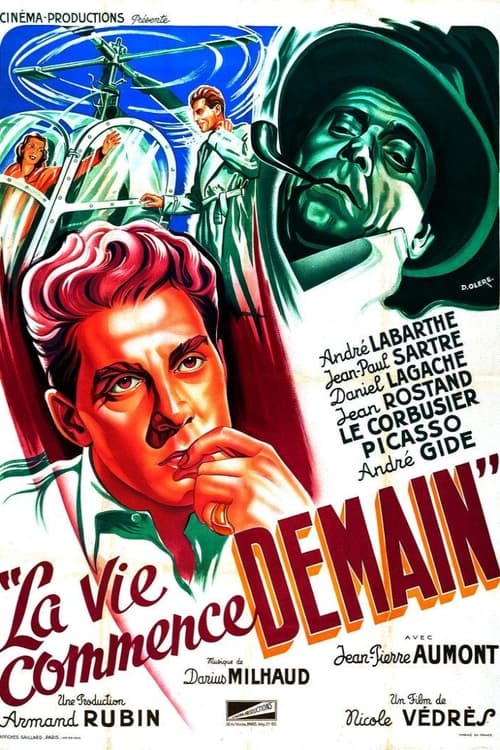
Documentary filmmaker Védrès' first semi-fictional feature was released in France in 1949 as La Vie Commence Demain. The film made it to the U.S. in 1952 as Life Begins Tomorrow. Made in cooperation with UNESCO, the film speculates on the future of mankind after the advent of Atomic Energy. Many prominent French artists and intellects contribute to the narration: Jean-Pierre Aumont plays The Man of Today, Andre Labarthe is the Man of Tomorrow, and Jean-Paul Sartre, Daniel Agache, Jean Rostand, Le Corbusier, Pablo Picasso and Andre Gide are respectively seen as "The Existentialist," "The Psychiatrist,' "The Biologist," "The Architect," "The Artist" and "The Author". Film clips of hospitals, schoolrooms, scientific laboratories, and even nightclubs are woven into Védrès' fascinating tapestry.
Life Begins Tomorrow

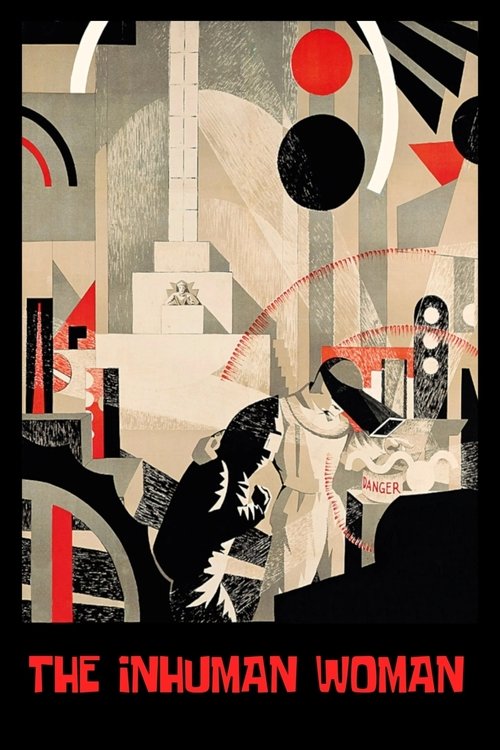
A famous singer Claire Lescot, who lives on the outskirts of Paris, is courted by many men, including a maharajah, Djorah de Nopur, and a young Swedish scientist, Einar Norsen. At her lavish parties she enjoys their amorous attentions but she remains emotionally aloof and heartlessly taunts them. When she is told that Norsen has killed himself because of her, she shows no feelings. At her next concert she is booed by an audience outraged at her coldness and she decides to visit the vault in which Norsen's body lies.
The Inhuman Woman

Spanish Civil War, 1937. A platoon of Republican soldiers plans to stop the advance of the rebel troops by bombing a bridge on the road to Zaragoza, near the city of Linás. With the close collaboration of the peasants of the area, the soldiers try to overcome the continuous bombardments and endure the harsh and tireless opposition of the powerful enemy…
Days of Hope

Flying from one charming lady---eluding another---and almost losing both!
The Beloved Vagabond

An attempt to bring the work of surrealist artists to a wider public. The plot is that of an average Joe who can conjure up dreams that will improve his customer's lives. This frame story serves as a link between several avant-garde sequences created by leading visual artists of their day, most of whom were emigres to the US during WWII.
Dreams That Money Can Buy

Examines the sea horse, the only fish that swims upright. We watch it use its prehensile tail to wrap around plants and other sea horses. A frontal bulge houses organs including an air ballast. Three fins propel this fish. We see a female place her eggs in a male's pouch where they are fertilized and nurtured until birth in violent contractions. Inside the pouch are nurturing blood vessels. We then follow the growth of an embryo, greatly magnified: we examine its heart beating and its dorsal fin moving. Young sea horses attach themselves to each other. The film ends with images of many sea horses moving on the ocean floor, superimposed on a horse race.
The Sea Horse

8 x 8: A Chess-Sonata in 8 Movements is an American experimental film directed by Hans Richter, Marcel Duchamp, and Jean Cocteau. Described by Richter as "part Freud, part Lewis Carroll" and filmed partially on the lawn of Duchamp's summer house in Southbury, Connecticut.
8 x 8: A Chess-Sonata in 8 Movements

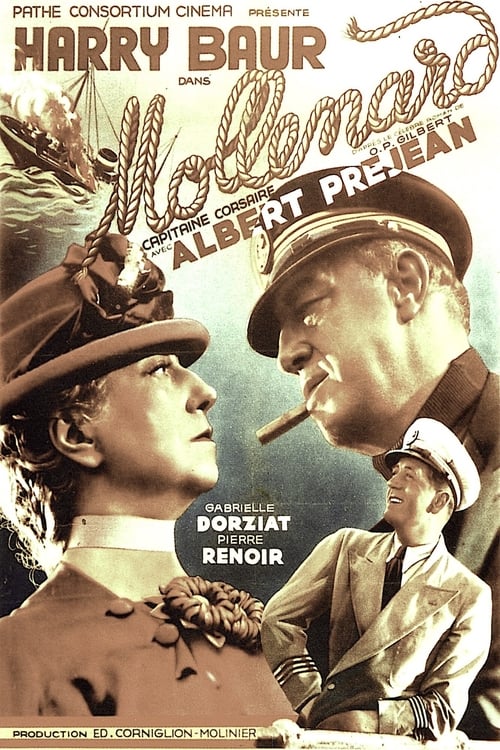
Captain Justin Mollenard works for a company that sells armaments to the Far East. After an eventful stay in Shanghai, where he and his cargo are the victim of a malicious attack, he returns to his hometown of Dunkirk. Mollenard receives a frosty welcome from his wife Mathilde, who resents the way in which he has neglected his family for so many years. Mollenard’s only wish is to get back to sea as soon as he can, but a sudden heart-attack leaves him paralysed and entirely in his wife’s power...
Hatred

Hans Richter, noted for his abstract shorts, has everyday objects rebelling against their daily routine.
Ghosts Before Breakfast

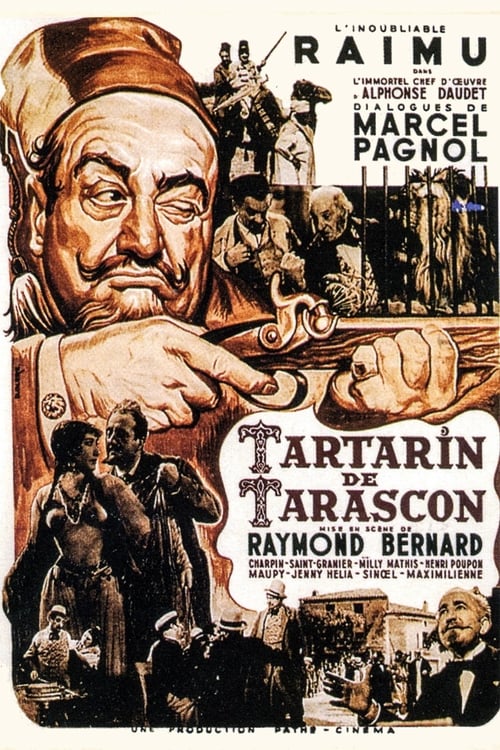
Tartarin is the local hero in the small provincial town of Tarascon. He shows off about imaginary adventures in Africa, where he has never been, as a Lion Hunter, which he is only in his imagination. Even though the locals know he has never been to Africa, they keep hoping he will leave one day. After a misunderstanding, and much gossip, everyone thinks that Tartarin plans to actually take the trip.
Tartarin of Tarascon

We catch up with Bar Avni two years after her victory in the La Maestra conducting competition. At the Philharmonie de Paris, the conductor joins forces with the Orchestre de Paris and violinist Ava Bahari for a vibrant concert.
Bar Avni conducts Ravel, Milhaud, and Bizet With Ava Bahari

Gaston, an artist in love with an upper class English girl, accepts to stay away from her when a wealthy rival offers to pay her father's heavy debt. Broken-hearted, he leaves for France with his young servant. They join a young girl as popular musicians and tour the countryside in their way to Paris, where his former love reappears.
Le Vagabond bien-aimé

At the beginning of World War I in a village in the country of La Marne, two families are against the marriage of their children. The war changes the positions.
The Mayor's Dilemma

A short documentary on Paul Gauguin, a French painter and sculptor.
Gauguin

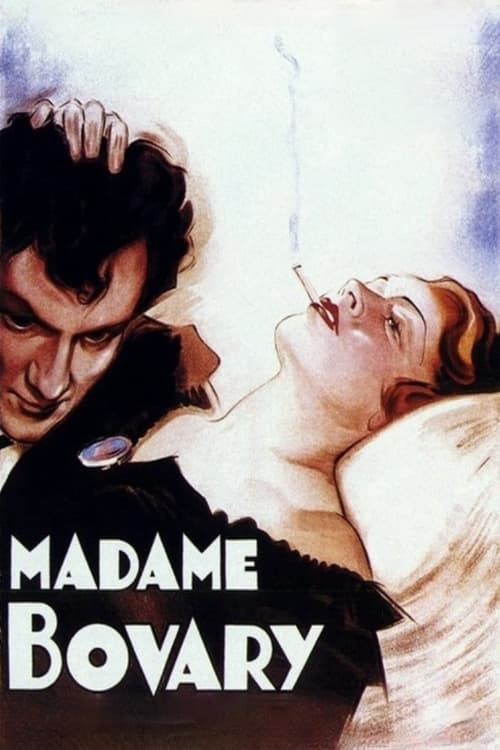
In 19th-century France, doctor's wife Emma Bovary seeks to escape her dull provincial life through various extramarital affairs and extravagant spending, leading to tragic consequences.