Acting
Polizeiruf 110 is a long-running German language detective television series. The first episode was broadcast 27 June 1971 in the German Democratic Republic, and after the dissolution of Fernsehen der DDR the series was picked up by ARD. It was originally created as a counterpart to the West German series Tatort, and quickly became a public favorite.
No description available.
Der Staatsanwalt hat das Wort was an East German television series.
The show was meant to compete with those on West German television. To this end it was fairly successful even attracting a following in parts of West Germany which could receive Eastern TV. Its production values were high. Apart from song and dance numbers and appearances from East German celebrities, almost every broadcast featured well-known stars from the west, often after their popularity had peaked in their home countries.
Stubbe – Von Fall zu Fall is a German crime detective television series starring Wolfgang Stumph as detective Stubbe. It is being broadcast on ZDF, the second German public television channel since 1995.
Die Straßen von Berlin is a German television series.
Using the example of three generations of a Hamburg working class family, the rise of the working class from the founding of the Wilhelmin Empire to the First World War, over the time of the Weimar Republic and National Socialism to the destruction of the Third Reich.
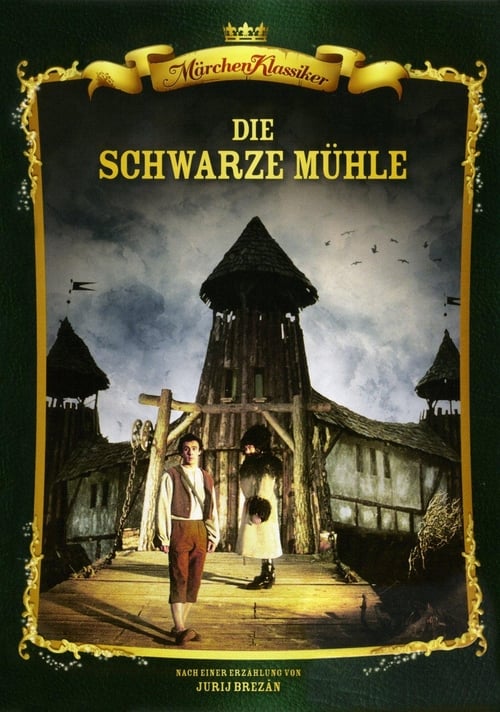
Driven by need and a thirst for knowledge, Krabat wanders through the impoverished country and falls under the control of the "black miller". Krabat defends himself against him, but his opponent still has the stronger means of power.
The film concentrates on the last days of the German navy during World War II.
For some time now, the residents of the placid little village of Sonnenthal talk only about one topic: Football! The ambitious mayor wants to promote the Sonnenthal team to the district league at any price because this success would also boost his own popularity. But he did not expect the resistance of the new head of school, Barbara, who is heavily annoyed by the one-sided focus. To bring Sonnenthal′s men and the mayor in particular to their senses, Barbara sets up a women′s football team that soon turns out to be a serious competition for the men′s team.
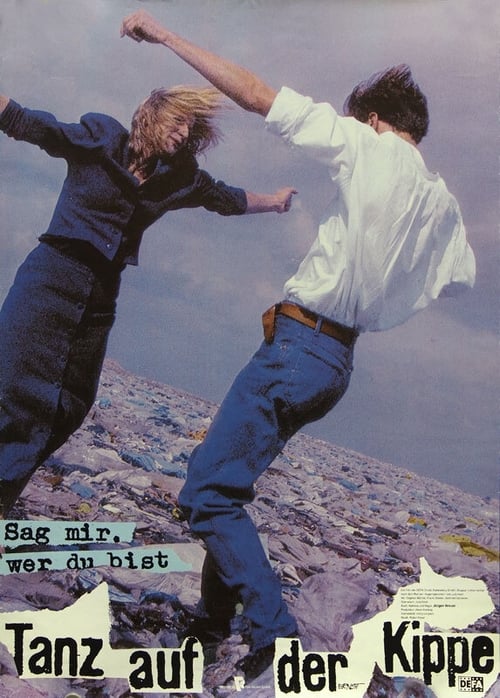
The tragic love story between 17 year-old Gerat Lauter, who is in search of the truth, and his much older teacher Claudia, as it becomes a criminal case with state complicity in the chaotic GDR autumn of 1989.
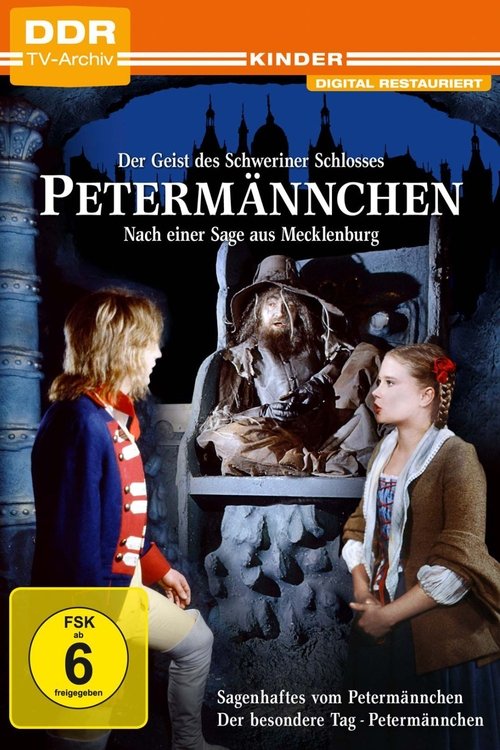
Every hundred years, the Petermännchen has the chance to be released from his enchantment. This time everything seems to go well. The story tells how he manages to free a wrongly suspected servant from prison and expose a member of the court household as a thief. However, the Petermännchen remains condemned to continue his mischief as a household ghost. Based on a legend from Mecklenburg.
It’s the spring of 1945 in a small resort town on the Baltic. Günter is 16 and firmly believes that the Germans will win the war. During the hunt for a forced labourer who is on the run, Günter catches him and watches as he is shot to death. He proudly accepts the award of an Iron Cross before being shipped to the nearby front as part of the last contingent of troops. He is quickly captured by Soviet soldiers, but manages to escape and return home. When the town is occupied by the Red Army, Günter is arrested for the murder of the forced labourer. The film was banned in 1968 before it was completed, and a large portion of the negative was later destroyed.
Early 1921: a man is on his way home. Gleb Chumalov, regimental commander, worker and Hero of the Order of the Red Banner, returns to his home town from the Civil War. The victory over the enemies of the Russian people gives him the conviction that a new, better time will dawn overnight. Gleb looks for his comrades from earlier years, but only finds people who are emaciated by their efforts. The cement works where he used to work has been plundered and abandoned. With great effort, Gleb and his comrades try to get the plant up and running again. The struggle seems to begin anew... It is the time after the victory of the “Great October Socialist Revolution“ and the time of building a new society.
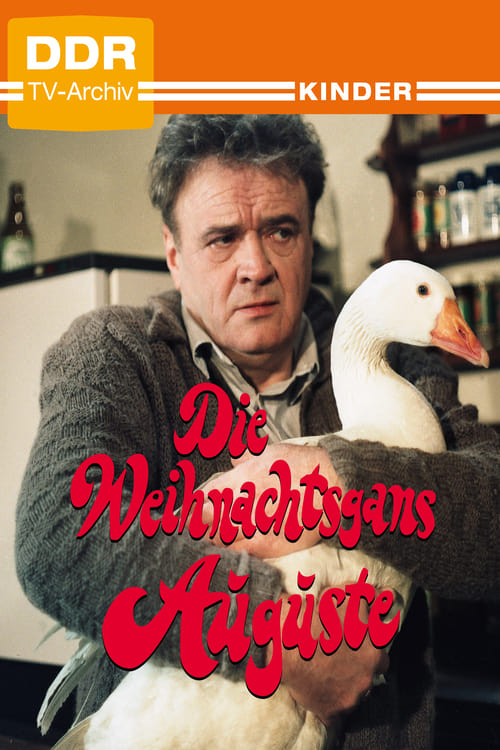
The opera singer Ludwig Löwenhaupt wants a proper festive roast for Christmas, so he buys a goose in advance to feed the whole family. What he doesn't realize, however, is that the children, Elli, Gerda and Peterle, will grow fond of the animal, which is christened Gustje, and will no longer want to eat it. After the "liberation", the "five kilos of meat", which were initially locked up in the cellar, become a pet that the children take to bed with them and communicate with. But shortly before Christmas, father Löwenhaupt still wants to slaughter them. However, as his family protests and his conscience gets in the way, he can't slaughter the goose after all. So Gustje only has to leave a few feathers as proof that she has been plucked, and the opera singer is given another goose that has already been cut up.
Karl Erp is a middle-aged man with two children and a boring marriage. After starting an exciting affair with his intern, Miss Broder, he leaves his loveless marriage and moves in with his lover. Under pressure from Miss Broder’s mother, Karl once again promises marriage. He finds, however, that the excitement that drew him to her in the first place doesn’t carry over into their daily lives.
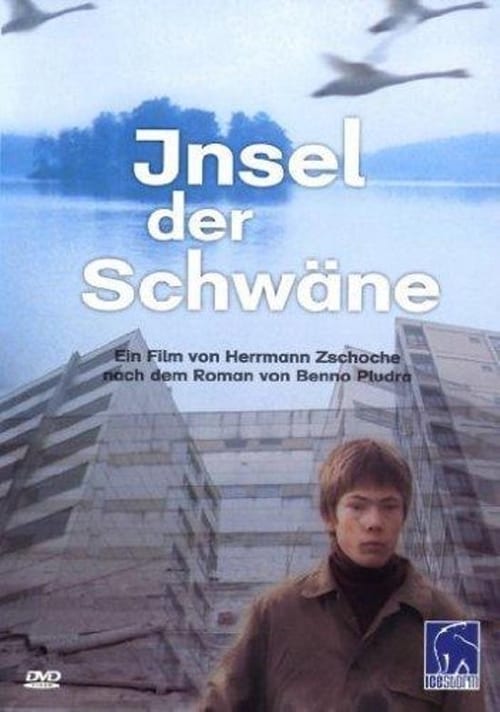
Fourteen-year-old Stefan Kolbe, along with his mother and sister, moves from an idyllic small town to the developing area of Berlin-Marzahn, where his father works as a construction worker. Stefan must find his way in a completely new environment and surrounded by strange people. Stefan gets to know two girls, who attempt to seduce him, and gets himself into trouble with the landlord, who kisses up to societal authority figures. He becomes friends with the anxious Hubert, defends him against the constant humiliation of the older student Windjacke, and encourages him to stand up for himself. It ends tragically in a bitter fight between Stefan and Windjacke.