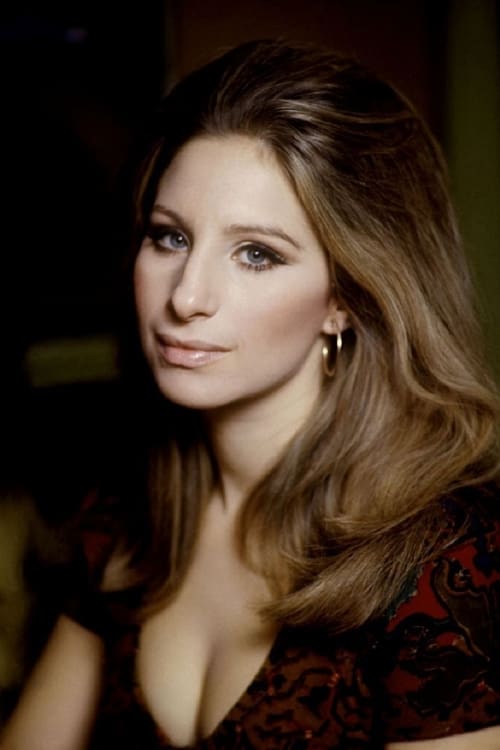
Barbra Streisand
Acting
Biography
Barbara Joan 'Barbra' Streisand (born April 24, 1942) is an American singer, actress and director. With a career spanning over six decades, she has achieved success in multiple fields of entertainment, and is among the few performers awarded an Emmy, Grammy, Oscar, and Tony (EGOT). With sales exceeding 150 million records worldwide, she is one of the best-selling recording artists of all time. According to the Recording Industry Association of America (RIAA), she is the second highest-certified female artist in the United States, with 68.5 million certified album units. Billboard ranked her as the greatest female artist on the Billboard 200 chart and the top Adult Contemporary female artist of all time. Her accolades include two Academy Awards, 10 Grammy Awards including the Grammy Lifetime Achievement Award and the Grammy Legend Award, five Emmy Awards, four Peabody Awards, the Presidential Medal of Freedom, and nine Golden Globes. She began her career by performing in nightclubs and Broadway theaters in the early 1960s. Following her guest appearances on various television shows, she signed to Columbia Records, insisting that she retain full artistic control, and accepting lower pay in exchange, an arrangement that continued throughout her career, and released her debut The Barbra Streisand Album (1963), which won the Grammy Award for Album of the Year. Throughout her recording career, she has topped the US Billboard 200 chart with 11 albums—a record for a woman—including People (1964), The Way We Were (1974), Guilty (1980), and The Broadway Album (1985). She also achieved five number-one singles on the US Billboard Hot 100—"The Way We Were", "Evergreen", "You Don't Bring Me Flowers", "No More Tears (Enough Is Enough)", and "Woman in Love". Following her established recording success in the 1960s, she ventured into film by the end of that decade. She starred in the critically acclaimed Funny Girl (1968), for which she won the Academy Award for Best Actress. Additional fame followed with films including the extravagant musical Hello, Dolly! (1969), the screwball comedy What's Up, Doc? (1972), and the romantic drama The Way We Were (1973). She won a second Academy Award for writing the love theme from A Star Is Born (1976), the first woman to be honored as a composer. With the release of Yentl (1983), she became the first woman to write, produce, direct, and star in a major studio film. The film won an Oscar for Best Score and a Golden Globe for Best Motion Picture Musical. She also received the Golden Globe Award for Best Director, becoming the first (and for 37 years, the only) woman to win that award. She later directed The Prince of Tides (1991) and The Mirror Has Two Faces (1996).
Known For

The Tonight Show Starring Johnny Carson is a talk show hosted by Johnny Carson under The Tonight Show franchise from 1962 to 1992. It originally aired during late-night. For its first ten years, Carson's Tonight Show was based in New York City with occasional trips to Burbank, California; in May 1972, the show moved permanently to Burbank, California. In 2002, The Tonight Show Starring Johnny Carson was ranked #12 on TV Guide's 50 Greatest TV Shows of All Time.
The Tonight Show Starring Johnny Carson

After Jay Leno's second retirement from the program, Jimmy Fallon stepped in as his permanent replacement. After 42 years in Los Angeles the program was brought back to New York.
The Tonight Show Starring Jimmy Fallon

Stephen Colbert brings his signature satire and comedy to The Late Show with Stephen Colbert, the #1 show in late night, where he talks with an eclectic mix of guests about what is new and relevant in the worlds of politics, entertainment, business, music, technology, and more. Featuring bandleader Jon Batiste with his band Stay Human, the Emmy Award-nominated show is broadcast from the historic Ed Sullivan Theater.
The Late Show with Stephen Colbert

The Pritchett-Dunphy-Tucker clan is a wonderfully large and blended family. They give us an honest and often hilarious look into the sometimes warm, sometimes twisted, embrace of the modern family.
Modern Family

A late-night live television sketch comedy and variety show created by Lorne Michaels. The show's comedy sketches, which parody contemporary culture and politics, are performed by a large and varying cast of repertory and newer cast members. Each episode is hosted by a celebrity guest, who usually delivers an opening monologue and performs in sketches with the cast, and features performances by a musical guest.
Saturday Night Live

Each week Bill Maher surrounds himself with a panel of guests which include politicians, actors, comedians, musicians and the like to discuss what's going on in the world.
Real Time with Bill Maher

The biggest stars, the most iconic performances, the most outrageous outfits – it’s Britain’s number one pop show.
Top of the Pops

An annual awards ceremony recognizing excellence in film and television, both domestic and foreign, bestowed by the Hollywood Foreign Press Association.
Golden Globe Awards

The story of the Miami Police Department's vice squad and its efforts to end drug trafficking and prostitution, centered on the unlikely partnership of Sonny Crockett and Ricardo Tubbs - who first meet when Tubbs is undercover in a drug cartel.
Miami Vice

Four panelists must determine guests' occupations - and, in the case of famous guests, while blindfolded, their identity - by asking only "yes" or "no" questions.
What's My Line?

No description available.
Champs-Elysées

No description available.
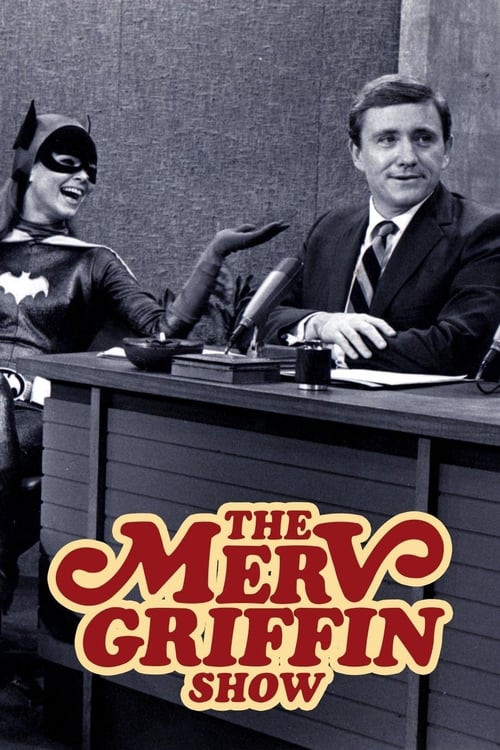
The Merv Griffin Show

The Antoinette Perry Award for Excellence in Theatre, more commonly known as a Tony Award, recognizes achievement in live Broadway theatre. The awards are presented by the American Theatre Wing and The Broadway League at an annual ceremony in New York City. The awards are given for Broadway productions and performances, and an award is given for regional theatre.
Tony Awards

No description available.
Sacrée soirée

Exclusiv: das Starmagazin reports on the latest news and topics from the world of celebrities on a regular weekly basis. It covers the latest headlines relating to the stars as well as rumors and insights into the everyday lives of famous personalities around the globe. In addition to the 15-minute weekday magazine, there is a particularly detailed one-hour weekend edition on Sundays with additional reports and background reports on the celebrities.
Exclusiv - Das Star-Magazin

An annual American awards ceremony honoring cinematic achievements in the film industry. The various category winners are awarded a copy of a statuette, officially the Academy Award of Merit, that is better known by its nickname Oscar.
The Oscars

An American awards show recognizing people in entertainment, voted online by the general public and fans.
People's Choice Awards

The Bob Hope Show hosted by Bob Hope, debuted on April 9, 1950. During the 1952-1953 season, NBC rotated with other variety shows in a Sunday night block known as "The Colgate Comedy Hour" (Sept. 1950 to Dec. 1955). Also known as, "The Chevy Show with Bob Hope." When the first special debuted in October of 1950 it was the most expensive television program made up to that point - costing an astronomical $1,500 a minute to produce. Bob Hope had his own television show and radio show at the same time. For the next three seasons, The Bob Hope Show was broadcast once a month on Tuesday nights, giving Milton Berle a week off. Bob ended his radio show in April, 1956. Bob Hope also had another show by a similar name, "The Bob Hope Show (All Star Revue)". In addition, he performed in "Specials" for many years. It is the longest running variety program in television's history with a record of 45 years of televised entertainment.
The Bob Hope Show

Le Grand Échiquier is a French variety television program created and presented by Jacques Chancel. It aired at 8:30 pm on the first channel of the ORTF from January 12, 1972 to July 12, 1972, then on the second color channel of the ORTF from September 1972 to December 1974, and finally on Antenne 2 from January 1975 to December 21, 1989. The program returned to France 2 on December 20, 2018 and is hosted by Anne-Sophie Lapix.
Le Grand Échiquier
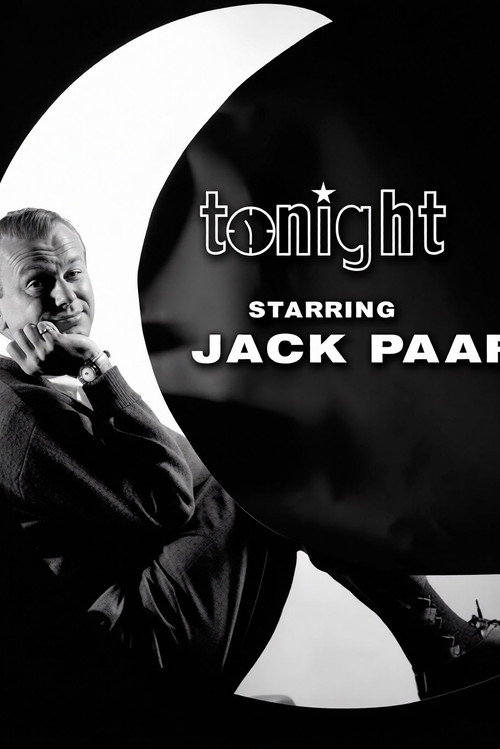
Tonight Starring Jack Paar is an American talk show hosted by Jack Paar under The Tonight Show franchise from 1957 to 1962. It originally aired during late-night. During most of its run it was broadcast from Studio 6B inside the RCA Building. The same studio would also host early episodes of The Tonight Show Starring Johnny Carson, and Late Night with Jimmy Fallon. Its theme song was an instrumental version of "Everything's Coming Up Roses", and the closing theme was "So Until I See You" by Al Lerner.