Directing
Short thriller about an older woman and an escaped convict.
In the face of Berlin's current banking crisis, brought about by the Bankgesellschaft Berlin, a group of demonstrators, largely academics, sought to draw attention to the seriousness of this economic scandal.
No description available.
A Soldier gets harrased by two young man and one old man.
This film has no story - one could be born at any moment. His characters are the composition of the composition that, in the time they live in, is the composition of the time in which they live. The situations are exemplary, they come from the reality of dreams, a movement takes on several dimensions, gives the impression of simultaneity, the passage of time is not perceived.
Scenes from Berlin: Kids playing football, a man tries to light a fire in his stove, a film team sets up a shot in a park, students discuss politics.
Twenty-five years after the death of Holger Meins, filmmaker and former student friend of the deceased, Gerd Conradt takes an in-depth look at the helmsman of the Baader-Meinhof gang. Who was Holger Meins? What led him into the underground? What circumstances resulted in his death, a death which made him the declared symbol of the radical opposition in Germany? What remains of his legacy?
Film essay on Holger Meins, Gerd Conradt's former colleague who died on hunger strike in 1975.
A look into the life of Holger Meins, the German cinematography student who became a revolutionary and a prominent voice in the Vietnam War protest movement. This film is comprised of interviews with his associates.
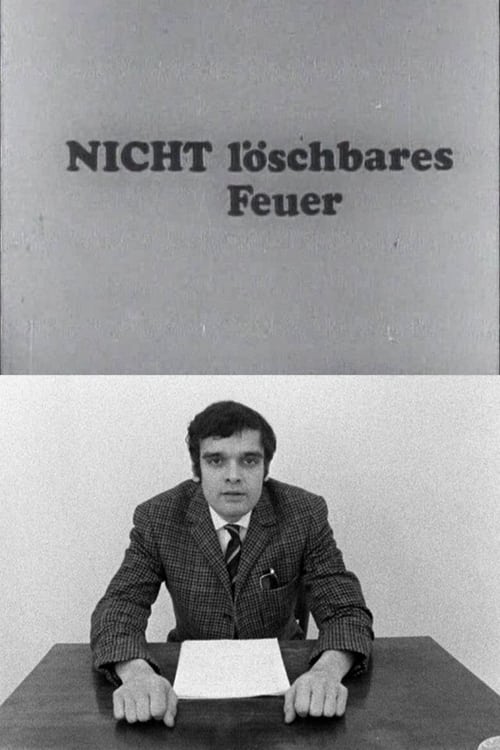
Film announcing the November 4, 1968 demonstration and urging demonstrators to be prepared to fight.
From the 1950s onwards, Erika and Ulrich Gregor brought countless film historical milestones to Berlin and shaped cinema discourse in post-war Germany. A look at the life and work of the couple without whom Arsenal and the Forum wouldn’t exist.
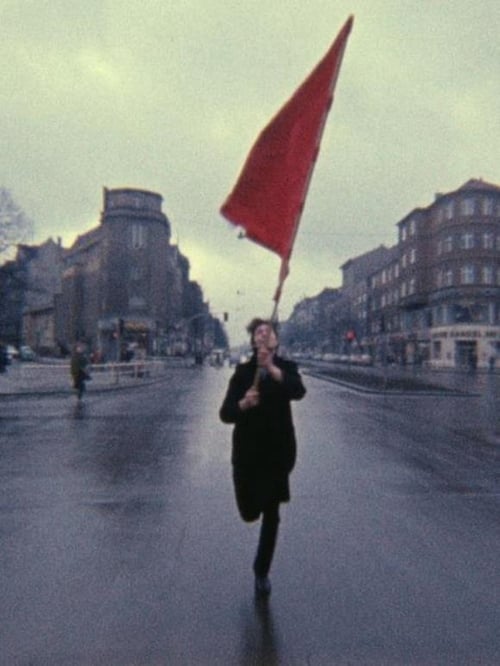
Gerd Conradt films men carrying a red flag in a relay race through Berlin, to hoist it on the balcony of the current Mayor’s seat. A cinematic experiment based on Eadweard Muybridge, Andy Warhol and New American Cinema. A study in men, movements and a symbol. This is the 7th part of this series of film exercises. The other 6 parts were staged by Harun Farocki (Part 1), Carlos Bustamante (Part 2), Helke Sander (Part 3), Holger Meins (Part 4), Wolfgang Petersen (Part 5), Philip Werner Sauber (Part 6).
Documents a one-week meeting of radical leftist activists known as "Knastkamp" (Prison battle), which took place in July 1969 in Ebrach, Bamberg.
An austere treatise on the military-industrial complex that produces napalm.
A concise blast of feminist film making, Sander's first film is a tense yet playful four minute short that dissects a typical urban scene at a bus stop on a busy street in Berlin.
In September 1983, a sword is forged into a ploughshare in Wittenberg. It is the most spectacular action of the peace movement in the GDR. Its initiator was the Wittenberg theologian Friedrich Schorlemmer.
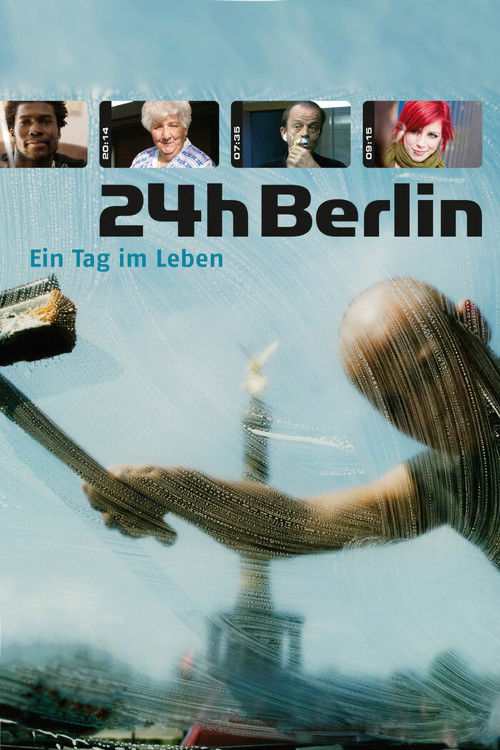
24-hour television documentary about Berlin and its inhabitants, reporting in real time on the everyday lives of more than 50 protagonists from a wide range of professions, social classes, religions and ethnicities.
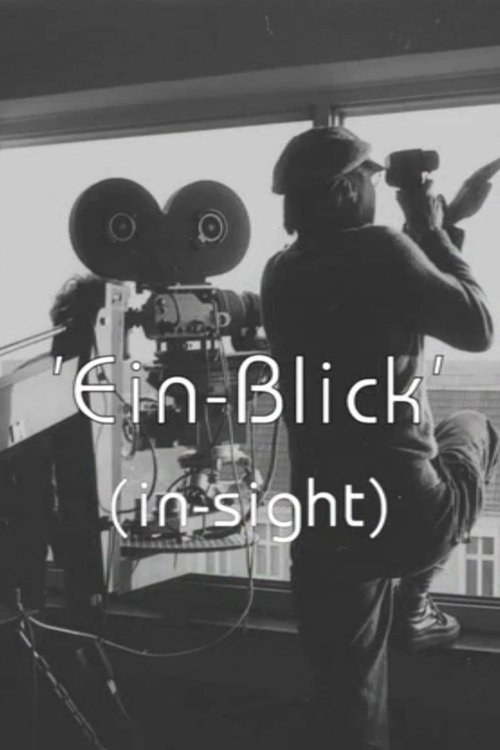
Gerd Conradt's experimental documentary "Ein-Blick" from 1987 captures the rhythms of daily life along Elsenstraße's border in a time-lapse. Over the course of a day, a camera focuses on a house and watchtower within the border zone, snapping one image per second for twelve hours. What unfolds is a surreal ballet of reality, transforming into a slapstick grotesque, all set to the backdrop of evocative piano melodies.
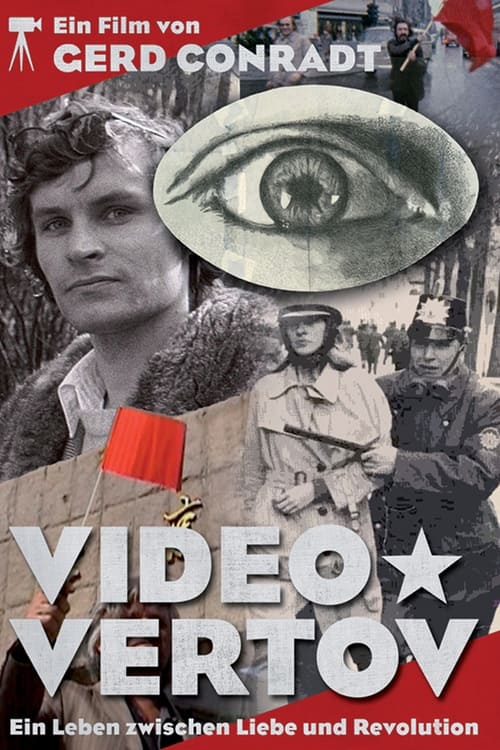
In VIDEO VERTOV, director Gerd Conradt tells his grandson stories from more than forty years of his eventful life - based on film and video documents. The film tells the life story of the video pioneer: love and revolution, red flag and meditation - expeditions to distant countries. For his grandson, Gerd Conradt spreads his film and video treasures on the big screen and leaves behind an "electronic" testament to his 50-year career as a film artist. The first love. Economic Miracle Berlin. Marriage and birth of daughter in Rome. Student at the dffb in Berlin. A life between adaptation and provocation. A life in search of knowledge, always interested in the extreme.
Only the chosen few know this woman who started working as a secretary for the German Film and Television Academy (DFFB) on 13 February, 1966. The path of Helen’s career is paved with famous names – including that of Wolfgang Petersen, Holger Meins (who later became a member of the Red Army Faction) as well as directors Wolfgang Becker, Detlev Buck and Christian Petzold. All have fond memories of forgetting their troubles after having poured their hearts out over a cup of coffee in Helene’s office – for Helene was both friend and advisor to countless film students.