Acting
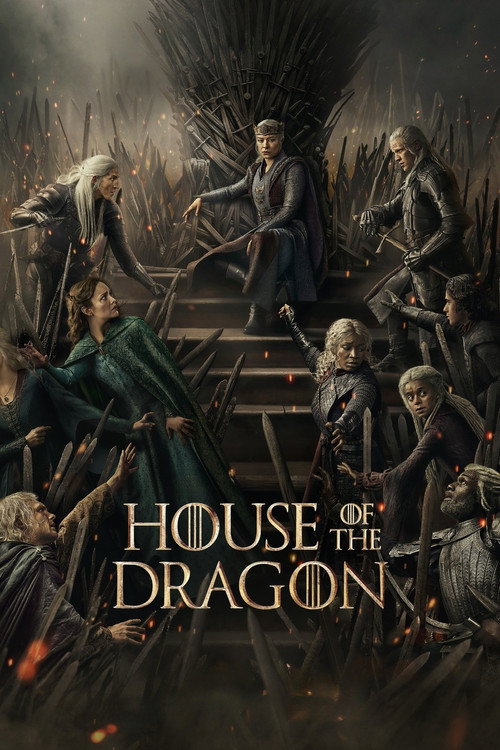
The Targaryen dynasty is at the absolute apex of its power, with more than 15 dragons under their yoke. Most empires crumble from such heights. In the case of the Targaryens, their slow fall begins when King Viserys breaks with a century of tradition by naming his daughter Rhaenyra heir to the Iron Throne. But when Viserys later fathers a son, the court is shocked when Rhaenyra retains her status as his heir, and seeds of division sow friction across the realm.
Anna (Anna Sargent making her acting debut), a middle-aged Korean adoptee with a cognitive disability, cares for her aging parents in a fragile balance of meeting one another’s needs. Alongside her sister Emily (Ali Ahn) and her father (Victor Slezak), they must confront challenging questions about the future, but Anna remains determined to build a life where all of them can thrive.
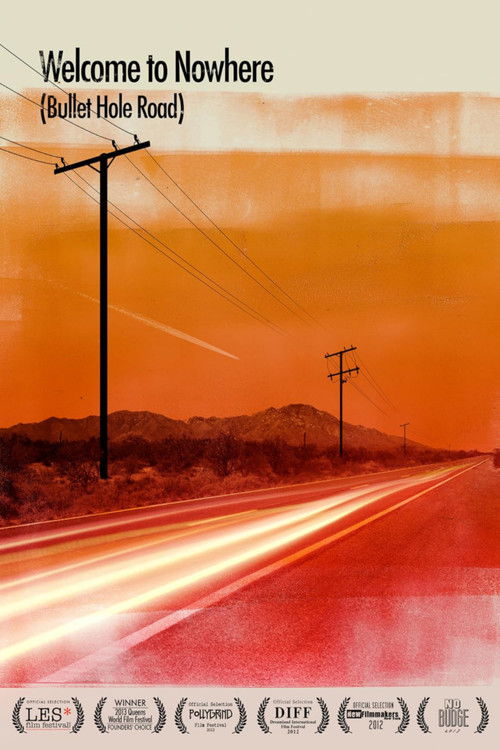
In the illustrious tradition of on-the-road, rambler cinema, Welcome to Nowhere (Bullet Hole Road) is a fresh, experimental take. Heavily reliant on motion graphics animation, director William Cusick charts the surreal encounters of five overlapping strangers in the American desert. The spirit calls to mind David Lynch, and more recently Calvin Lee Reeder and Cory McAbee, but it never feels derivative, it always brings fresh light...Cinema often loses power in clarity, in a strict adherence to narrative logic. The unwieldy and fractured nature of Welcome To Nowhere offers more than a story, here, all that really matters is the weariness of the ramble. It's hazy and sweaty and sketched. "You know how some pills you take are clear, but on the inside are all these little balls of shit that are really the pill?" That's where nowhere is. This used to be the stuff of cult classics.
To mark the conclusion of their "Third World Week" celebration, a cricket team in a small English village invites a black cricket team from South London to a charity game with comical results.
A man's recurring sexual fantasies about a mermaid tear his world apart and reveal disturbing insights into the object of his desire.
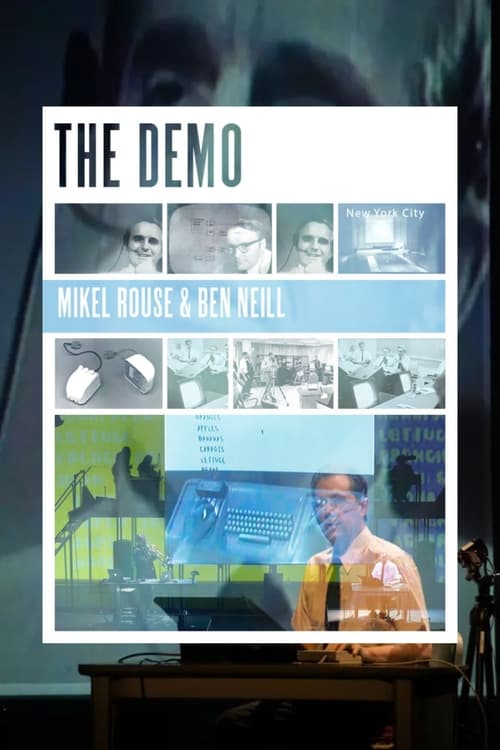
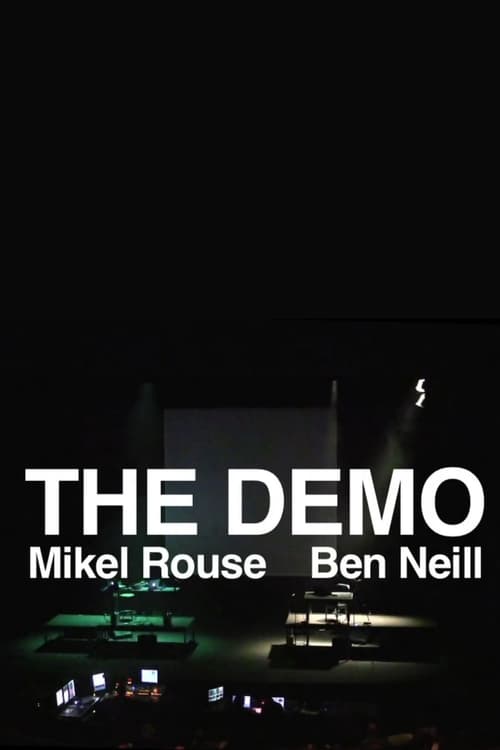
World premiere of "The Demo," a music theater work written by composer/performers Mikel Rouse and Ben Neill based on Douglas Engelbart’s historic 1968 demonstration of early computer technology. Engelbart’s 1968 demo rolled out virtually everything that would define modern computing; videoconferencing, hyperlinks, networked collaboration, digital text editing, and something called a “mouse.” The Demo re-imagines Engelbart’s historic demonstration as a technologically-infused music theater piece, a new form of hybrid performance.
2014 performance of "The Demo," a music theater work written by composer/performers Mikel Rouse and Ben Neill based on Douglas Engelbart’s historic 1968 demonstration of early computer technology. Engelbart’s 1968 demo rolled out virtually everything that would define modern computing; videoconferencing, hyperlinks, networked collaboration, digital text editing, and something called a “mouse.” The Demo re-imagines Engelbart’s historic demonstration as a technologically-infused music theater piece, a new form of hybrid performance.