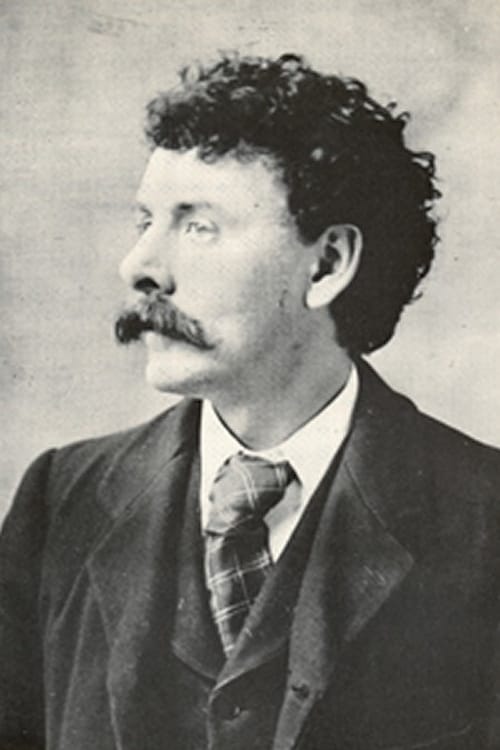
George Albert Smith
Directing
Biography
Along with his better-known French counterpart Georges Méliès, George Albert Smith, usually credited as G.A. Smith, was one of the first filmmakers to explore fictional and fantastic themes, often using surprisingly sophisticated special effects. His background was ideal – an established portrait photographer, he also had a long-standing interest in show business, running a tourist attraction in his native Brighton featuring a fortune teller. His films were among the first to feature such innovations as superimposition (Smith patented a double-exposure system in 1897), close-ups and scene transitions involving wipes and focus pulls. He also patented Kinemacolor – the world's first commercial cinema color system--in 1906, which was extremely successful for a time, despite the special equipment required to project it
Known For
Girl dreams of Dick Whittington, Robinson Crusoe, Forty Thieves, Aladdin, Cinderella, Bluebeard, and Red Riding Hood.
Dorothy's Dream

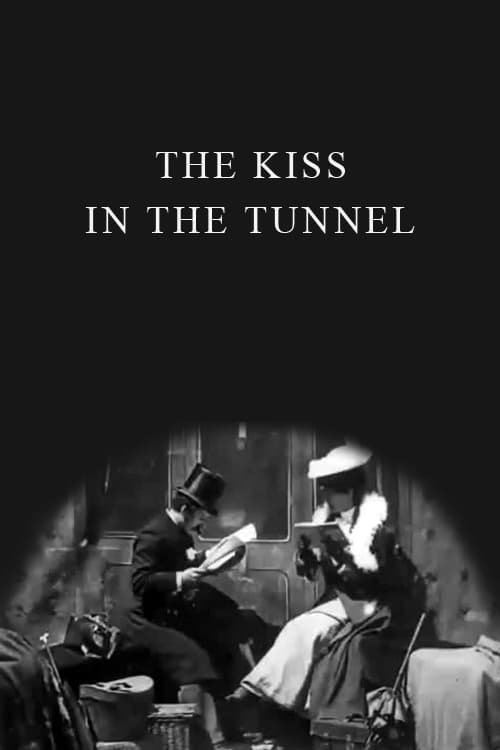
Produced and directed by George Albert Smith, the film shows a couple sharing a brief kiss as their train passes through a tunnel. The Kiss in the Tunnel is said to mark the beginnings of narrative editing. It is in fact, two films in one, hence the 2 min length. Firstly, the G.A. Smith film here for the central cheeky scene in the carriage. The train view footage however is Cecil Hepworth's work, entitled 'View From An Engine Front - Shilla Mill Tunnel', edited into two halves in order to provide a visual narrative of the train entering the tunnel before the kiss and then leaving afterwards. More information about the filming of the phantom train ride can be found searching for the Hepworth film separately.
The Kiss in the Tunnel

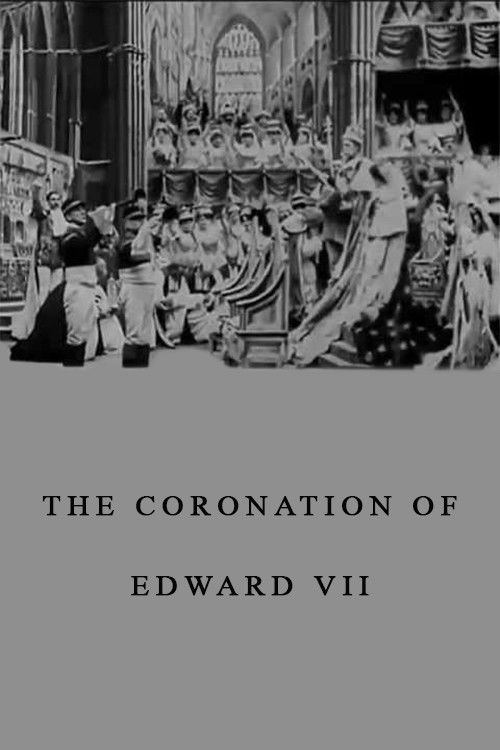
King Edward VII's coronation ceremony.
The Coronation of Edward VII
A man attempts to shave with a blunt razor.
A Quick Shave and Brush Up

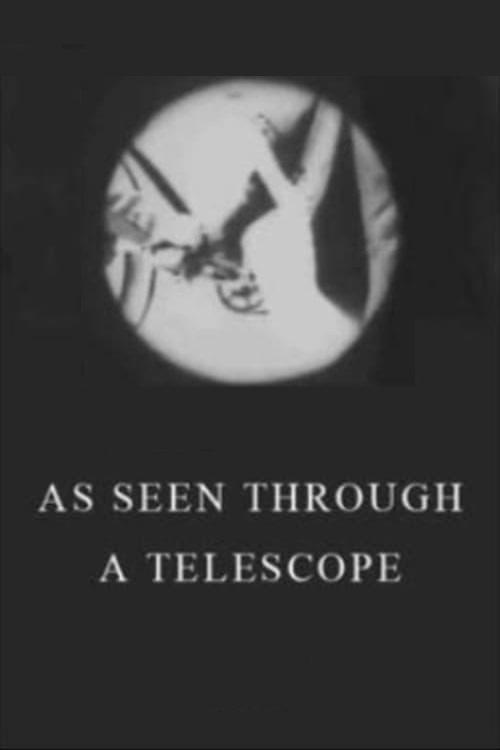
An elderly gentleman in a silk hat sits on a stool in front of a store on the main street of town. He has a telescope that focuses on the ankle of a young woman who is a short distance away. Her husband catches the gent looking. What will the two men do now?
As Seen Through a Telescope
Consisting of a single shot, Spiders on a Web is one of the earliest British examples of close-up natural history photography. Made by one of the pioneers of the British film industry, G.A. Smith, this short film details spiders trapped in an enclosure, and despite the title, does not actually feature a web.
Spiders on a Web

An old man gets progressively livelier - and drunker - as he downs his bottle of beer. Finally, he cocks a snook - and doesn't bother to uncock it as he continues to drink.
Comic Face

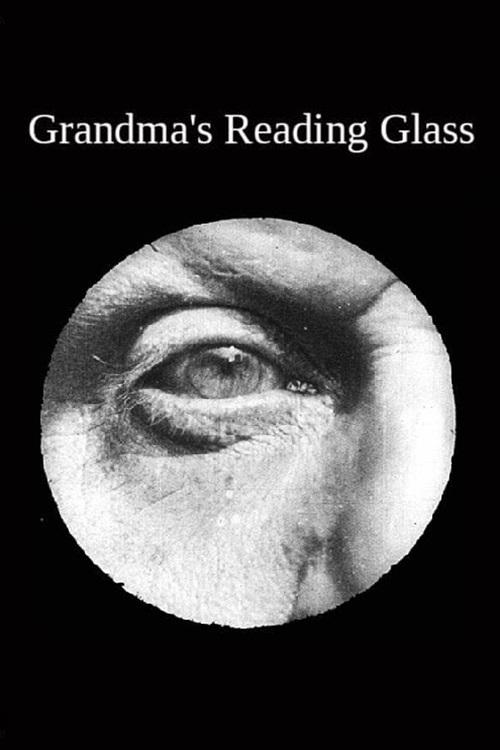
A child borrows his grandmother's magnifying glass to look at a newspaper ad for Bovril, at a watch, and then at a bird. The child shows grandma what he is doing. The child looks next at grandma's eye, then at a kitten.
Grandma's Reading Glass
Man paints 'This house to let' and then the film is reversed.
The Sign Writer
The first successful motion picture in natural color, filmed with Kinemacolor. It is an 8 minute short film directed by George Albert Smith of Brighton, showing people doing everyday activities. It is ranked of high historical importance. Kinemacolor later influenced and replaced by Technicolor, which was used from 1916 to 1952.
A Visit to the Seaside
Woman Draped in Patterned Handkerchiefs is a 1908 British short silent documentary film, directed by George Albert Smith as a showcase his new Kinemacolor system, which features a woman displaying assorted tartan cloths, both draped on her body and waved semaphore-style. The patterned handkerchiefs are, according to Michael Brooke of BFI Screenonline, “presumably the same cloths featured in Tartans of Scottish Clans (1906), this time shown from various angles.”
Woman Draped in Patterned Handkerchiefs
An actuality of the Brock's fireworks factory to celebrate its 40th anniversary organizes. The final shot has two flaming portraits of King Edward VII and Queen Alexandra, originally presented by Brock's at the coronation in 1902. The film is a cornucopia of colors, as it was originally a hand-painted film. The 2011 restoration has tried to revive the brilliance and the impact of colors through digital reproduction. The original film archival print is at the National Cinema Museum.
Grand Display of Brock's Fireworks at the Crystal Palace

It's common knowledge that Scotsmen are macho enough to pull off wearing a skirt - perhaps it's all that caber-tossing. This disarmingly simple film concentrates on the tartan cloths of various clans rather than the men who wore them, and is an early filmic reminder of their huge importance to both Scottish national identity and the thriving tourist industry north of the border. The film's unique selling point was that pioneering filmmaker G. A. Smith showed off the vibrant designs in Kinemacolor, among the earliest colour film processes that didn't involve meticulous hand-painting. And no dangly bits in sight.
Tartans of Scottish Clans

Compilation of 7 short scenes: ‘Sing a Song of Sixpence’; ‘Old Mother Hubbard’; ‘Little Miss Muffet’; ‘Goosey Gander’; ‘Jack and Jill’; ‘Old Woman in a Shoe’; ‘Hey Diddle Diddle’. Only the last one is known to have survived and to be available to watch.
Mother Goose Nursery Rhymes

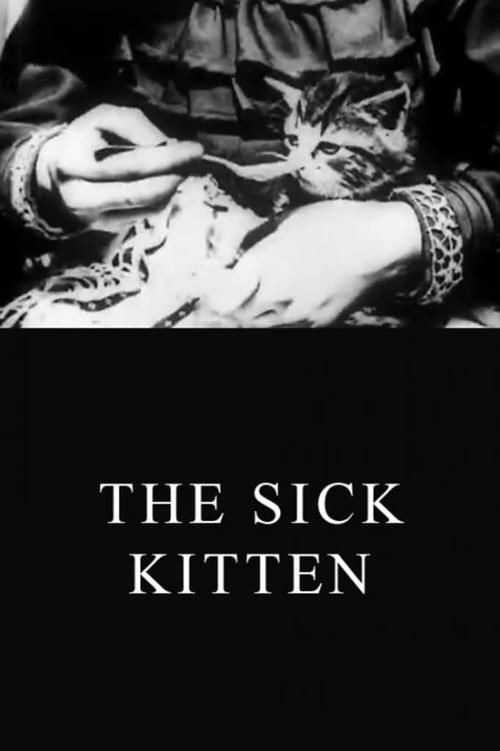
A simple scene of two rather flamboyantly-dressed Edwardian children attempting to feed a spoonful of medicine to a sick kitten. The film is important for being one of the earliest films to cut to a close-up, then back again to the same medium shot as before.
The Sick Kitten

A bracing fight scene
Policeman and Burglar
A woman is shown various wallpaper samples, in a short displaying the Kinemacolour process
Choosing the Wallpaper

A cab is hailed in front of a palatial mansion by a gentleman who wishes a score of people driven to another part of the city. A clown jumps out and a satisfactory agreement is made between the clown and the gentleman, and a score or so of persons are hustled in one at a time until the clown succeeds in piling in the whole lot except Bridget, who is carrying a child. The persistent clown, in order to assist the nurse, who tips the scale at 400 pounds, takes the child from her. After caressing it he tosses it on top of the cab. He then picks up a board and uses it with good effect on the extremities of the fat woman, until she is forced into the cab, which drives away with its load of humanity.
The Inexhaustible Cab
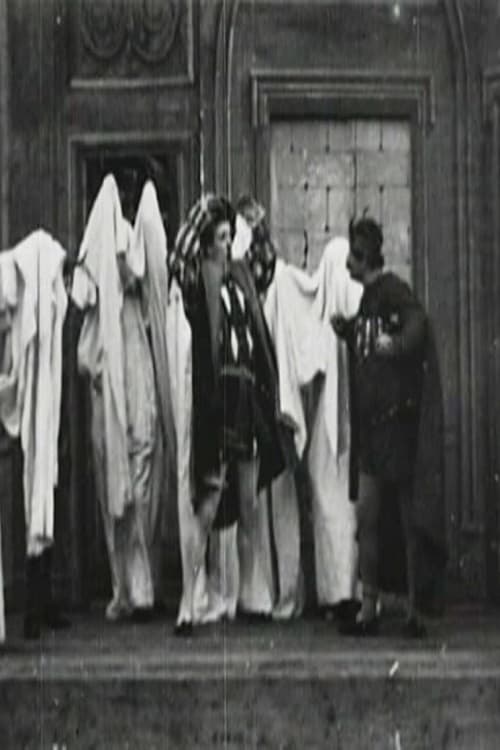
The ghost of a man's twin shows him a vision of how he was killed in a duel.
The Corsican Brothers
Photographer tries to take a picture of a ghost, but it won't keep still and then vanishes.