FEEL IT.STREAM
Evald Schorm

Evald Schorm

Directing

Biography

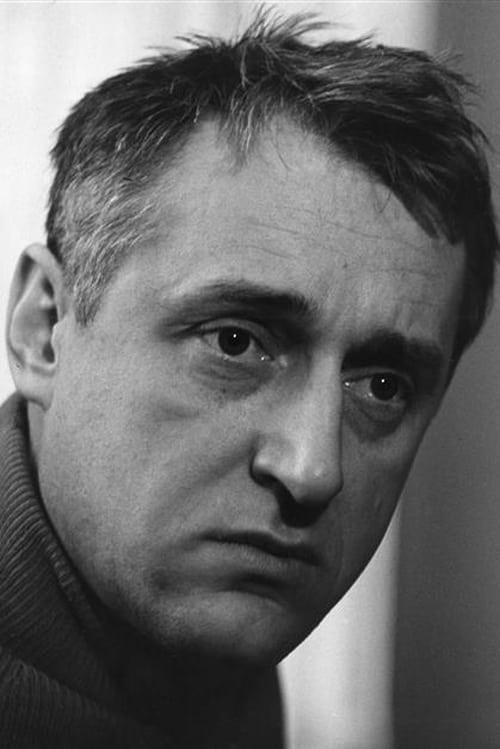
At one time, Czech director Evald Schorm was known as "the conscience of the Czech New Wave" and was known for using film to promote notions of compassion, equality, and individualism in the face of social structure. Originally an opera singer, the Prague native studied filmmaking at the prestigious F.A.M.U. between 1957 and 1962. He went on to create documentaries with the Documentary Film Studio in Prague. Schorm also worked as a film actor. Following the Soviet invasion of Czechoslovakia, the Communist government repressed his films. Still, Schorm remained in Czechoslovakia and directed opera, stage plays, and sometimes television shows. He returned to feature filmmaking in the late '80s, but died of heart failure in 1988.

Known For

No image
N/A

Television series Golden Sixties examines new insights into Czech and Slovak cinema of the 1960s and the role of the Czechoslovak New Wave. Each episode focuses on a different filmmaker.

Golden Sixties

2009
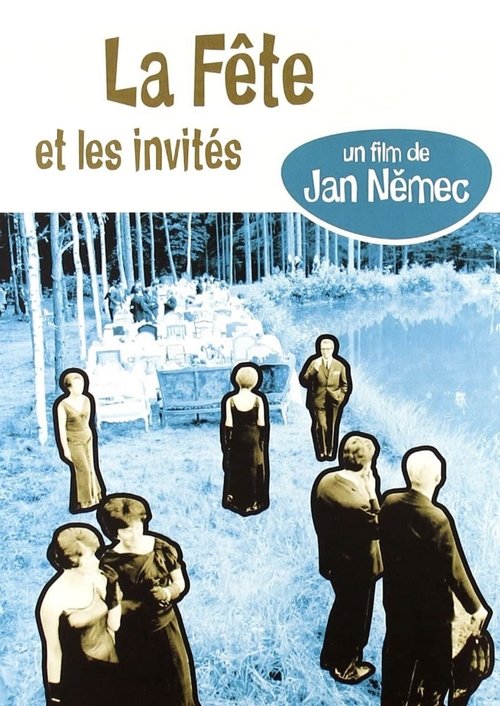
The Party and the Guests
6.9

A group of the bourgeois head for a prominent figure's birthday party. As they venture through the woods and have a picnic, they're suddenly surrounded by some suspicious strangers.

The Party and the Guests

1966
Pearls of the Deep
5.9

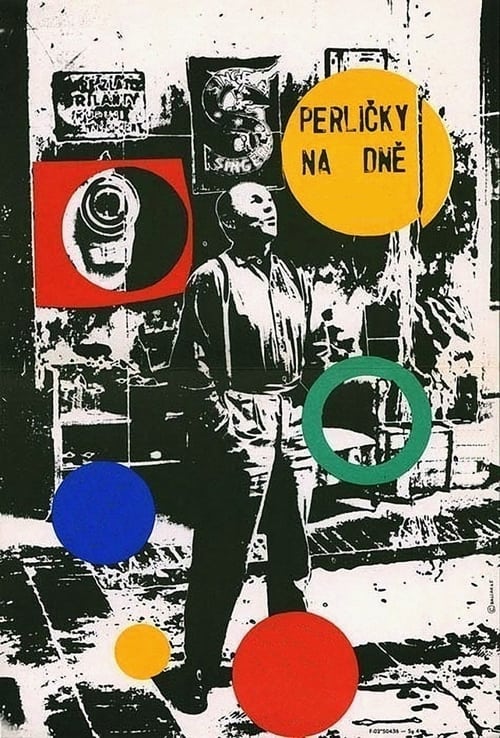
A quintet of vignettes based on short stories by Bohumil Hrabal: an eventful trip to the motorcycle races results in drunkenness, long-winded discussions, and death; two elderly men create false biographies; insurance agents visit an eccentric painter/goat farmer and his mother; guests at a wedding reception remain oblivious to outlying misery; and a working-class boy romances a Roma girl.

Pearls of the Deep

1966
The Joke
6.5

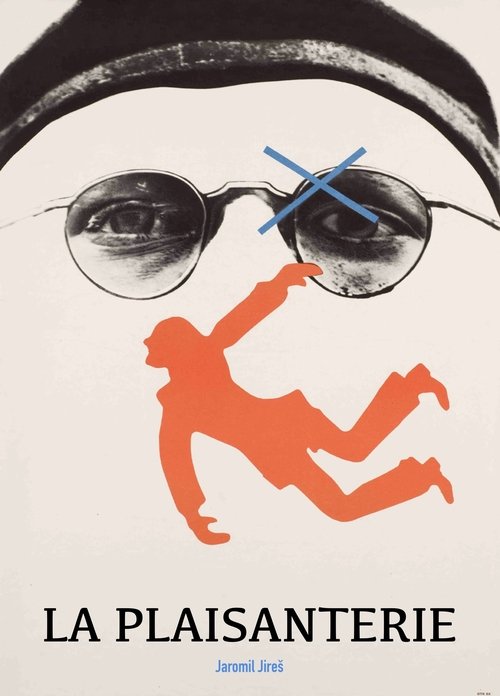
In the 1950s, Ludvik Jahn was expelled from the Communist Party and the University by his fellow students, because of a politically incorrect note he sent to his girlfriend. Fifteen years later, he tries to get his revenge by seducing Helena, the wife of one of his accusers.

The Joke

1969
Dogs and People
10.0

The first short story "Naked in the Thorns" tells the story of a man whose clothes were taken away by a dog during his bath in the river. In the second short story "Games of Love", a retired professor paints a biblical scene of Susan and the old man. In the last short story, "Fidelity", the dog Argos perishes while defending his beloved master.

Dogs and People

1971
The Seventh Day, the Eighth Night
4.8

An allegory set in an archetypal Czech village, it tells the story of what happens when a series of mysterious events take place, including the disappearance of the station master. While everything has a rational explanation, collective paranoia takes over and everyone's worst instincts are unleashed. Interrogations, disenfranchisement, and the search for scapegoats ultimately lead to murder. The movie was completed in 1969, but it was banned and not released till 1990, Evald Schorm who died in 1988 never saw it completed.

The Seventh Day, the Eighth Night

1990
The Return of the Prodigal Son
5.9

Engineer Jan Sebek (Jan Kacer) is undergoing treatment in a mental home after his unsuccessful attempt to commit suicide. His therapist, via discussions both with the patient and with people who know him, tries to find out what made the young and seemingly satisfied man decide to end his own life. Jan's pretty wife Jana (Jana Brejchová) claims not to know about anything but she is conducting an affair with a family friend, almost publicly and with the blessing of her parents.

The Return of the Prodigal Son

1967
Spadla s měsíce
10.0

A story about the uproar caused by the arrival of a new, young and, by local standards, too energetic zookeeper in a village JZD. Her name is Maya Četná and one evening she arrives like a tornado on a motorbike in the semi-truck of a typical Czech village. The chairman, leaving the next day for a long-term training, has no time to get to know the girl properly, so it's no wonder he can't help wondering when she returns.

Spadla s měsíce

1961
Prague Nights
5.8

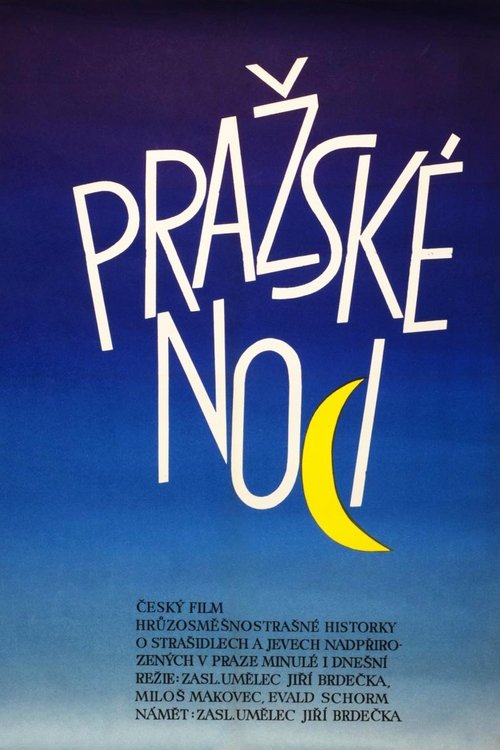
A stuffy middle-aged foreigner, a businessman named Fabricius, lonely and looking for a night's diversion, finds it in the form of a mysterious blonde. In an abandoned cemetery, she tells him three tales involving black magic and erotic obsession. In "The Last Golem," a young rabbi struggles to fashion a massive, silent giant out of living clay — until he's distracted by a mute servant girl. In the second episode, "Bread Slippers," an 18th-century countess indulges her passion for sweet cakes, adulterous affairs, and secret kisses with pretty maids until a mysterious visitor whisks her away to an abandoned mansion, where Fate has a different kind of dance in store for her. And in the final story, "Poisoned Poisoner," a ravishing murderess in the Middle Ages dispatches lecherous merchants to the tune of upbeat '60s Czech pop songs.

Prague Nights

1969
Escape Home
8.0

A twelve-year-old is looking for his biological parents after discovering the fact that he was adopted.

Escape Home

1980
No image
4.0

The popular folk singer Jaro Zárubecký, a former waiter, follows the motto "A man is not what he is, but what people think of him", and that is how he is raising his son. He lives only for him. Even though he feels successful, he still tries to equal those "above" him out of a certain feeling of inferiority and wants to bring his son to that level. He learns that Paul is in a group of boys who, for lack of other interests and out of recession, let off gas so that whoever shuts him up will become a "coward". Zárubecký is willing to protect his son even at the cost of losing his job and his life partner...

Lítost

1970
The Karamazov Brothers
7.0

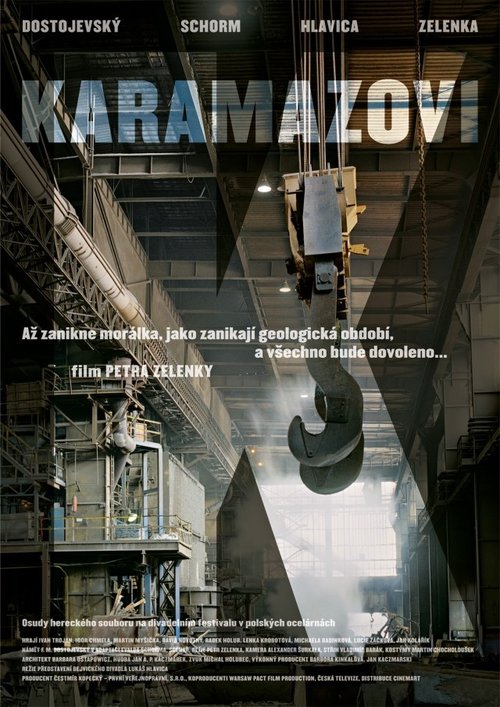
Dostoevsky’s latter-day opus about the siblings and their father is among the masterpieces of world literature. It asks profound questions about ethics and religion. Is there a God? Does the devil exist? Is everything allowed because we live in a world without morality? And if so, does patricide even constitute a crime? One of the most interesting adaptations of the material is The Karamazovs by Czech director Petr Zelenka. We witness a group of thesps from Prague on a trip to Krakow in Poland to stage the novel as a play in a derelict steelworks as part of the Closer to Life Festival. The project, however, is born under the bad sign, apparently doomed from the start. When they arrive, the roof is about to cave in, so that the actors are told to wear safety helmets. Their sole consistent audience is a laborer (Andrzej Mastalerz) who rather follows each dress rehearsal than watching over his seven-year-old son who has suffered a tragic accident in the factory.

The Karamazov Brothers

2008
Courage for Every Day
6.2

A passionate communist worker is discouraged by the changing political climate and the failure of his peers to live up to his ideals.

Courage for Every Day

1965
No image
N/A

In 1976, the Czech New Wave philosopher and director Evald Schorm came to the Na zábradlí Theatre. He stayed there for twelve years, until his death. He raised a generation of actors who were aware of their own personalities. In The Brothers Karamazov, the then compact acting ensemble performed in full force on stage. Schorm created from ban to ban (Hamlet, Macbeth, The Brothers Karamazov, Marathon) and in front of Zábradlí, there were queues for tickets in double rows all the way to the Vltava embankment: when the subscription began, people slept outside from midnight until ten in the morning, when the box office opened, in sleeping bags, they brought fishing chairs to the theater. A ticket to Zábradlí was more valuable than Tuzex vouchers...

Bratři Karamazovi

1981
No image
N/A

Documentary about the film academy in Prague and the Czech Film in 1965.

An Occasion to Speak

1966
Hotel for Strangers
6.2

A gifted poet checks into a Gothic hotel in hopes of meeting the woman with whom he has long been enamored. He is surrounded by a variety of offbeat characters like the hefty homosexual cook, shadowy clerks, snooty waiters, and valets prone to violence. He finally meets the woman of his dreams only to lose her and ultimately meet with tragedy.

Hotel for Strangers

1967
The End of a Priest
6.2

A verger, who likes to dress as a priest, is invited, by one of the villagers, to be the pastor at a vacant church. The atheist teacher resents the pastor, and tries to embarrass him in various ways, including being caught with the local girl, Majka.

The End of a Priest

1969
No image
5.8

A leading director of the Czech film renaissance provides a philosophical meditation on life and death, set amidst complex hospital apparatus and the sadness, hope, or resignation of the patients. Existentialist rather than optimist, the approach is one of humanistic atheism, accepting death as part of life. Interviews with doctors and nurses explore their outlook; all speak of death as a fact, without either sentimentality or religiosity. The studied objectivity of the film only imperfectly hides an intense emotionality.

Reflection

1966
Five Girls Around the Neck
6.8

Five Girls Around the Neck, in 1967, set out to explore that critical age of adolescence when a person's character is formed for good or evil. Schorm examined a girl's problems of being giving too much. She tries to buy the goodwill of her less fortunate friends; her intentions are pure, but in the difficulty of communicating she learns envy and deceit, and must decide if she will submit to double dealing or steel her life against self-deception and mediocrity. In addition to the relationship between the girl and her friends, Schorm introduces a teenage romance and the broader relationship between the girl's parents - neatly tied together with segments of Weber's opera "Der Freischütz". He reveals himself as a skilled psychological director with a wide range of knowledge about people.

Five Girls Around the Neck

1967
No image
N/A

A veristic investigation into life at a boarding school for girls on the Czech-Polish border. The austere black and white camera captures everyday moments, the work in the factory and the students' leisure activities. The inner world of the female protagonists is presented in a stylized commentary read by Iva Janžurová. For political reasons, the film was shown in cinemas under the name of cameraman Přemysl Prokop.

Křepelky

1969