FEEL IT.STREAM
Jesse Owens

Jesse Owens

Acting

Biography

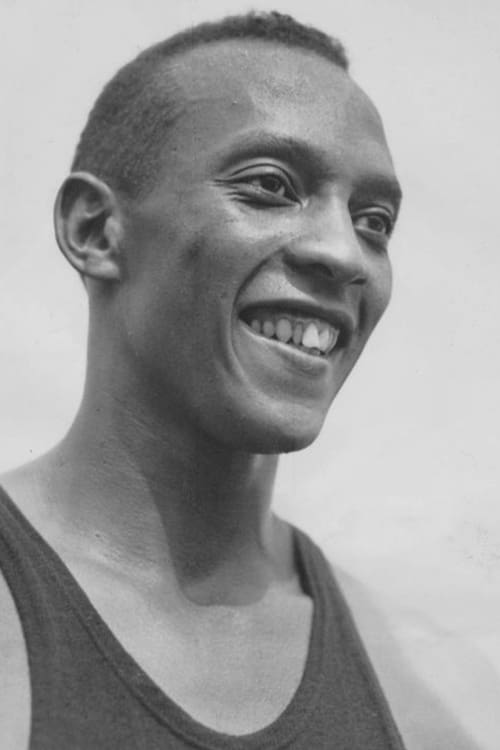
James Cleveland "Jesse" Owens (September 12, 1913 – March 31, 1980) was an American track and field athlete who won four gold medals at the 1936 Olympic Games. Owens specialized in the sprints and the long jump and was recognized in his lifetime as "perhaps the greatest and most famous athlete in track and field history". He set three world records and tied another, all in less than an hour, at the 1935 Big Ten track meet in Ann Arbor, Michigan—a feat that has never been equaled and has been called "the greatest 45 minutes ever in sport". He achieved international fame at the 1936 Summer Olympics in Berlin, Germany, by winning four gold medals: 100 meters, long jump, 200 meters, and 4 × 100-meter relay. He was the most successful athlete at the Games and, as a black American man, was credited with "single-handedly crushing Hitler's myth of Aryan supremacy". The Jesse Owens Award is USA Track and Field's highest accolade for the year's best track and field athlete. Owens was ranked by ESPN as the sixth greatest North American athlete of the 20th century and the highest-ranked in his sport. In 1999, he was on the six-man short-list for the BBC's Sports Personality of the Century. Jesse Owens, originally known as J.C., was the youngest of ten children (three girls and seven boys) born to Henry Cleveland Owens (a sharecropper) and Mary Emma Fitzgerald in Oakville, Alabama, on September 12, 1913. He was the grandson of a slave. At the age of nine, he and his family moved to Cleveland, Ohio for better opportunities as part of the Great Migration (1910–40) when 1.6 million African Americans left the segregated and rural South for the urban and industrial North. When his new teacher asked his name to enter in her roll book, he said "J.C.", but because of his strong Southern accent, she thought he said "Jesse". The name stuck, and he was known as Jesse Owens for the rest of his life. As a youth, Owens took different menial jobs in his spare time: he delivered groceries, loaded freight cars, and worked in a shoe repair shop while his father and older brother worked at a steel mill. During this period, Owens realized that he had a passion for running. Throughout his life, Owens attributed the success of his athletic career to the encouragement of Charles Riley, his junior high school track coach at Fairmount Junior High School. Since Owens worked after school, Riley allowed him to practice before school instead. Owens and Minnie Ruth Solomon (1915–2001) met at Fairmont Junior High School in Cleveland when he was 15 and she was 13. They dated steadily through high school. Ruth gave birth to their first daughter Gloria in 1932. They married on July 5, 1935, and had two more daughters together: Marlene, born in 1937, and Beverly, born in 1940. They remained married until his death in 1980. Owens first came to national attention when he was a student of East Technical High School in Cleveland; he equaled the world record of 9.4 seconds in the 100 yards (91 m) dash and long-jumped 24 feet 9+1⁄2 inches (7.56 m) at the 1933 National High School Championship in Chicago. ... Source: Article "Jesse Owens" from Wikipedia in English, licensed under CC-BY-SA 3.0.
Known For

What's My Line?
7.0

Four panelists must determine guests' occupations - and, in the case of famous guests, while blindfolded, their identity - by asking only "yes" or "no" questions.

What's My Line?

1950
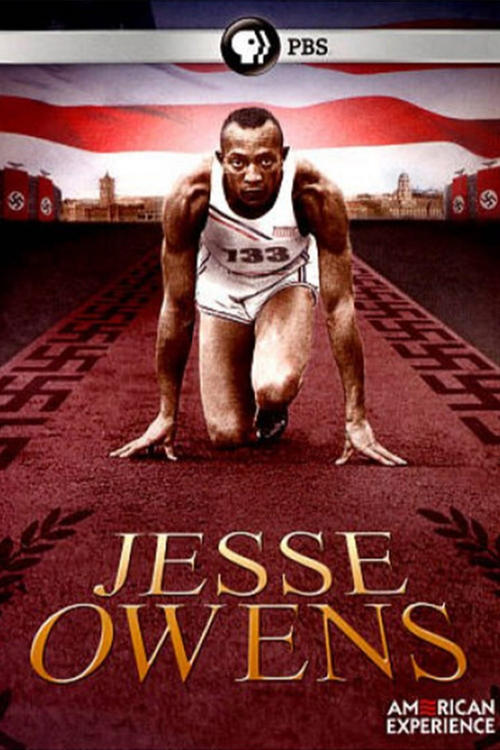
American Experience
6.6

TV's most-watched history series brings to life the compelling stories from our past that inform our understanding of the world today.

American Experience

1988
The Ed Sullivan Show
6.8

The Ed Sullivan Show is an American TV variety show that originally ran on CBS from Sunday June 20, 1948 to Sunday June 6, 1971, and was hosted by New York entertainment columnist Ed Sullivan. It was replaced in September 1971 by the CBS Sunday Night Movie, which ran only one season and was eventually replaced by other shows. In 2002, The Ed Sullivan Show was ranked #15 on TV Guide's 50 Greatest TV Shows of All Time.

The Ed Sullivan Show

1948
Explained
7.5

This documentary series, made in partnership with Vox, explain some of the world's current trends, from politics, to science to pop culture.

Explained

2018
The U.S. and the Holocaust
8.3

Americans consider themselves a 'nation of immigrants', but as the catastrophe of the Holocaust unfolds in Europe, the U.S. prove unwilling to open its doors to more than a fraction of the hundreds of thousands of desperate refuge seekers. Through riveting firsthand testimony of witnesses and survivors who as children endured persecution, violence and flight as their families tried to escape Hitler, this three-part documentary series delves deeply into the tragic human consequences of public indifference, bureaucratic red tape and restrictive quota laws in America. Did the nation fail to live up to its ideals? This is a history to be reckoned with.

The U.S. and the Holocaust

2022
Brother, Can You Spare a Dime?
6.3

Period music, film clips and newsreel footage combined into a visual exploration of the American entertainment industry during the Great Depression.

Brother, Can You Spare a Dime?

1975
Ace of Aces
7.1

In this action comedy the French boxer Jo Cavalier is charmed on the train to Berlin for the Olympics in Hitler's Germany by the little boy Simon Rosenblum who asks his autograph; when it turns out his adorable young fan is a Jewish orphan in danger of persecution, he risks his one shot at Olympic glory to save Simon and his family, helped only by a German officer-gentleman who became his friend in World War I, by an adventurous escape to Switzerland, Nazi troops on their heals and braving impossible odds in roller coaster-style.

Ace of Aces

1982
Olympia Part One: Festival of the Nations
6.9

Starting with a long and lyrical overture, evoking the origins of the Olympic Games in ancient Greece, Riefenstahl covers twenty-one athletic events in the first half of this two-part love letter to the human body and spirit, culminating with the marathon, where Jesse Owens became the first track and field athlete to win four gold medals in a single Olympics.

Olympia Part One: Festival of the Nations

1938
The Olympic Series: Golden Moments 1920 - 2002
N/A

A celebration of the finest moments from the world's largest and most historic sporting event, released to coincide with the return of the Olympic Games to their Greek roots as Athens became the venue of the 28th modern Olympics in August 2004. Contrasting bygone heroes with modern-day sports stars, the film offers an insight into the event's past, present and future, and features footage of all its most defining moments, from black US athlete Jesse Owens' defiance of both the odds and the prevailing political regime when he won four gold medals in Berlin in 1936 under the watchful eye of Adolf Hitler, to Carl Lewis's repeat of Owens' incredible quadruple win in Los Angeles in 1984.

The Olympic Series: Golden Moments 1920 - 2002

2004
No image
10.0

The story of black and mixed race people in Nazi Germany who were sterilised, experimented upon, tortured and exterminated in the Nazi concentration camps. It also explores the history of German racism and examines the treatment of Black prisoners-of-war. The film uses interviews with survivors and their families as well as archival material to document the Black German Holocaust experience.

Hitler's Forgotten Victims

1997
Mom and Dad
5.2

A teenage girl from a traditional family goes on a date with a pilot and ends up having sex with him. After the pilot dies in a plane crash, the girl discovers she is pregnant with his child.

Mom and Dad

1945
Genocide
7.5

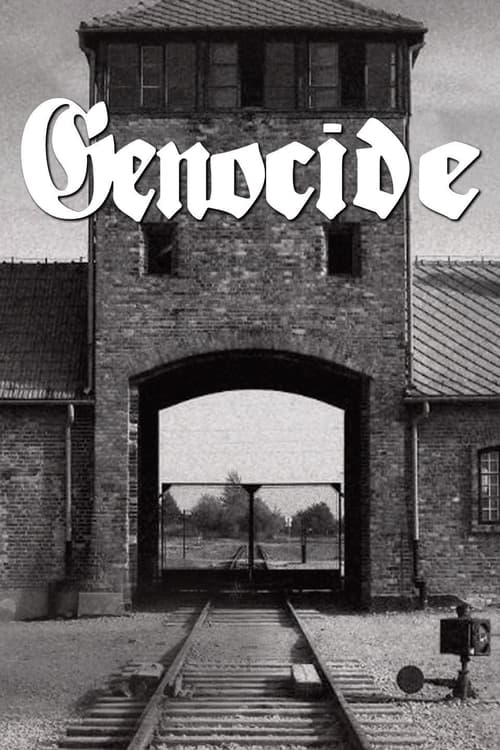
The mass murder of Jewish people by the Nazi regime is chronicled, with a warning that anti-Semitism is on the rise and the events of the Holocaust could happen again. The history of European Jewish culture and events before and during the Holocaust are seen in newsreels, photographs, and animated segments. The words of the victims of the era are read, and footage from the liberation os a concentration camp is shown.

Genocide

1982
Jesse Owens et Luz Long : le temps d'une étreinte
8.0

No description available.

Jesse Owens et Luz Long : le temps d'une étreinte

2015
No image
6.5

Every year, top athletes set new world records. But are today’s record holders really better than those of the past? Or do modern athletes get their edge from their high tech gear? Top sports scientist Steve Haake sets off on a journey to investigate. He travels to Canada, the USA, and Germany to meet five champions. Each athlete demonstrates how their modern training and equipment enhances their performance, and then Steve challenges them to compete against a legendary athlete using old-school vintage gear. Each experimental matchup has a surprising result.

Der wahre Champion: Siegen mit Hightech

2016
Swastika
6.8

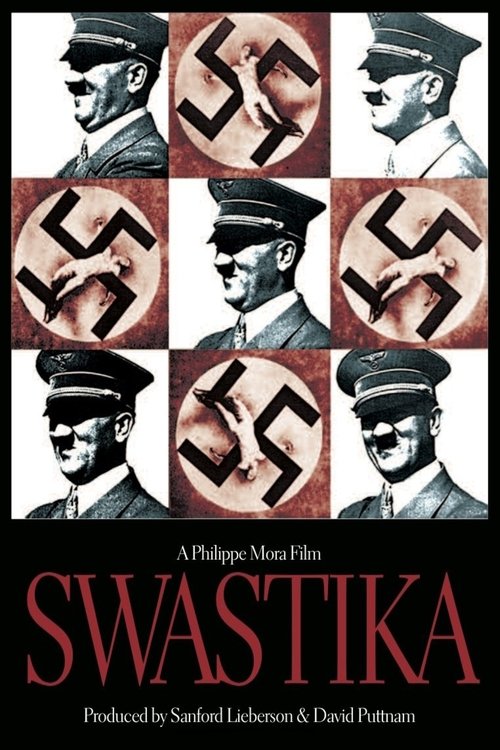
Comprised of footage shot during the Nazi regime, including propaganda, newsreels, broadcasts and even some of Eva Braun's colorized personal home movies, we explore the way in which the Third Reich infiltrated the lives of the German population, from 1933 to 1945.

Swastika

1974
Fists of Freedom: The Story of the '68 Summer Games
7.8

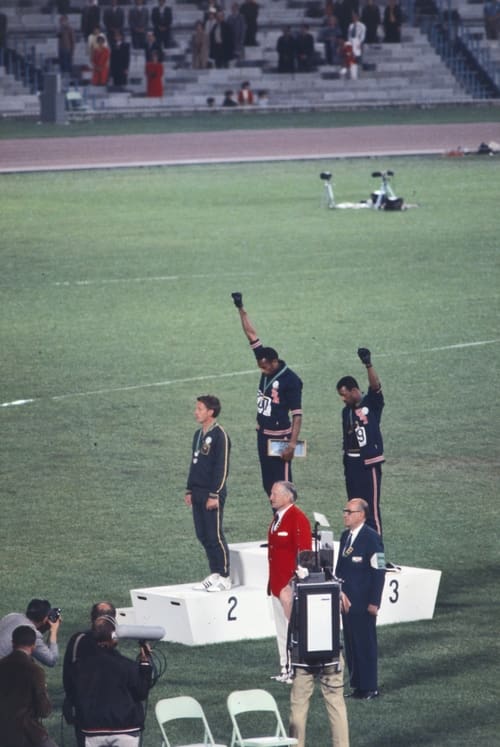
Fists of Freedom examines one of the 20th century’s most memorable moments — the dramatic “Black Power” demonstration of American sprinters Tommie Smith and John Carlos on the victory stand at the 1968 Summer games in Mexico City. Using rare footage, archival photos and interviews with key figures from the era, revisit a pivotal event in American history.

Fists of Freedom: The Story of the '68 Summer Games

1999
The Century Is Fifty
7.0

As the title of this French documentary indicates, Ce Siecle a 50 Ans examines the 20th Century at its halfway point. Utilizing the archives of several European film reserves, director Denise Tua offers a fascinating mosaic of the people and events that shaped the years 1900 to 1950. Complementing the vintage film clips are three dramatized sketches, delineating the romantic customs of three different points in time. These sketches are inadequately performed, and can easily be ignored. Ce Siecle a 50 Ans both preserved and provided celluloid material for scores of future documentaries.

The Century Is Fifty

1950
The Grand Olympics
6.0

Events and athletes that characterized the 1960 Summer Olympics in Rome. From the absolute protagonist Wilma Rudolph, called the black gazelle, to Livio Berruti, the first white to win the 200 meters, to the deeds of Ethiopian marathon runner Abebe Bikila, who won the marathon racing barefoot.

The Grand Olympics

1961
Black Power Salute
N/A

A film about one of the most iconic images of the 20th century, the moment when the radical spirit of the 1960s upstaged the greatest sporting event in the world. Two men made a courageous gesture that reverberated around the world, and changed their lives forever. This film is about Tommie Smith and John Carlos' protest at the 1968 Olympics.

Black Power Salute

2008
Easy to Get
9.0

U.S. Army training film about avoiding venereal disease, intended primarily for Black servicemen.

Easy to Get

1947