Jean-Claude Bernardet
Acting
Biography
Jean-Claude Bernardet OMC (Charleroi, August 2, 1936 – São Paulo, July 12, 2025) was a Belgian film theorist, film critic, filmmaker, actor, screenwriter and writer, naturalized Brazilian.

Known For

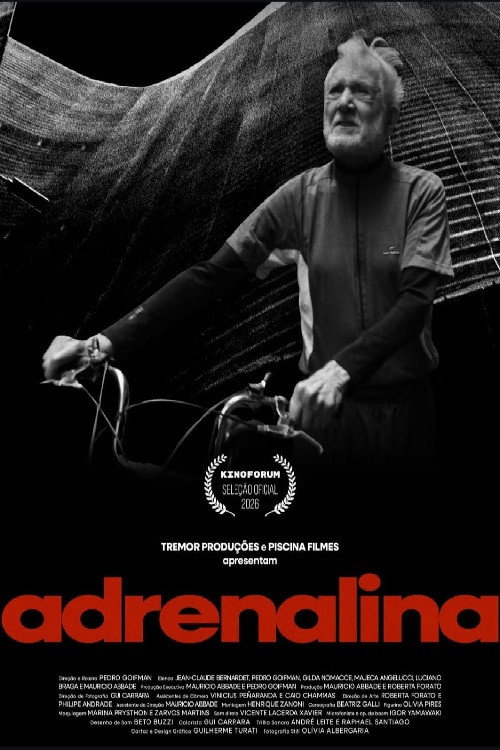
A film director faces a complex situation in the production of his new film: Laerte, the protagonist of the story, begins to renegade her former characters, the Pirates of the Tietê. Lost in this situation and determined to be faithful to his whims after seeing the approach of death, the director decides to tell his drama mixing his persona with the story, creating a chaotic labyrinth between fiction and real life.
The City of Pirates

This documentary, produced by the Mazzaropi Institute, shows movie scenes, testimonials of researchers, historians, intellectuals, and popular artists. As a bonus, it shows parts of Mazzaropi's last appearance on TV, on Hebe Camargo Show.
O Cineasta das Platéias

Juvenal is a metro driver from Belo Horizonte. Margô, a station controller. Both live in a state of complete solitude – each in a particular way. Juvenal refuses to be alone and strolls through the streets of this metropolis taking comfort by mingling with the anonimous crowd. Margo seeks relief in the virtual world of social networks where she struggles to establish long lasting relations with real persons.
The Man of the Crowd

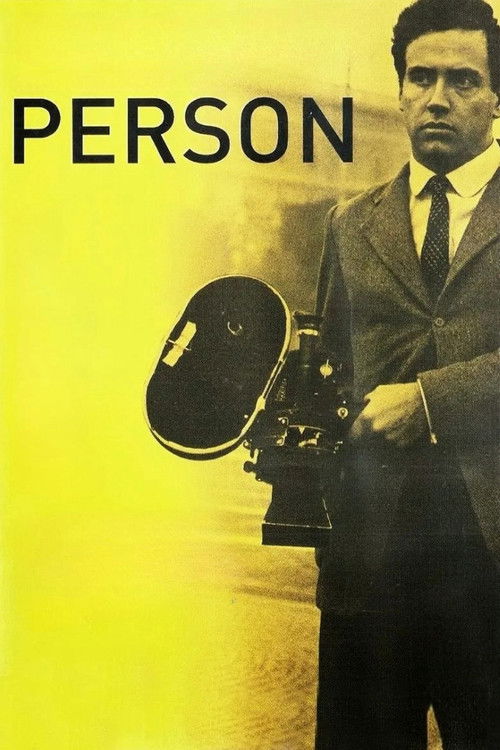
Person is a documentary about the life and work of filmmaker Luiz Sérgio Person. The documentary brings the reconstruction of the history of the São Paulo filmmaker through the personal journey of his daughter, Marina. Through interviews with friends, family, and people who worked with Person, she seeks to discover more than dates and biographical data.
Person

Letter Beyond the Walls reconstructs the trajectory of HIV and AIDS with a focus on Brazil, through interviews with doctors, activists, patients and other actors, in addition to extensive archival material. From the initial panic to awareness campaigns, passing through the stigma imposed on people living with HIV, the documentary shows how society faced this epidemic in its deadliest phase over more than two decades. With this historical approach as its base, the film looks at the way HIV is viewed in today's society, revealing a picture of persistent misinformation and prejudice, which especially affects Brazil’s most historically vulnerable populations.
Letter Beyond the Walls

In the miserable Northeastern Brazil, a ruthless land Baron wants to throw a poor farming community out of their land.
The Night of the Scarecrow

Nosferatu arrives in a town escaping from Van Helsing. He brings not only his curse, but ghosts from his past. In this escape, he dives into a macabre dance searching for an actress and faces the horror of eternity and the pain of an endless existence.
Nosferatu

32 renowned Brazilian screenwriters of the contemporary Brazilian cinema talk about their creative processes. From the concept of script to their agreements and disagreements, going through their experiences with filmmakers, their reaction to the finished film, critic, and even controversies on auteurism.
The Screenwriter

In 1965, a year after the military coup in Brazil, an oasis of freedom opened in the country's capital. The Brasília Film Festival: a landmark of cultural and political resistance. Its story is that of Brazilian cinema itself.
Candango: Memoirs from a Festival

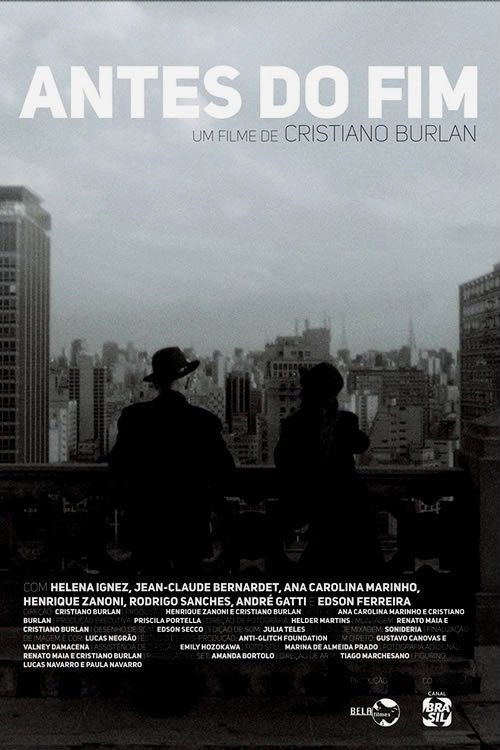
Jean feels trapped in the logic of longevity that the pharmaceutical industry imposes on him and decides to plan a conscious suicide. He invites Helena to commit suicide to two. She, on the other hand, hesitates, knows that she will live well even if she needs to live alone, but she helps him in his intentions. The silence between them does not reveal distance, but intimacy. These are years of shared affection. Together, they will prepare all the details for the funeral. He dances death while she continues rehearsing life. In the process, the two realize that before the end, there is still a lifetime.
Antes do Fim
Documentary wich tries to capture the iconoclastic spirit of the 1922 Week of Modern Art, to tell about the beginning of cinema made in the city of São Paulo.
Paulicéia Fantástica

Symbolic film from the Underground Movement of Brazilian Cinema (Cinema Marginal) about a woman, three men and some apes. In the director's own words: “a fable where realism and logic have no place, and in which sex is a translation of all the tortures, circumstances and violent actions.”
Gamal, O Delírio do Sexo

The story of the University of Brasília, since it was only a project in Darcy Ribeiro's head until the fateful events in August 1968 when its campus was invaded by the police, during the military dictatorship, thus putting an end to its independence.
1968 - Without Losing Tenderness

In 1967, de Andrade was invited by the Italian company Olivetti to produce a documentary on the new Brazilian capital city of Brasília. Constructed during the latter half of the 1950s and founded in 1960, the city was part of an effort to populate Brazil’s vast interior region and was to be the embodiment of democratic urban planning, free from the class divisions and inequalities that characterize so many metropolises. Unsurprisingly, Brasília, Contradições de uma Cidade Nova (Brasília, Contradictions of a New City, 1968) revealed Brasília to be utopic only for the wealthy, replicating the same social problems present in every Brazilian city. (Senses of Cinema)
Brasilia, Contradictions of a New City

São Paulo, 1984. Agostinho, an old and tired Physics professor, is married to Januária, a retired school principal. In his classes, he begins to feel attracted to one of his students, Márcia, an HIV positive teenager. Quickly, the attraction of the two turns into an impossible love.
Uma Noite Não é Nada

No description available.
Nunc et Semper

After assaulting a Hollywood film crew, a group of residents of a community in Rio de Janeiro decided to produce a film that would express the reality of Brazil - with the theme of Inconfidência Mineira.
Sweet Thieves

Bil is an elderly man who works as an office boy for a firm in São Paulo, as he does not pay for a bus ticket and takes a preferential line at the bank. One day he gets involved in an unusual bank robbery.
Super Oldboy

The making of an unfinished film about phobias. Says the director. Behind the screens, he discusses at length (with e.g. Coffin Joe) about the aesthetic boundaries of the project: volunteers under controlled circumstances become immersed in their phobias in order to film the fear on their faces.
FilmeFobia

Former political activist receives compensation from the Brazilian government for the disappearance of her husband, victim of the repression triggered by the Brazilian military dictatorship. With the money, she can buy her an apartment and free herself from this dreadful condition she lived for decades. At the moment of moving to the new home, however, a visit arises that forces her to review her entire life.