Risë Stevens
Acting
Biography
Risë Stevens was an American operatic mezzo-soprano. Beginning in 1938, she sang for the Metropolitan Opera in New York City for more than two decades during the 1940s and 1950s. She was most noted for her portrayals of the central character in Carmen by Georges Bizet. Born Risë Gus Steenberg, was of Norwegian descent. She studied at New York's Juilliard School for three years, and with Anna Eugenie Schoen-René. She went to Vienna, where she was trained by Marie Gutheil-Schoder and Herbert Graf. She made her début as Mignon in Prague in 1936 and stayed there until 1938, also singing in guest appearances at the Vienna State Opera. She was engaged as a member of the Vienna State Opera ensemble at the Teatro Colón and was invited to the Glyndebourne Festival in 1939. In 1938, she made her début with the Metropolitan Opera on tour in Philadelphia. Three weeks later , she sang at the Metropolitan Opera in New York City. The film industry in Hollywood produced several films for her, including The Chocolate Soldie, and Going My Way with Bing Crosby. Other roles included Fricka in Wagner's The Ring of the Nibelung, Marfa in Mussorgsky's Khovanshchina, Giulietta in The Tales of Hoffmann, and Prince Orlovsky in Die Fledermaus. Her acclaimed RCA Victor recording of the complete opera Carmen, conducted by Fritz Reiner and co-starring Jan Peerce, Robert Merrill and Licia Albanese remains a best-seller and has been continuously available since its original 1951 release. She also appeared in Paris, London, and the London Palladium. Her farewell performance at the Metropolitan was as Carmen, in 1961. She toured the U.S. annually for several decades singing recitals. In 1962, she recorded the voice of Glinda for Journey Back to Oz, but the production ran out of money and was halted for more than four years. It was only after the Filmation studio had made profits on their numerous television series that they were able to finish the project (which was copyrighted 1971, released in 1972 in the United Kingdom and in 1974 in the United States). After her retirement from the opera stage, Stevens served as General Manager of the Metropolitan Opera National Company until 1966 and later coached the new generation of singers at the Met. Stevens made occasional television appearances too, including a guest-starring role on NBC's The Martha Raye Show. Stevens was awarded the University of Pennsylvania Glee Club Award of Merit, which was established in 1964, and is sought "to bring a declaration of appreciation to an individual each year that has made a significant contribution to the world of music and helped to create a climate in which our talents may find valid expression". She was a Kennedy Center Honoree in 1990. She has been the subject of two biographies, Kyle Crichton Subway to the Met and John Pennino 1999 Rise Stevens: A Life in Music.
Known For
The Tonight Show Starring Johnny Carson is a talk show hosted by Johnny Carson under The Tonight Show franchise from 1962 to 1992. It originally aired during late-night. For its first ten years, Carson's Tonight Show was based in New York City with occasional trips to Burbank, California; in May 1972, the show moved permanently to Burbank, California. In 2002, The Tonight Show Starring Johnny Carson was ranked #12 on TV Guide's 50 Greatest TV Shows of All Time.
The Tonight Show Starring Johnny Carson
Four panelists must determine guests' occupations - and, in the case of famous guests, while blindfolded, their identity - by asking only "yes" or "no" questions.
What's My Line?
No description available.
The Merv Griffin Show

The Ed Sullivan Show is an American TV variety show that originally ran on CBS from Sunday June 20, 1948 to Sunday June 6, 1971, and was hosted by New York entertainment columnist Ed Sullivan. It was replaced in September 1971 by the CBS Sunday Night Movie, which ran only one season and was eventually replaced by other shows. In 2002, The Ed Sullivan Show was ranked #15 on TV Guide's 50 Greatest TV Shows of All Time.
The Ed Sullivan Show
The Colgate Comedy Hour is an American comedy-musical variety series that aired live on the NBC network from 1950 to 1955. The show starred many notable comedians and entertainers of the era, including Eddie Cantor, Dean Martin and Jerry Lewis, Fred Allen, Donald O'Connor, Bud Abbott and Lou Costello, Bob Hope, Jimmy Durante, Ray Bolger, Gordon MacRae, Ben Blue, Robert Paige, Tony Curtis, Burt Lancaster, Broadway dancer Wayne Lamb and Spike Jones and His City Slickers.
The Colgate Comedy Hour
No description available.
The Steve Allen Show
“The Bell Telephone Hour” was a musical variety show that aired on “NBC” TV from 12 January 1959 to 14 June 1968 that showcased the best in Broadway, Classical, Concert, Jazz and Popular music each week. The series had its’ own house band appropriately named the “Bell Telephone Orchestra”. The show also had its’ own theme song being the “Bell Waltz” composed by “Donald Voorhees” who was also the show's Orchestra conductor. Some of the greatest violinists of the 1960’s performed on this show that aired in the old “Black & White” format. Some of these great violinists included “Erica Mornin”, “Isaac Stern", "Michael Rabin", "Ruggiero Ricci", "Yehudi Menuhin" and "Zino Francesacatti". From time to time some of the great singers and bandleaders of the 1960’s would perform on the show as well. Some of these were “Bing Crosby”, “Gordon MacRae”, “John Gary”, “Leslie Uggams”, “Mary Martin”, “Nelson Eddy”, “Patti Page” and “Roy Rogers”. The TV show followed on the heels of its’ predecessor with the same name on “NBC” radio that aired from 29 April 1940 to 1958 on Monday nights at 8 PM. The name of the show was derived from its’ Major sponsor “Bell Telephone Laboratories”. The TV version began airing on Friday nights at 8:30 PM once a month. It later was given it’s same time slot now airing every other week alternating with another show on the other weeks such as News shows and specials. The show time slot changed quite often over the years. In September 1960 it aired at 9 PM and in September 1961 it moved to 9:30 PM. In October 1963 it moved to Tuesday nights at 10 PM, September 1965 it moved to Sunday night at 6:30 PM and in September 1967 it made its' final move back to Friday night at 10 PM.
The Bell Telephone Hour
The Kennedy Center Honors is an annual honor given to those in the performing arts for their lifetime of contributions to American culture.
The Kennedy Center Honors
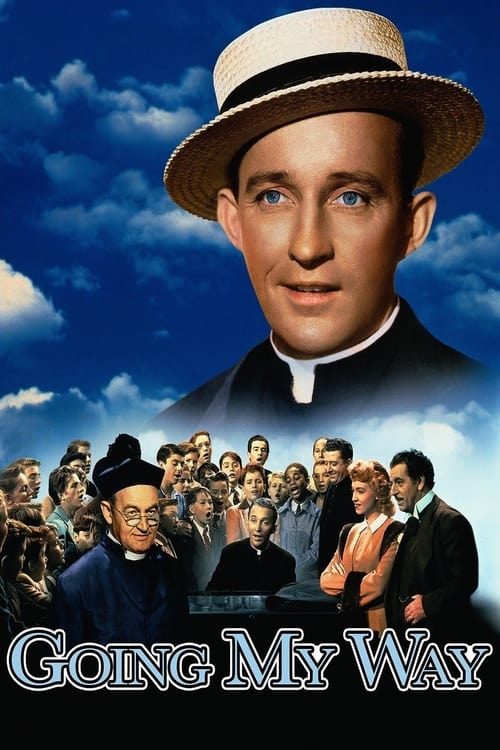
Youthful Father Chuck O'Malley led a colorful life of sports, song, and romance before joining the Roman Catholic clergy. After being appointed to a run-down New York parish, O'Malley's worldly knowledge helps him connect with a gang of boys looking for direction, eventually winning over the aging, conventional Parish priest.
Going My Way
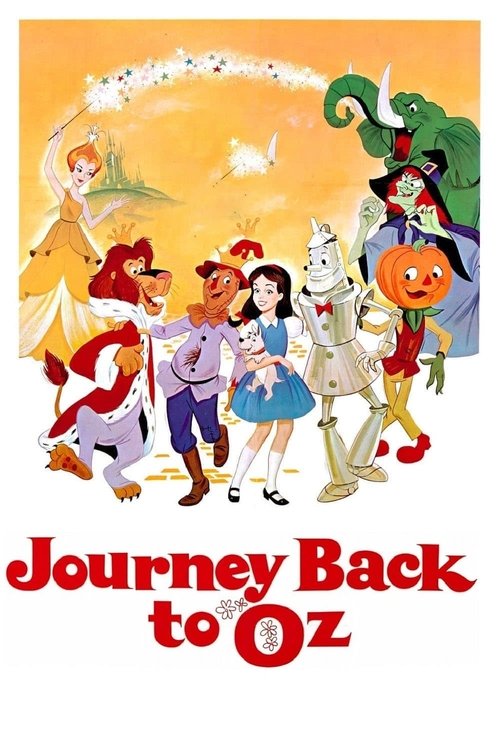
Dorothy and Toto return to Oz to find the Scarecrow ruling the Emerald City. Unfortunately for the new overseer, the wicked Mombi is conspiring to take over the city. With the help of the Tin Woodsman, the Cowardly Lion and other familiar friends, Dorothy sets out to save Oz.
Journey Back to Oz
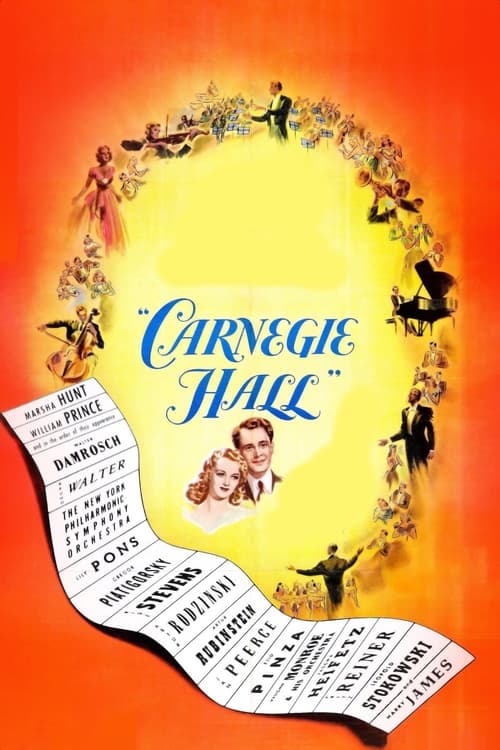
A young Irishwoman comes to the United States to live and work with her mother as a cleaning lady at Carnegie Hall. She becomes attached to the place as the people she meets there gradually shape her life. The film also includes a variety of performances from some of the foremost musical artists of the times: conductors Bruno Walter & Leopold Stokowski, solists Arthur Rubinstein & Jascha Haifetz, singers Lily Pons & Jan Peerce and bandleader Vaughn Monroe among many others.
Carnegie Hall
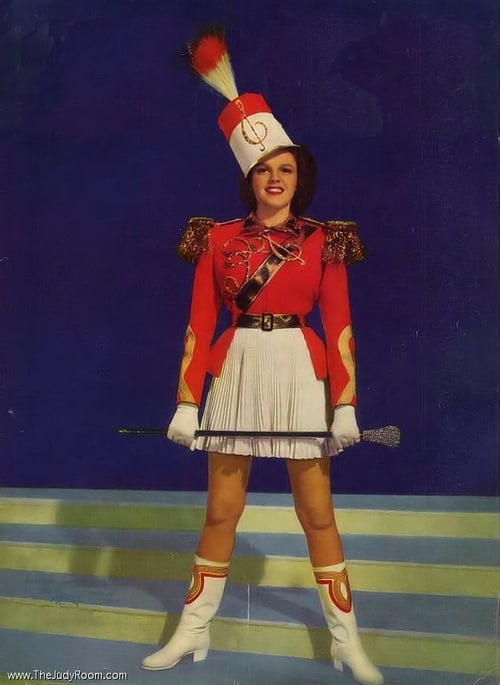
A short history of movie music is presented, from silent films accompanied by a single piano, to the elaborate song scores for musicals (with scenes from MGM's musicals) and background music for dramas. Conductor/composer
We Must Have Music
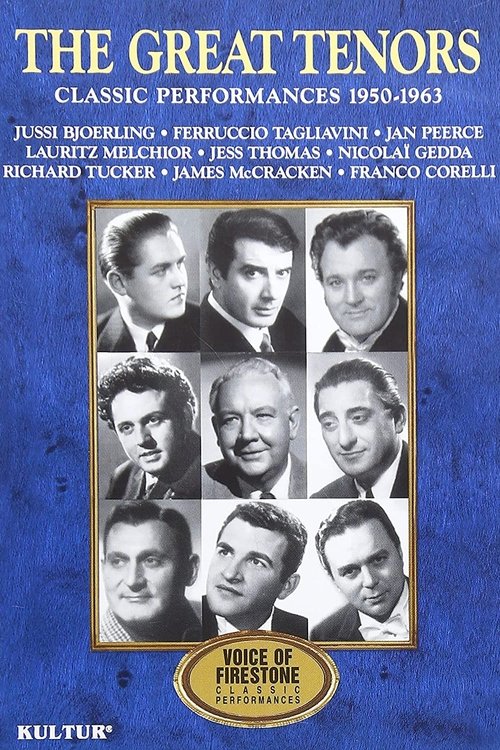
The Voice of Firestone is a long-running radio and television program of classical music. The show featured leading singers in selections from opera and operetta. Originally titled The Firestone Hour, it was first broadcast on the NBC Radio network on December 3, 1928 and was later also shown on television starting in 1949. The program was last broadcast in 1963.
The Voice of Firestone
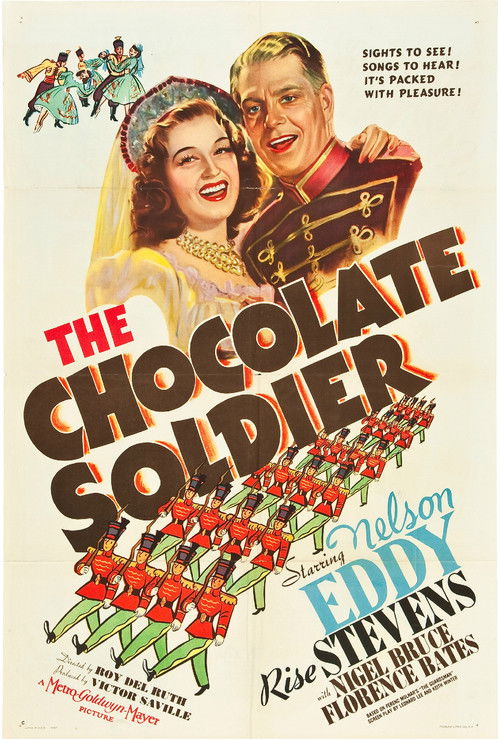
Maria and Karl Lang are the singing duo of Vienna. Maria is very flirtatious and Karl very jealous. Karl decides to masquerade as a Russian guardsman and attempts to make Maria flirt with him - to test her loyalty to him - as the Russian, Karl makes a vigorous attempt to seduce Maria. For a moment she accepts then rejects. Karl is left in turmoil...
The Chocolate Soldier
Musical adaptation of the Brothers Grimm story broadcast as a live television special on NBC.