
Margarita Bychkova
Acting
Known For
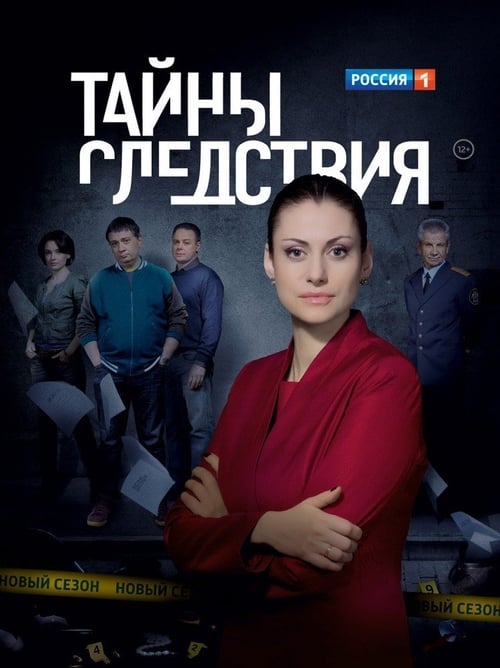
In the center of the plot is a senior investigator named Masha Shvetsova and her male colleagues. The plot is the most vital, but, like in “Streets of Broken Lanterns,” it is seasoned with a fair amount of humor - otherwise, how can the audience (and the heroes) endure countless morgues, identifications and other “cute” charms of the investigative routine?
Secrecy of the Investigation

No description available.
Sklifosovsky

Collection of satirical sketches, telling about the decent inhabitants of the Patriarchal Ponds and their obscene stories. The series includes touching, outrageous and full of love intimate stories that are not accepted to speak out loud.
Unprincipled

No description available.
Sea Devils
No description available.
Investigator Tikhonov

Albina's life changes in an instant: under threat of arrest, her oligarch husband leaves her, taking all the money with him. All that remains of the spouse are two children and a Russian factory on the verge of bankruptcy. Now Albina is forced to forget about the luxurious life in a London mansion and remember what she was told in business courses. Just to start life from scratch in a provincial town without a penny in her pocket, no one taught her.
The Oligarch's Wife

Petr is not only a successful writer but also is the owner of the agen- cy called Alibi — that creates alibis for the clients who need to hide their lies and failures. His second business is hidden, so he himself has a double life. But his attitude to lies changes when his own wife appears at the agency asking for an alibi. From this moment on, he will solve not only his client’s problems, but his own. Unfortu- nately, he’ll be able to help everyone but himself.
Alibi

Experienced Moscow police officer Maksim Pokrovskiy is sent to Northern Russia to investigate the murder of the local Oligarch's daughter.
The Dead Lake

Igor is ready for anything for the sake of Polina’s happiness, and in order to compensate for the loss of her son, the couple opens up to a new child. But instead of an ordinary boy from a shelter, a mystical creature that can recreate the memories gets into their family ... There has not yet been found a recipe for centuries of suffering, but perhaps the key to salvation in selfless love for each other ... Open your heart! Let her in ...
Stray

The story is based on the real events of 1985. The team of a Russian polar icebreaker “Mikhail Gromov” discovered a giant iceberg. The ship came into collision while attempting to take cover from the weather and is forced to drift with ice along the Amundsen Sea coast. The crew of “Gromov” spent 133 days of polar night trying to find a way out of their icy trap. They have no room for mistakes; one wrong move and the vessel is crushed by ice.
The Icebreaker
No description available.
Профессионал
No description available.
Sinbad's Time
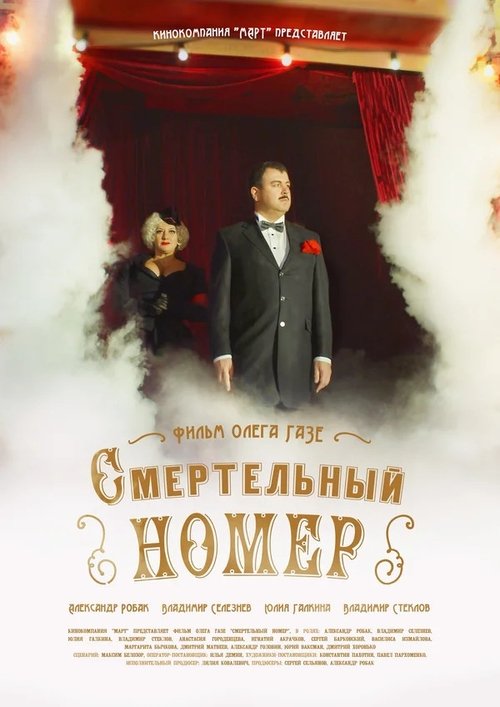
On June 21, 1941, the artists of the traveling circus tent under the direction of the famous hypnotist Andrei Belov, who performs under the pseudonym the Great Armando, give their first performance in a small Latvian town. During the performance of the number under the dome, Belov's wife, the aerial equilibrist Elsa, sees a little girl among the audience, meets her eyes, loses her balance and falls into the arena. This girl is a copy of Masha, the daughter of Elsa and Belov, who died five years ago.
A Deadly Number

Russia, 1917, WWI. This is the story of the 1st Russian Women's Battalion of Death, formed as part of an ill-conceived propaganda ploy by the Russian Provisional Government in late May of 1917.
The Battalion

A group Russian soldiers is send to an outpost to guard the area. They pass the day patroulling the area, while being shot at from the forest. They never know if the civillions are hostile or friendly to them.
Checkpoint
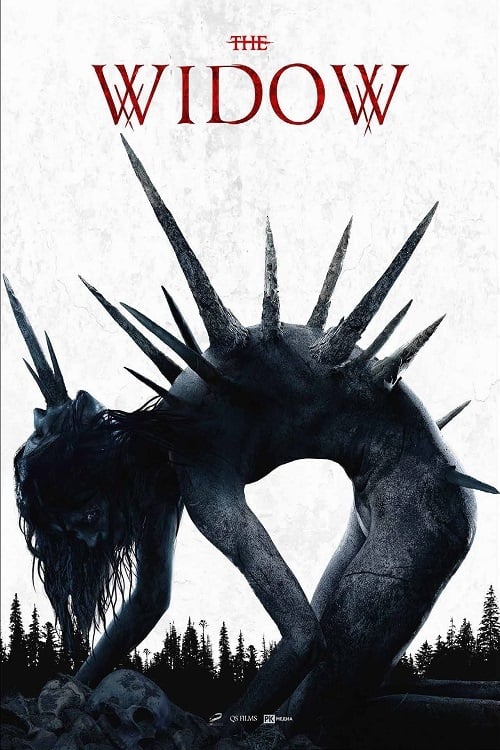
Based on real events. In a densely forested area north of St. Petersburg people have been going missing for three decades. The few corpses ever found were naked. On October 14, 2017 a team of volunteers went out into the woods in search of a missing teenager. Soon, all communication with them was lost. Locals believe they were taken by the same dark spirit that took the others. They call it the Limping Widow.
The Widow
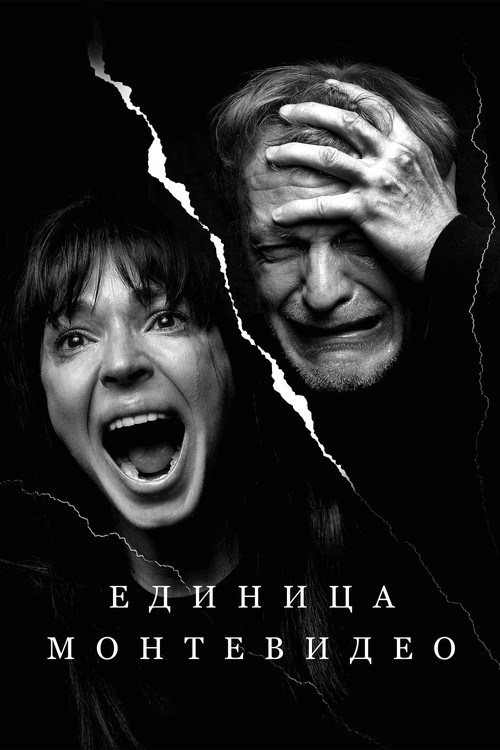
A film about the drama of a talented doctor who fell into a chain of tragic accidents - the death of his wife, psychological trauma that led to the loss of his voice, imprisonment, his daughter's drug addiction and a suicide attempt - but who found the strength to turn the tide, not lose heart and save himself, his daughter and granddaughter .
Montevideo Unit
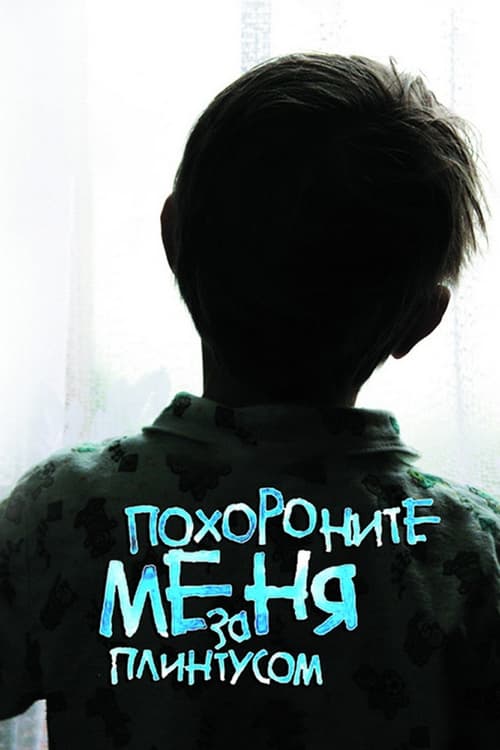
A small child is trapped in a tug-of-war battle between his frivolous, but loving mother and an emotionally abusive neurotic grandmother, who wants to "shelter" her beloved grandson at all cost.
Bury Me Behind the Baseboard

In the Far Eastern village of Chernovka, surrounded by taiga and swamps, an emergency occurs: a sawmill burns down, and in the morning bodies are found there, burned beyond recognition. A young investigator, Evgenia Rakitina, arrives from the district center. The local authorities and the villagers themselves are trying in every possible way to hush up the case, writing everything off as an accident, but Evgenia's professional instinct tells her that something is wrong here. And the deeper the heroine delves into this matter, the more she realizes that the people here are not only related to each other. Comparing the testimony of witnesses, she concludes that she will have to look for the solution to the mystery in the past.…
Everyone Has Their Own Here

Katya is a landscape designer. On December 31, she delivers New Year's trees to customers. The last tree from the unfulfilled order could have become Katya's only guest for the New Year, but her mother is determined to introduce her daughter to a young man. To avoid this fate, the girl agrees to meet her uncle, her neighbor from Chicago. From this moment on, the longest day of the outgoing year begins for her: she will pick up the wrong uncle from the airport, meet a man, hide from bandits pursuing her... and on New Year's Eve she will again find herself at her tree, but will she be alone?