FEEL IT.STREAM
James Benning

James Benning

Directing

Biography

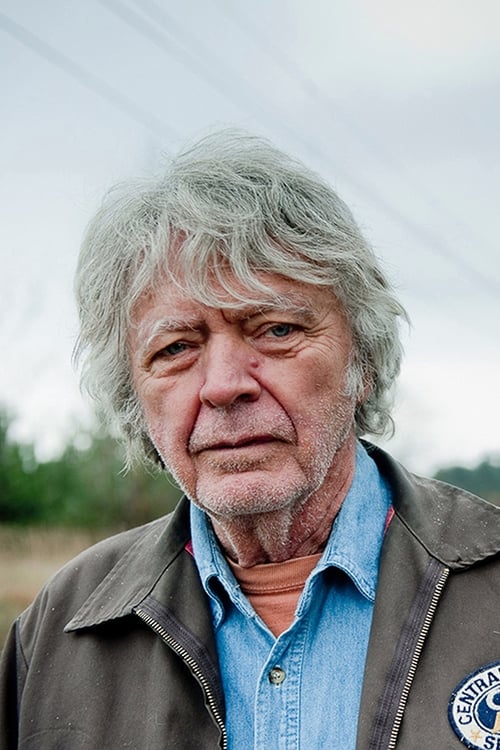
Over the past thirty-five years James Benning (b. 1942) has played a central role in the history of American independent cinema by offering his rigorously structured yet wonderfully graceful films as extended meditations on the American landscape and its social and environmental histories. Benning’s life and work have been shaped by his passionate wanderlust—born in Milwaukee, he lived for intervals in Colorado, the Missouri Ozarks, Illinois and Oklahoma before settling in Val Verde, California in 1987, with car and motorcycle journeys around the country generating such films as I-94 (1975) and Four Corners (1997). His career has been equally restless, ranging from his early experimentation with an avant-garde aesthetic to his embrace, during the 1980s and 90s, of explicitly autobiographical elements and increased human content. With his “California Trilogy” (2000-2001) Benning entered a new phase, refining his formalist style and political concerns while distilling his abiding interest in place and exacting organizational structures.
Known For

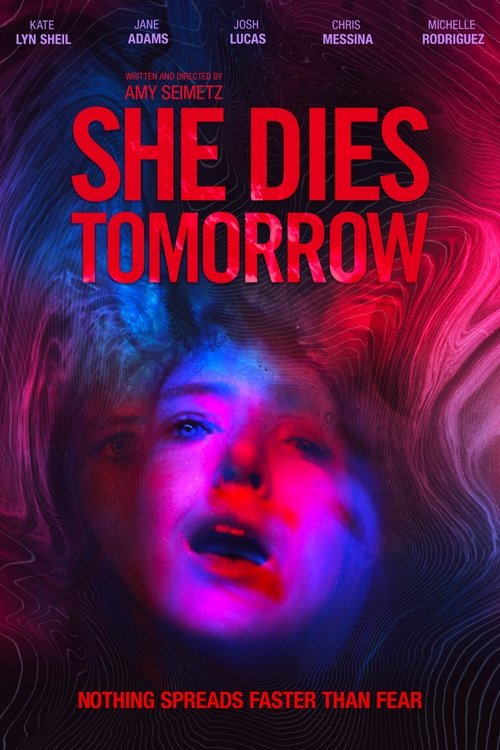
She Dies Tomorrow
5.1

Amy is ravaged by the notion that she is going to die tomorrow, which sends her down a dizzying emotional spiral. When her skeptical friend Jane discovers Amy’s feeling of imminent death to be contagious, they both begin bizarre journeys through what might be the last day of their lives.

She Dies Tomorrow

2020
No image
7.4

Lunch Break features 42 workers as they take their midday break in a corridor stretching nearly the entire shipyard.

Lunch Break

2008
Adulthood
N/A

Made over 15 years, Adulthood is a feature composed of six short films, each chapter following a couple as they grow older without necessarily growing up.

Adulthood

2026
From Bakersfield to Mojave
N/A

A document of one of the most famous 66 miles of railroad track in the world including the Tehachapi Loop.

From Bakersfield to Mojave

2021
Landscape Suicide
7.4

Benning continues his examination of Americana in this film through the stories of two murderers. Ed Gein was a Wisconsin farmer and multiple murderer who taxidermied his victims in the 1950s. Bernadette Protti was a California teenager who stabbed a friend to death over an insult in 1984.

Landscape Suicide

1987
O Panama
7.0

O Panama features a man confined to his apartment on a winter day as he suffers through an illness. Built on the polarity between hot and cold, the tedious reality of the man's sickness and the vivid hallucinatory visions of his delirium, O Panama conveys the workings of the subconscious.

O Panama

1985
YouTube Trilogy: 4 Songs, History, Asian Girls
5.7

Director James Benning turned his attention to the digital world in YouTube Trilogy, organizing found material around three thematic clusters.

YouTube Trilogy: 4 Songs, History, Asian Girls

2011
20 Little Films
N/A

Since 1995, the Viennale has invited renowned directors to create short, one-minute films as personal contributions to the festival. Ranging from home movies to political essays, musical sketches to abstract studies, these “little films” form a unique anthology of cinematic moments. 20 Little Films collects a selection of these works, premiering together for the Viennale’s 50th anniversary at the Locarno Film Festival.

20 Little Films

2012
The Great Gatsby in Five Minutes
N/A

The Fitzgerald classic as you've never seen it, transposed to a Los Angeles of sleek modern architecture and strip-mall foot clinics.

The Great Gatsby in Five Minutes

2011
RR
7.0

Looping, chugging and barreling by, the trains in Benning's latest monumental film map a stunning topography and a history of American development. RR comes three decades after Benning and Bette Gordon made The United States of America (1975), a cinematic journey along the country’s interstates that is keenly aware “of superhighways and railroad tracks as American public symbols.” A political essay responding to the economic histories of trains as instruments in a culture of hyper-consumption, RR articulates its concern most explicitly when Eisenhower's military-industrial complex speech is heard as a mile long coal train passes through eastern Wyoming. Benning spent two and a half years collecting two hundred and sixteen shots of trains, forty-three of which appear in RR. The locomotives' varying colors, speeds, vectors, and reverberations are charged with visual thrills, romance and a nostalgia heightened by Benning's declaration that this will be his last work in 16mm film.

RR

2007
North on Evers
7.5

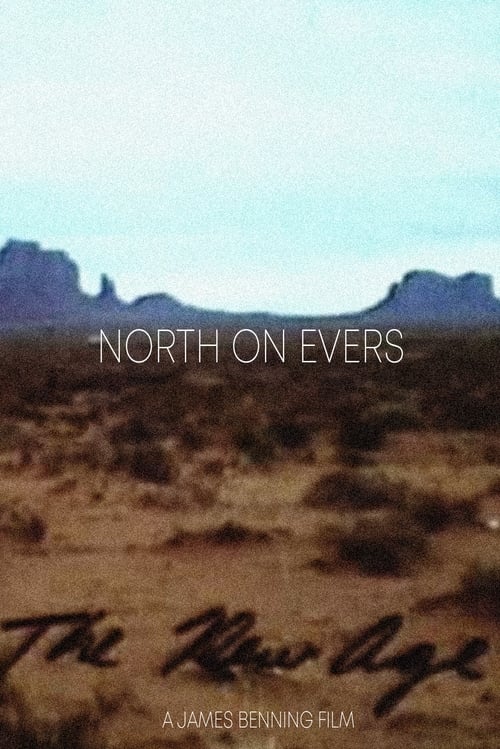
In NORTH ON EVERS James Benning takes the road movie seriously, making his circular trip across the U.S. a marvelously photographed, intensely felt, and disturbing portrait of contemporary America. In many ways, this recent film is a departure of Benning’s earlier films which are characterized, at times, by extremely long, carefully planned takes and a minimal narrative approach. In NORTH ON EVERS, the shots are kept short with a narrative that is direct and detailed, like a diary or a long series of postcards to a friend. What this work shares with the other films is a dry wit and a deep interest in the American social landscape.

North on Evers

1992
Allensworth
8.0

It centers on Allensworth, the first self-administered African-American municipality in California, showcasing the buildings of the now-abandoned town and looking for the traces of a Black cultural history.

Allensworth

2022
Twenty Cigarettes
3.0

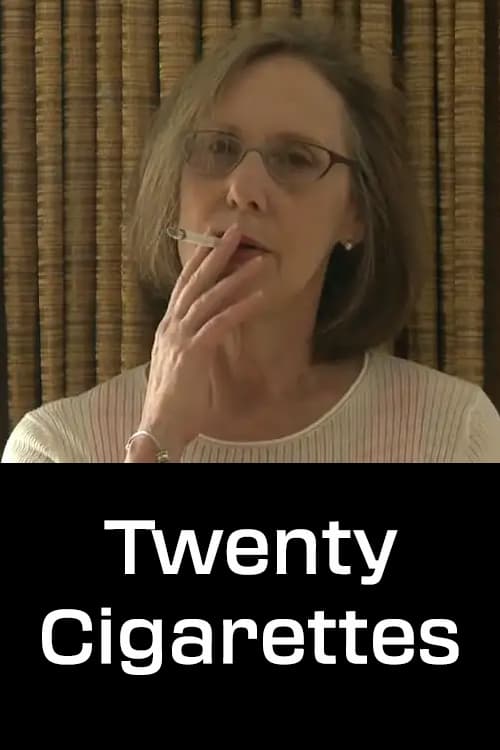
Celebrated for his minimal, monumental landscape studies, James Benning turns to the intimacy of the portrait in his latest film, TWENTY CIGARETTES. Referencing Warhol’s screen tests, 1930s Hollywood glamour, and the disappearing cigarette break, the film captures 20 of Benning’s friends (including filmmaker Sharon Lockhart, cultural theorist Dick Hebdige, and book editor Janet Jenkins) satiating their smoke cravings. Each shot’s length is determined by the time it takes each subject to smoke a cigarette, and over the course of the film a dynamic range of personalities emerges out of an array of physical characteristics, distinctive settings, and personal relationships to the camera. (Amy Beste and Jessica Bardsley)

Twenty Cigarettes

2011
The United States of America
7.8

A conceptual bicentennial film dealing with spatial and temporal relationships between two travelers, their car, and the geographic, political, and social changes from NY to Los Angeles.

The United States of America

1975
Four Corners
6.3

James Benning's "Four Corners" uses a specific geographical location to pose larger questions about the United States. Here, the geographic and wholly imaginary place Four Corners, that favorite tourist destination where Colorado, New Mexico, Arizona, and Utah meet, becomes a kind of theoretical ground zero, the site from which Benning can give voice to other, pointedly unofficial American stories.

Four Corners

1997
Coming to Terms
7.2

One day, father makes a shocking decision in a family gathering. The family disagrees with it and against him in the very beginning. However, they make up their mind to support him at the end. A portrait of family disorganization casting the master of experimental film, James Benning.

Coming to Terms

2013
Faces
N/A

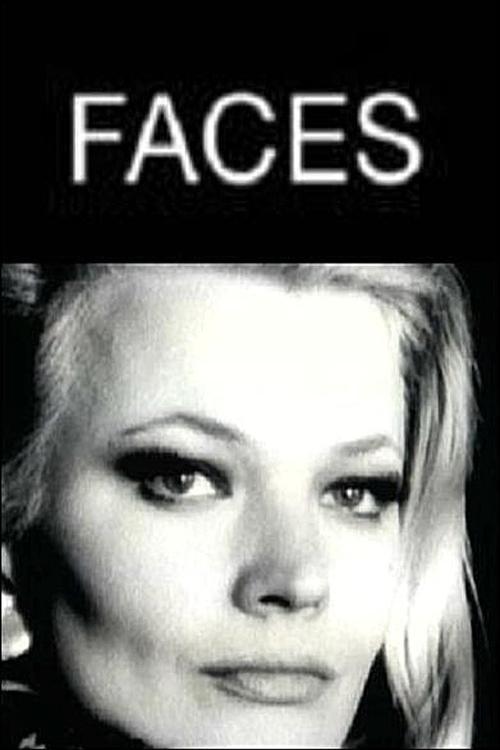
James Benning’s "remake" of John Cassavetes’s Faces (1968) is an unexpected venture into the world of found footage filmmaking. As Benning explains, he’s reconstructed Cassavetes’s Faces in such a way that it’s comprised entirely of shots of single faces, each actor and actress is on screen as long as he or she is in the original and each scene is exactly as long as it is in the original. This reconstruction, he notes, remains steadfastly true to its title

Faces

2011
Used Innocence
6.0

Using experimental narrative structure as his vehicle, Benning recreates the sensationalized and controversial circumstances surrounding Lorencia Bembenek, aka "Bambi", former "Playboy bunny" turned cop, turned accused and convicted killer who disappeared after a daring escape from prison. The film shows the evolution of Benning's and Bembenek's relationship presented through their actual letters read in voice over which depict the filmmaker's curiosity with the subject as it evolves from intrigue to a love obsession.

Used Innocence

1989
Exquisite Moving Corpse
N/A

The Surrealist, "Exquisite Corpse" was a French Café parlor game. "Exquisite Moving Corpse" is more of an artist chain letter. 60 artists participated over a two-year period, beginning in March 2020. Each invited artist made a one minute video in response to the last frame of the previous minute.

Exquisite Moving Corpse

2022
American Dreams (Lost and Found)
7.4

Scrolling excerpts from the diary of George Wallace's would-be assassin Arthur Bremer at screen bottom, Hank Aaron cards and ephemera from his entire career up top, and alternating audio clips of popular songs and highlights from the news throughout Aaron's career.

American Dreams (Lost and Found)

1984