Acting
Soledade González is the housekeeper for Anselmo, a father of five: Jesus—who is disabled—Ramiro, Sheila, André, and Luíza. Knowing he was near death, Anselmo married Soledade so she would take charge of his children.
Doña Bárbara is a Spanish-language telenovela produced by the United States-based television network Telemundo, Sony Pictures Television International and RTI Colombia. Edith González and Christian Meier star in this adaptation of the 1929 novel by Venezuelan author Rómulo Gallegos.
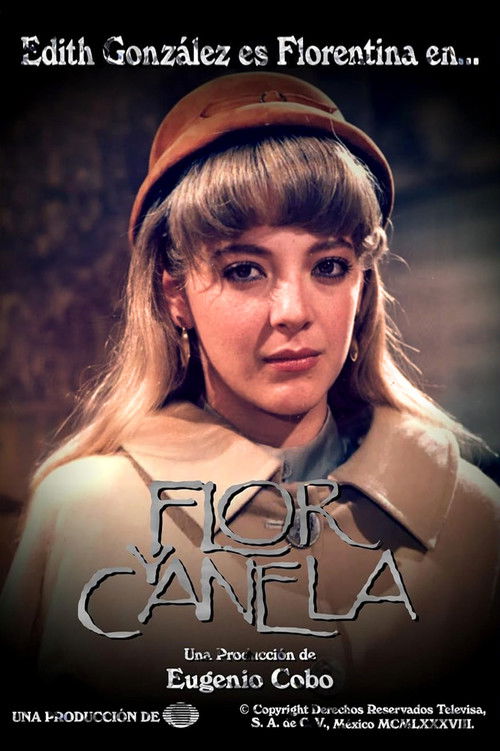
A telenovela that dramatizes the romances and rivalries between two brothers and two sisters in Mexico between the years 1885 and 1900.
No description available.
Natalie, a poor but beautiful girl from a humble neighborhood, falls in love with and wins the heart of Victor Afonso—her childhood friend and the son of the city's wealthiest family. Natalie lives with a cruel old woman who forces her to beg to support her, yet also foresees through fortune-telling cards that "The Beast"—as Natalie is known—will one day find happiness and wealth. Believing this fortune is linked to "The Greek," a wealthy man in love with Natalie, the old woman sells her to him—unaware that Natalie and Victor Afonso had secretly married before he left the country for his studies. When the young man's parents discover the truth, they annul the marriage, indifferent to the fact that "The Beast" is pregnant with his child. Supported by her friend—a cabaret performer known as "La Costeña"—and by The Greek himself, Natalie turns her life around and gives birth to twins; however, she has no idea that The Greek intends to exact a price for all his generosity.
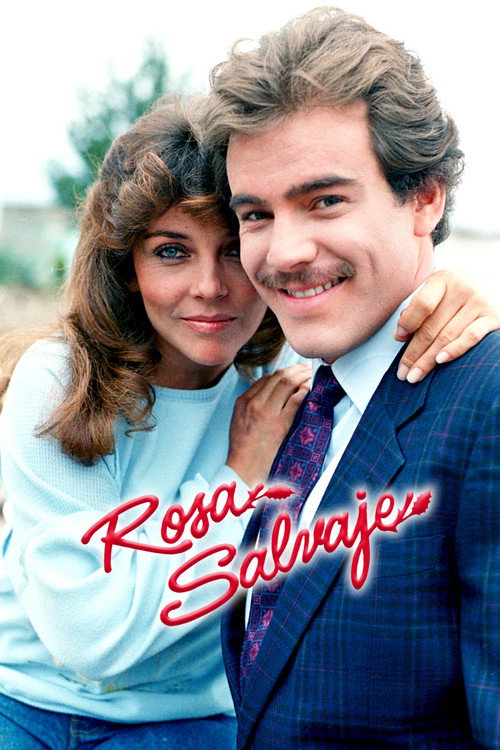
Popular telenovela produced in Mexico in 1979, starring Verónica Castro, Rogelio Guerra and Rocío Banquells. Castro also sang the theme Aprendí a Llorar, a song written by Lolita de la Colina. The telenovela was produced by Chilean Valentín Pimstein and Carlos Romero, it was directed by Rafael Banquells. The story was written by Inés Rodena and adapted by Valeria Philips.
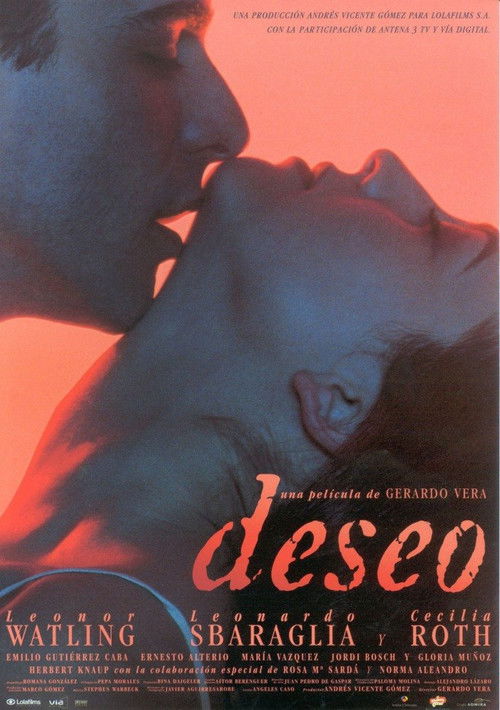
Eight short stories of seduction and illicit encounters between lovers, filled with humor and eroticism, which use a circular structure located in the cosmopolitan atmosphere of a colonial city of Mexico.
Fernanda Quiñones, whose stage name is Salomé, is a dancer who works at the D'Rubí cabaret in Mexico City with her friend Karicia. One day, Salomé meets Julio, son of the millionaire Montesino family, who is married to Ángela, a sickly woman who cannot have children. Lucrecia, Julio's mother, who is obsessed with the idea of having a grandson who will inherit the family fortune, proposes to Salomé that she be the mother of that grandson. But, when she finds out that Julio, even though he loves her, will not only not leave Angela, but that she will be the one to raise the child as if it were her own, she flees far away with her son and two other babies abandoned by a neighbor. Twenty years later, Salomé becomes a wealthy business woman who lives with her three children. When he returns to Mexico, Julio and his mother will try to find out who Salomé and Julio's son is.
Vivir a Destiempo is a Mexican telenovela produced by Fides Velasco and Jacky Castro for Azteca. It stars Edith González and Ramiro Fumazoni as the protagonists alongside Humberto Zurita, Andrea Noli and Wendy de los Cobos as the main villains. The original story and screenplay is written by Eric Vonn. From February 25 to September 20, 2013 Azteca 13 broadcast Vivir a Destiempo, replacing Los Rey.
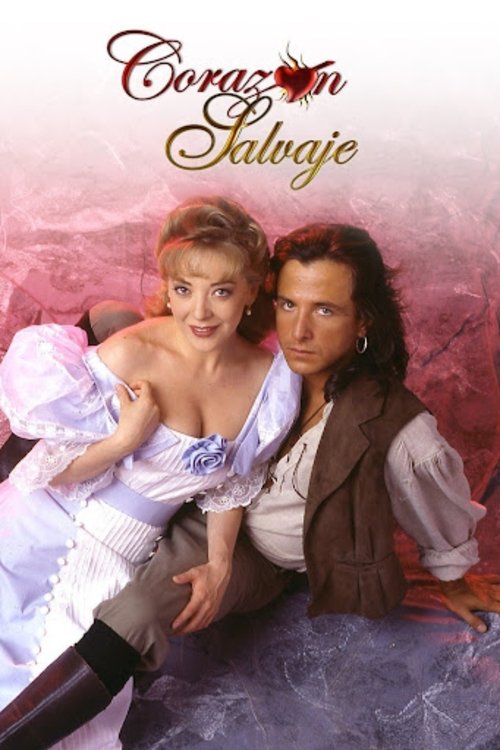
Corazón salvaje is a Mexican telenovela, which was produced by and broadcast on Televisa in 1966. It is the second of five screen adaptations of the novel of the same name by Caridad Bravo Adams. This telenovela was starred by singer Julissa while the 1977 production was starred by singer Angélica María who had previously had the role of Mónica in the 1968 film version. Actor Ernesto Alonso produced both telenovela versions. The role of Juan del Diablo went to Enrique Lizalde who, with Julissa, had previously starred in another Bravo Adams’ story, La mentira. This was the first starring role of Enrique Álvarez Félix, son of actress María Félix, in the role of the antagonist Renato Duchamp, the legitimate half-brother of Juan del Diablo. It was also the second time Jacqueline Andere co-starred with Enrique Lizalde, both being stage actors.
The year is 1972: Magdalena Dumont and Octávio Muriel are celebrating the birthday of their daughter, little Estefanía, at a party in the family mansion. However, this party is merely a backdrop and an opportunity to commit a crime.
Valentina and Sebastián—known as "Los Camaleones"—are manipulated by "El Amo" into stealing artworks and valuable jewelry worth millions of dollars; if they fail to meet his demands, he wields enough power to kill their only loved ones, who are currently imprisoned because of Augusto Ponce de León. Ponce de León is the police chief—and Solange’s father—as well as a womanizer estranged from Francisca Campos; he is in charge of the "Camaleón" case, which he must solve to secure a political position and gain ever-increasing power.
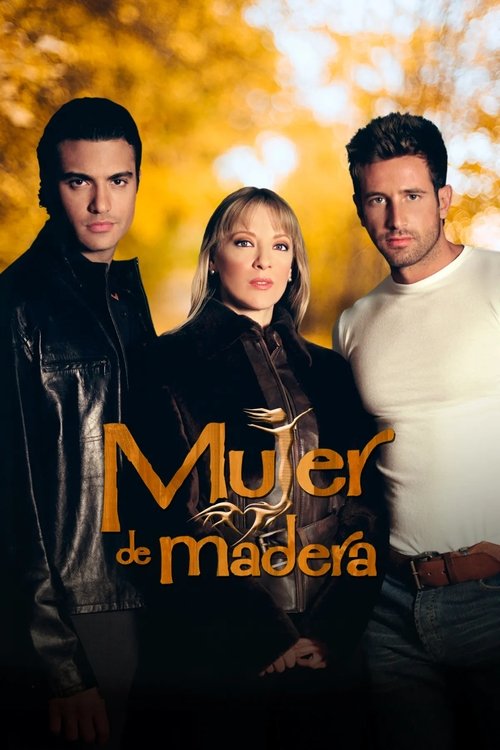
Mujer de Madera is a Mexican telenovela produced by Televisa in 2004. One unusual feature of this telenovela is that the main character is played by different actresses before and after her stay in hospital due to a forest fire.
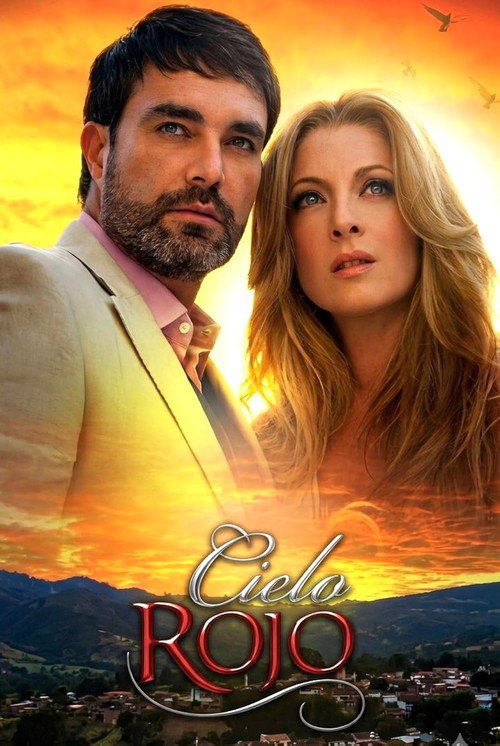
Cielo Rojo is a Mexican soap opera by TV Azteca. It stars Edith González and Mauricio Islas as the leading protagonists, with Regina Torné as the main villain and Alejandra Lazcano as leading teen cast. Filming lasted from 4 April 2011 to 1 December 2011. It premiered on 23 May 2011 on Azteca 13, occupying Entre el Amor y el Deseo's slot.
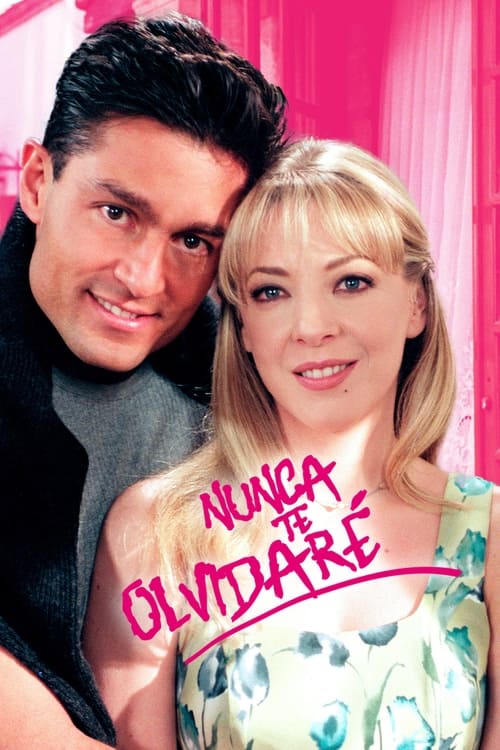
Nunca te olvidaré is a Mexican telenovela produced by Juan Osorio for Televisa in 1999. It is based on a novel by Caridad Bravo Adams and starring Edith González, Fernando Colunga and antagonistic interests of Alma Muriel, Eugenia Cauduro and Humberto Elizondo.
Palabra De Mujer is a telenovela remake of El Amor Tiene Cara De Mujer was made by Televisa, starring Edith González, Yadhira Carrillo, Ludwika Paleta, and Lidia Ávila. The telenovela, a production of José Alberto Castro, premiered October 22, 2007 and ended on May 9, 2008 in El Canal de las Estrellas.
The drama tells the story of Rosa, who lives with her godmother in a very poor neighborhood; she is a simple girl who dresses like a boy. She was abandoned by her mother, Paulette. One day, Rosa goes to a mansion to steal apples and meets the owner of the house, Ricardo.
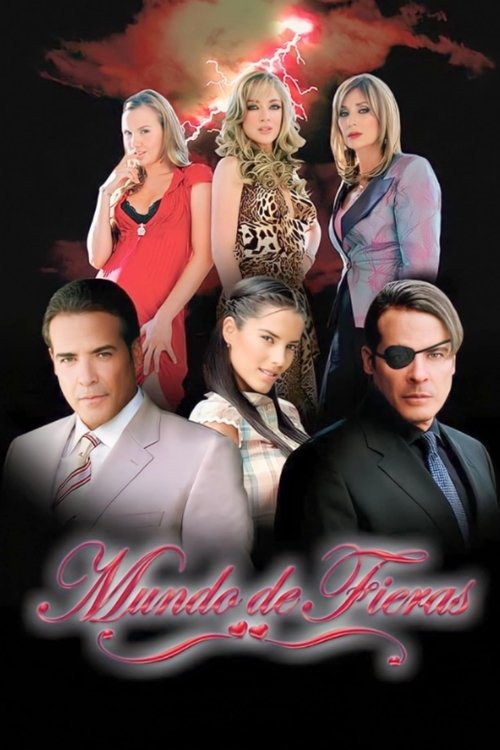
Gabriel and Damián are twin brothers, yet they are vastly different. Gabriel was raised in opulence, whereas his brother grew up in poverty; harboring deep resentment toward Gabriel, Damián seeks to destroy him by any means necessary. Gabriel is in his second marriage to the hysterical widow Joselyn. An accident causes Joselyn to miscarry and leaves Luisito—the son she shares with Gabriel—disabled. Blaming her husband for both tragedies, Joselyn makes his life a living hell. She is aided by her mother, Miriam, and Karen, her daughter from a previous marriage; together, they are the "furies" who torment Gabriel. One day, a humble young woman named Mariángela arrives at the mansion to tutor Luisito, and Gabriel falls in love with her. The "furies" set out to tear Mariángela apart, especially after discovering she is the illegitimate daughter of Clemente—a kind-hearted man who is Miriam’s husband and Joselyn’s father.