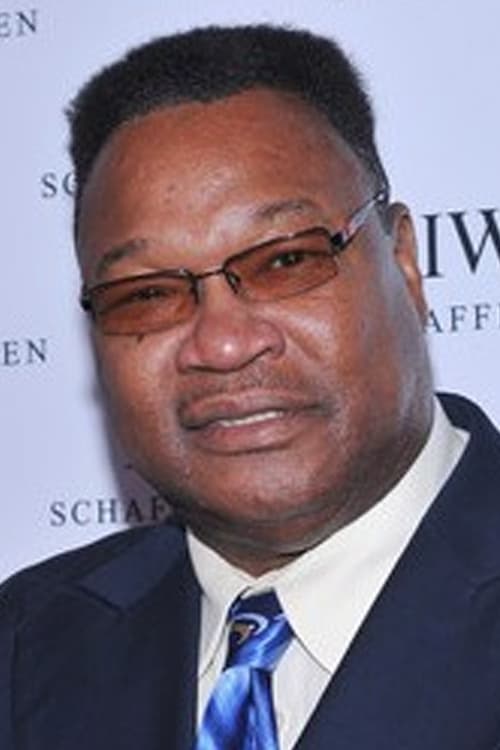
Larry Holmes
Acting
Biography
Larry Holmes is an American former professional boxer who competed from 1973 to 2002. He grew up in Easton, Pennsylvania, which led to his boxing nickname of the Easton Assassin. Holmes, whose left jab is rated among the best in boxing history, held the WBC heavyweight title from 1978 to 1983, The Ring magazine and lineal heavyweight titles from 1980 to 1985, and the inaugural IBF heavyweight title from 1983 to 1985. During his only title reign, he defended his title against 19 fighters, the second most in history behind Joe Louis. He also holds the record for the longest individual heavyweight title streak in the modern boxing history. Holmes is one of only five boxers—along with Joe Frazier, Ken Norton, Leon Spinks and Trevor Berbick—to defeat Muhammad Ali; he is the only one to have stopped Ali. Holmes won his first 48 professional bouts, including victories over Norton, Ali, Earnie Shavers, Mike Weaver, Gerry Cooney, Tim Witherspoon, Carl Williams and Marvis Frazier. He fell one short of matching Rocky Marciano's career record of 49–0 when he lost to Michael Spinks in an upset in 1985. Holmes retired after losing a rematch to Spinks the following year, but made repeated comebacks. He was unsuccessful in three further attempts (against Mike Tyson in 1988, Evander Holyfield in 1992 and Oliver McCall in 1995) to regain the heavyweight title. Holmes fought for the final time in 2002, aged 52, against the 334lb Eric "Butterbean" Esch, and ended his career with a record of 69 wins and 6 losses. He is frequently ranked as one of the greatest heavyweights of all time and has been inducted into both the International Boxing Hall of Fame and World Boxing Hall of Fame. When Holmes was nineteen, he started boxing. In his twenty-first bout, he boxed Nick Wells in the semifinals of the 1972 National Olympic Trials in Fort Worth, Texas. Wells, a southpaw known for unprecedently high knockout-to-win percentage for an amateur boxer, with a majority of knockouts coming in the first round, stopped Holmes in the first round. Nevertheless, Holmes was chosen by a selection committee of the National Olympic authorities to fight at the Olympic Box-offs in West Point, New York, where he had a match-up versus a fighting seaman Duane Bobick. Holmes was dropped in the first round with a right to the head. He got up and danced out of range, landing several stiff jabs in the process. Bobick mauled Holmes in the second round but could not corner him. The referee warned Holmes twice in the second for holding. In the third, Bobick landed several good rights and started to corner Holmes, who continued to hold. Eventually, Holmes was disqualified for excessive holding. Holmes invested the money he earned from boxing and settled in his hometown of Easton. When he retired from boxing, Holmes employed more than 200 people through his various business holdings. In 2008, he owned two restaurants and a nightclub, a training facility, an office complex, a snack food bar and slot machines.[citation needed] Holmes currently co-hosts a talk show What The Heck Were They Thinking?
Known For
Set in Springfield, the average American town, the show focuses on the antics and everyday adventures of the Simpson family; Homer, Marge, Bart, Lisa and Maggie, as well as a virtual cast of thousands. Since the beginning, the series has been a pop culture icon, attracting hundreds of celebrities to guest star. The show has also made name for itself in its fearless satirical take on politics, media and American life in general.
The Simpsons
A late-night live television sketch comedy and variety show created by Lorne Michaels. The show's comedy sketches, which parody contemporary culture and politics, are performed by a large and varying cast of repertory and newer cast members. Each episode is hosted by a celebrity guest, who usually delivers an opening monologue and performs in sketches with the cast, and features performances by a musical guest.
Saturday Night Live
The Mike Douglas Show is an American daytime television talk show hosted by Mike Douglas that originally aired only in the Cleveland area during much of its first two years on the air. It then went into syndication in 1963 and remained on television until 1982. It was distributed by Westinghouse Broadcasting and for much of its run, originated from studios of two of the company's TV stations in Cleveland and Philadelphia.
The Mike Douglas Show
The Dick Cavett Show has been the title of several talk shows hosted by Dick Cavett on various television networks.
The Dick Cavett Show

30 for 30 is the title for a series of documentary films airing on ESPN, its sister networks, and online highlighting interesting people and events in sports history. This currently includes four "volumes" of 30 episodes each, a 13-episode series under the ESPN Films Presents title in 2011–2012, and a series of 30 for 30 Shorts shown through the ESPN.com website. The series has also expanded to include Soccer Stories, which aired in advance of the 2014 FIFA World Cup, and audio podcasts. This entry refers to the main Volumes of the series presented by ESPN
30 for 30

An outrageous cut-rate producer is about to fulfill his lifelong dream to make a movie about the most offensive, dirtiest jokes ever told. As Charlie and his filmmaking team hilariously struggle to write a script and assemble their award-winning cast, the movie-within-a-movie emerges with one dirty joke after another. Only one can take the crown for writing the dirtiest joke ever told, and Charlie will do whatever he can to be that king.
Dirty Movie

A group of former high-school buddies have a reunion in Las Vegas. Thinking to increase their alumni fund, they proceed to use it to gamble at the casinos. Of course, they lose it all. They then get together and try to figure out a way to win it all back.
Glory Years
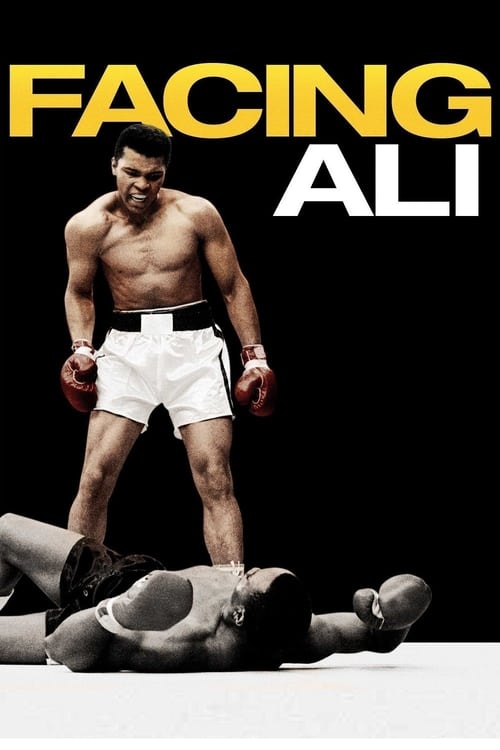
Ten of Muhammad Ali's former rivals pay tribute to the three-time world heavyweight champion.
Facing Ali
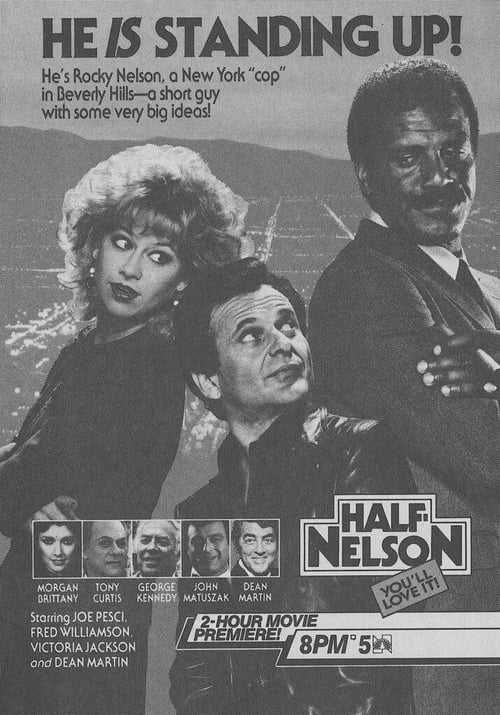
Rocky Nelson is a New York cop, who after making a major bust and selling the rights of his story to Hollywood decides to try his luck out as an actor. However, when he gets there, the directors think that he is too short to be an actor. He is then approach by someone who offers him a job at a Hollywood security agency, cause he would fit in there being an ex-cop and while working there he could come in contact with some Hollywood heavy-weights who could give him the break he needs. And at the same he gets to live in Dean Martin's guest-house.
Half Nelson
But Can They Sing? is a reality television series that premiered on October 30, 2005 on VH1 as part of its celebreality programming. Hosted by Ahmet Zappa, the series was partially based on NBC's announced but abandoned project I'm a Celebrity but I Wanna Be a Pop Star. Like its network predecessor, it was produced by Granada America. In January 2006 VH1 announced that the show would not return for a second season.
But Can They Sing?
Visionary artist Matthew Barney returns to cinema with this 3-part epic, a radical reinvention of Norman Mailer’s novel Ancient Evenings. In collaboration with composer Jonathan Bepler, Barney combines traditional modes of narrative cinema with filmed elements of performance, sculpture, and opera, reconstructing Mailer’s hypersexual story of Egyptian gods and the seven stages of reincarnation, alongside the rise and fall of the American car industry.
River of Fundament
The Next Great Champ is an American reality television series on Fox that aired in early 2005. It followed a group of boxers as they compete with one another in an elimination-style competition, while their lives and relationships with each other and their families are depicted. The show was the result of the synergy between boxing champion Oscar De La Hoya and reality television powerhouse Endemol USA. The show was rushed into production to compete with Mark Burnett's The Contender reality boxing series, and Champ deputed prior to The Contender. The show sought to discover young, raw boxers and train them for a possible title fight opportunity, with the winner also getting a professional contract with de la Hoya's Golden Boy Promotions and a large cash prize. The show quickly fizzled in the ratings, and after four episodes The Next Great Champ was cancelled by Fox. The final six episodes aired on Fox Sports Net. The only season of the show was won by Otis Griffin. After the victory, Griffin was set to battle Alfonso Sanchez live on Fox Sports for the WBO "8-round" light heavyweight championship, but the bout never materialized. Griffin did win this title against James Sundin in a non-televised fight.
The Next Great Champ
A nice guy goes into the hospital for surgery and through a series of mishaps suffers every man's worst nightmare.
National Lampoon's Snatched
Produced by PBS in 1992, this documentary explores the darker side of boxing. It follows the career of a young Shannon Briggs and includes interviews with Evander Holyfield, Larry Holmes, Teddy Atlas, Dan Duva, Kathy Duva, Lou Duva, Bobby Czyz, Bob Arum, Mike Marley and even Muhammad Ali.
Naked Sport: Welcome to the Sewer
Co-directed by Gentry Kirby and Erin Leyden, “Tommy” examines Morrison’s remarkable rise to the spotlight, followed by a stunning, confounding, and ultimately tragic fall. He was one of the best heavyweights of his time; a handsome, charming, yet unsettled young star. Born into a troubled family in America’s heartland, Morrison’s initial emergence as a fighter was bolstered by a starring role in “Rocky V.” A few years later he beat George Foreman for the WBO heavyweight title, and seemed primed for more stardom, even in the face of blown opportunities and upset losses. But everything changed in early 1996 when he tested positive for HIV, abruptly forcing him into retirement at age 27. From there, Morrison’s life spiraled further and further downward, plagued by drug problems, jail time, and an eventual denial that he had the virus at all.
Tommy
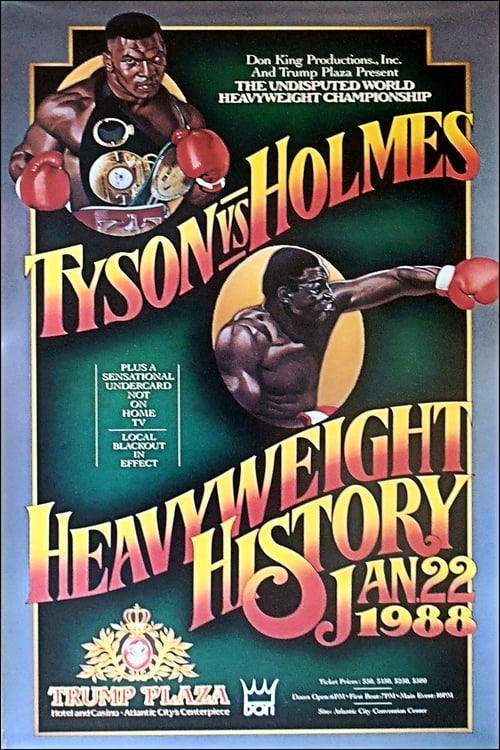
On January 22, 1988, Holmes was lured out of retirement to challenge reigning Undisputed World Heavyweight Champion Mike Tyson. Tyson dropped Holmes in the fourth round with an overhand right. Holmes got up, but Tyson put him down two more times in the round, and the fight was stopped. After the fight Holmes once again retired.
Mike Tyson vs Larry Holmes
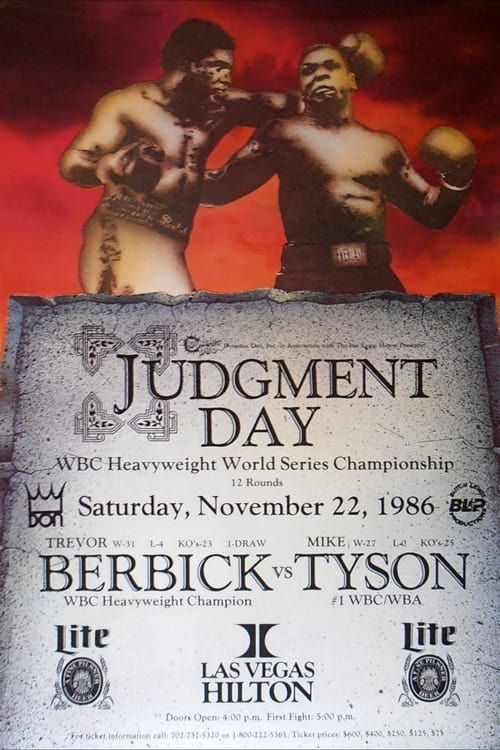
TYSON WINS W.B.C. CHAMPIONSHIP LAS VEGAS, Nev., Nov. 22— Mike Tyson made history tonight. The 20-year-old slugger from Catskill, N.Y., became the youngest heavyweight champion ever when he stopped Trevor Berbick at 2:35 of the second round of a scheduled 12-round bout. In taking away Berbick's World Boxing Council crown, Tyson knocked Berbick down twice, both times in the second round, pounding him so hard that he had Berbick reeling across the ring at the end in a nearly comic loop-de-loop.
Mike Tyson vs Trevor Berbick
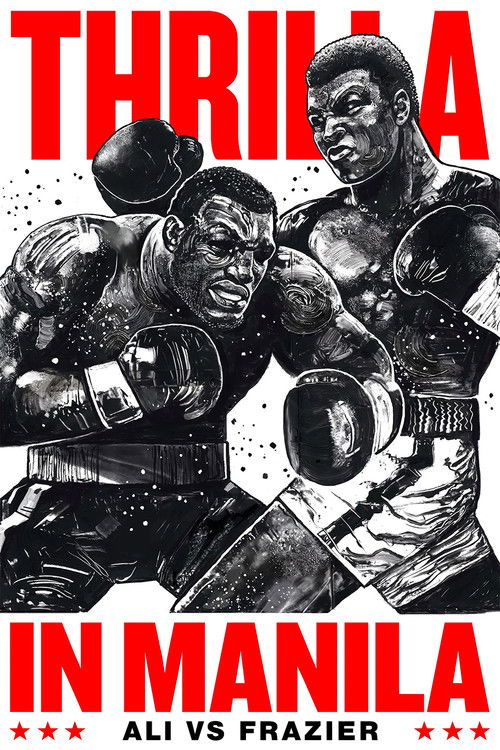
On October 1, 1975, World Heavyweight Boxing Champion Muhammad Ali was in the ring with his arch rival Joe Frazier for the third time. This fight in the Philippines, which has been nicknamed "Thrilla in Manila," is considered one of the most dramatic boxing matches in history - in the words of the voice-over, "They hated each other." With the help of archive material and eyewitness accounts (including Imelda Marcos), this documentary not only reconstructs the match, but shows us what was happening behind the scenes as well.
Thrilla in Manila
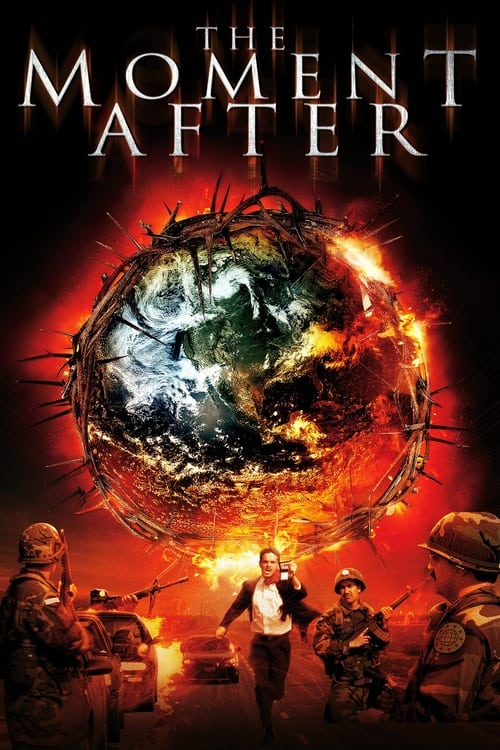
In the twinkling of an eye, a mass disappearance has occurred. Moments after the turmoil and confusion, the FBI is called in to investigate and locate the missing persons. For Agent Adam Riley (David White), it is personal. For Agent Charles Baker (Kevin Downes), it doesn't matter, it's just a job.
The Moment After
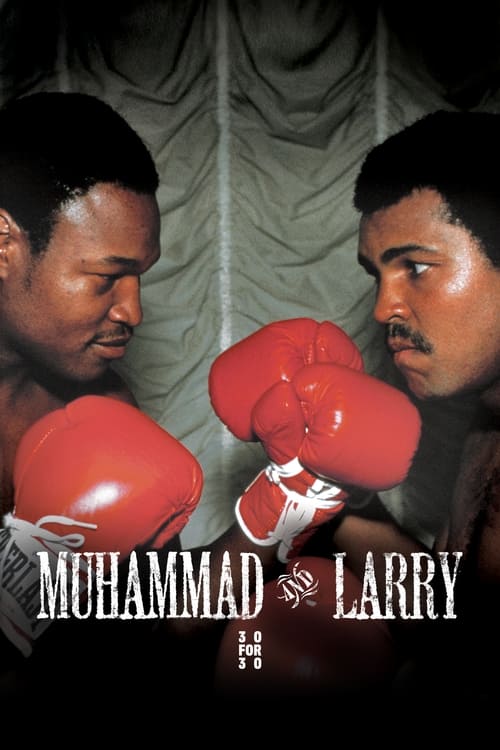
In October of 1980 Muhammad Ali was preparing to fight for an unprecedented fourth heavyweight title against his friend and former sparring partner Larry Holmes. To say that the great Ali was in the twilight of his career would be generous; most of his admiring fans, friends and fight scribes considered his bravado delusional. What was left for him to prove? In the weeks of training before the fight, documentarians Albert and David Maysles took an intimate look at Ali trying to convince the world and perhaps himself, that he was still “The Greatest.” At the same time, they documented the mild-mannered and undervalued champion Holmes as he confidently prepared to put an end to the career of a man for whom he had an abiding and deep affection