Production
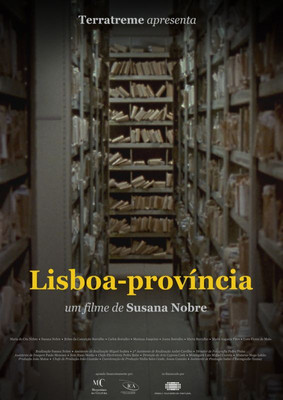
A nurse takes care of a patient in her house. Maria do Céu has been a nurse for more than forty years, working at an old Hospital in Lisbon. She was sixteen, when she arrived to Lisbon, coming from a small village in Alentejo. At the Hospital, she reads the file of an old patient who was also her friend. The file is then closed. Maria do Céu returns to her village, where she sings at the people’s house choir.
Paris, March 1939. While the march of the Nazi troops makes itself heard throughout Europe, exiled artists and intellectuals from all over the world still converge in the French capital. Portuguese composer Fernando Lopes-Graça is among them, sharing this cosmopolitan environment, on the verge of rupture. A happy coincidence brings him into the presence of the man he considers his master, the intransigent Hungarian composer Béla Bartók. For Lopes-Graça, the occasion presents itself as a unique opportunity to show Bartók his scores...
They thought life would be simple. All material problems would be overcome. Every morning it would be good to have breakfast together, the table laid. It would be the beginning of a long day at work. The daily ritual of a house inhabited by a mother and the two-year-old daughter. The automatism of the gestures of material life and its suspension in small events.
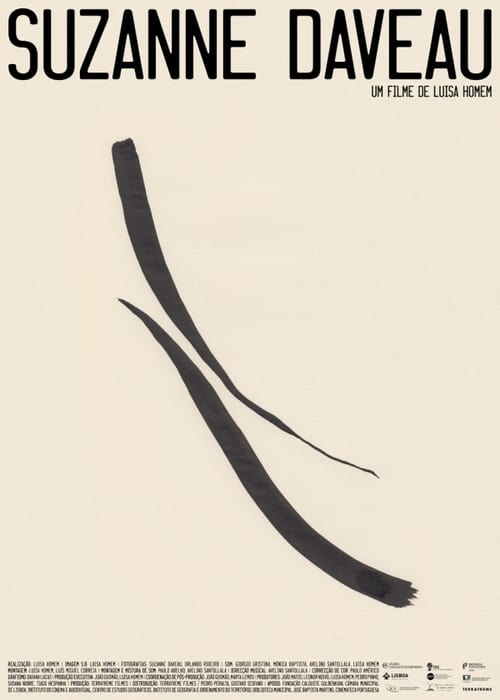
This documentary portrait covers all the themes of Daveau’s rich life: from her field research and private life to feminism and the influence of the modern age on family relationships and science. Her passionate life is examined in detail in an inexhaustible series of stunning archival photos and home videos recorded by Daveau, and in voice-over she speaks openly, extensively and full of wonder about life and the world around her.
New Opportunities were a portuguese education program with a focus on the academic certification of adults who left school early. Applicants will improve their academic degree from the re-elaboration and re-interpretation of his "life experience." These processes motivated workers to reflect on their working conditions, their training, their roots, producing a plurality of views about the school, emigration, the rural world and the universe of employment. Having its protagonists stories as a starting point, the film approches into a reflection about work in the contemporay world. This film was produced over four years work by the film director in a New Opportunities Centre.
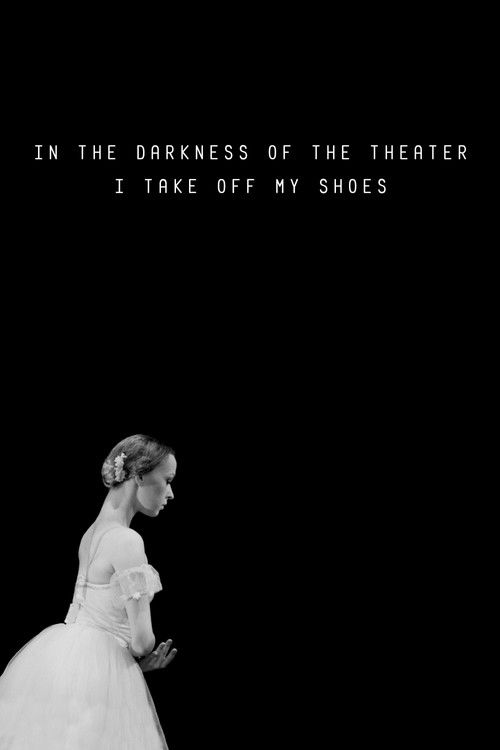
The National Ballet of Portugal is celebrating its 40th anniversary. Since its foundation, it has aimed to present the great classics, as well as to always welcome contemporary creations. Day-to-day life is demanding for dancers, choreographers, musicians, répétiteurs, seamstresses, light technicians, sound technicians, and other elements of a large staff that make it possible for dance to travel through the rehearsal rooms and linger in the hallways before making it onto the stage. This film follows not only the company’s creations and premieres, but mainly each dancer’s silent and structural work.
In 1975, Thomas Harlan's crew filmed Torre Bela's homestead occupation, in the center of Portugal. Three decades later, RED LINE revisits this emblematic film of the Portuguese revolutionary period: in which way did Harlan interfered in the events that seems to naturally develop in front of the camera? What was the impact of the film on the lives of the occupants and the memory of that period?
Two young Portuguese women try to put down roots in Brazil. Teresa is newly arrived; Francisca has been there a while. This sure-footed, loving portrait of two counterparts, attracting and repelling, is also an ode to Belo Horizonte: a city with no tourist attractions, but bags of atmosphere and lust for life.
Mirages have been reported along the Spanish coast. A young French woman travels to San Sebastián to observe these visual aberrations. There, she meets a mysterious Portuguese woman who tells her a story from her youth: of obsession, and a gaze that can turn the world inside out.
One night, a group of workers realises that the administration is stealing machines and raw materials from their own factory. As they organize to survey the equipment and block the relocation of production, they are forced to stand at their posts with no work to do, as a form of retaliation, while negotiations over general lay-offs take place. The pressure leads to a breakdown of the workers along with the world around them.
(within the project URB) CIDADE is a TV series that takes place in the diverse, urbanistically chaotic and multicultural periphery of Lisbon. Each episode has for landscape and dramatic background the everyday-life in the social housing neighborhoods and shanty towns of Lisbon. It explores the infinite possibilities of narratives and characters generated by the daily confrontation of the normal life of the city with several layers of cultural heritages and lifestyles, brought by different waves of migration. A network of interconnected characters, families and ties makes the narrative to evolve and illustrates the cultural, artistic, social and economic explosion that we are about to live in here.
The Ave Valley is, for more than a century, a territory seized by an imposing industry. Amongst ruins and operating factories, we descend the river on a journey alongside the banks of the present, unveiling the marks of the past.
Karlon, born in Pedreira dos Húngaros (a slum in the outskirts of Lisbon) and a pioneer of Cape Verdean creole rap, runs away from the housing project to which he had been relocated.
When her mother dies, 40-year-old Helena now has time for herself after years of taking care of her family. She works at a film production company, dances boisterously, gets drunk. A quiet film about letting go morphs into a coming of middle age story.
At dawn, a group of peasants tries to rescue the body of a young man from the inside of a well. Women veil their faces in silence while men endure the situation. In the centre of it all, a mother awaits her son's body. How can life cease to be when in nature there is an enduring renewal?
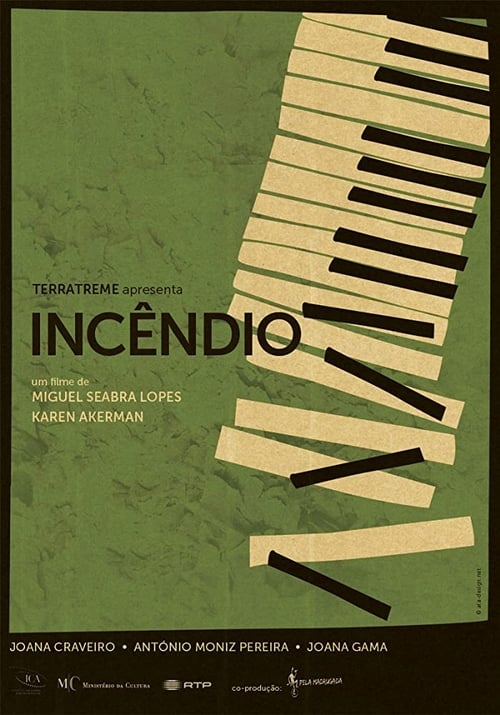
“There must be a different solution than the one from hell’. Full unadulterated terror (and music). 'The best class always ends with a lesson'. Almost baroque in its ambition and detail, Akerman and Seabra Lopes’ mesmerising short film delves deeply into the hard-wired dread of music lessons. Sewn around Schubert’s steely Opus 1, which is itself based on the no less terrifying legend of Goethe's Erlkönig, their film is a revelation.” International Film Festival Rotterdam.
It's a summer weekend in a country house near Sintra, in Portugal. Fourteen-year-old Nicolau is spending a couple of days with his older brother Simão and his friends, all of them in their late twenties. Everyone is drawn to the beautiful and quiet Maria do Mar, but Nicolau will see his life the most deeply shaken by her. Between homework and tree-climbing, stories about a deceased philandering grandfather and the origins of the tortellini's shape, a friend in a costume nursing a broken heart and seduction games, Nicolau observes this group of young adults.
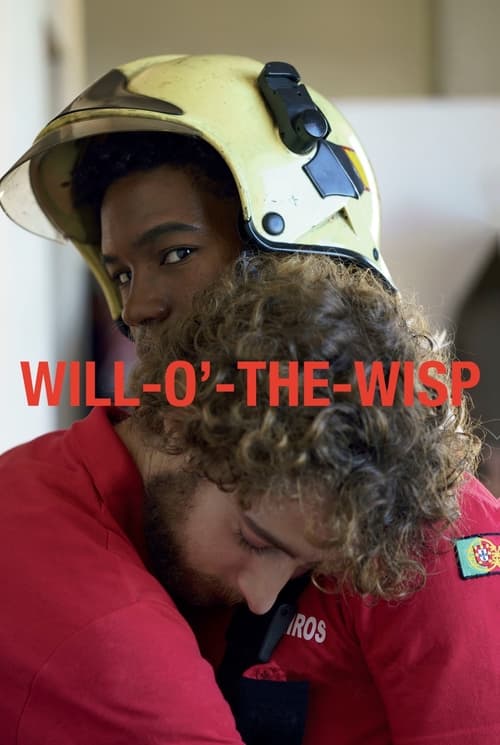
On his deathbed, His Majesty Alfredo, King without a crown, is taken back to distant youth memories from the time when he dreamt of becoming a fireman. His encounter with instructor Afonso from the fire brigade, opens a new chapter in the life of the two young men devoted to love and desire, and the will to change the status quo.
Mother and son move into a new house, a new city, a new story.
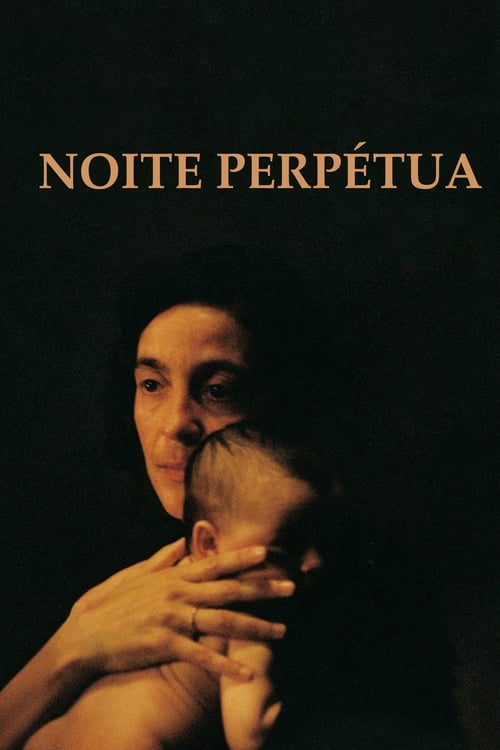
Castuera, Spain, April 1939. During the night two Falangist Guards appear at the door of the house where Paz is taking refuge with her family. They request her presence at the police station. Paz immediately understands the fatality of this visit. With no chance to escape, she asks to breastfeed her newborn daughter one last time.