Jean Epstein
Directing
Biography
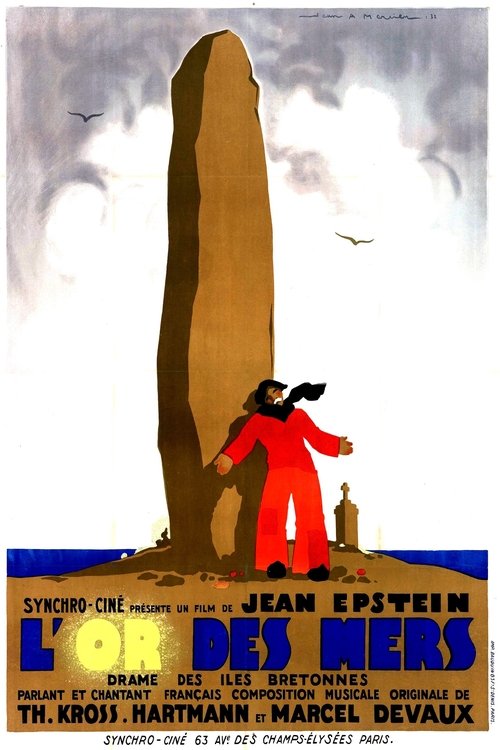
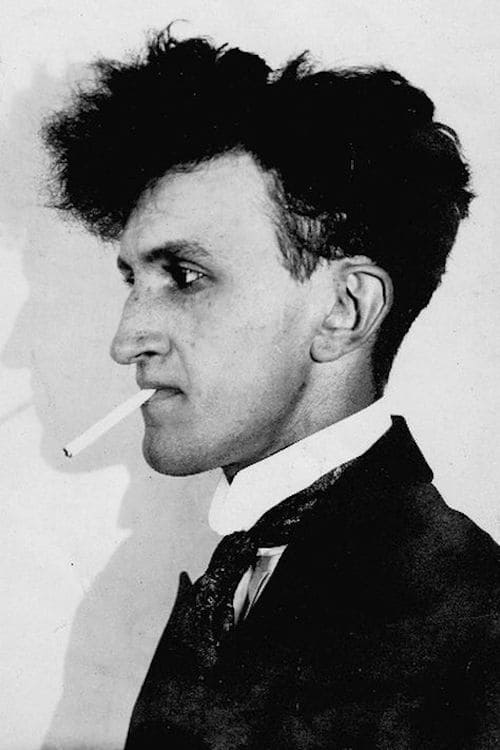
Jean Epstein (French: [ɛp.ʃtajn]; 25 March 1897 – 2 April 1953) was a French filmmaker, film theorist, literary critic, and novelist. Although he is remembered today primarily for his adaptation of Edgar Allan Poe's The Fall of the House of Usher, he directed three dozen films and was an influential critic of literature and film from the early 1920s through the late 1940s. He is often associated with French Impressionist Cinema and the concept of photogénie. Epstein was born in Warsaw, Kingdom of Poland (then a part of Russian Empire) to a French-Jewish father and Polish mother. After his father died in 1908, the family relocated to Switzerland, where Epstein remained until beginning medical school at the University of Lyon in France. While in Lyon, Epstein served as a secretary and translator for Auguste Lumière, considered one of the founders of cinema. Epstein started directing his own films in 1922 with Pasteur, followed by L'Auberge rouge and Coeur fidèle (both 1923). Film director Luis Buñuel worked as an assistant director to Epstein on Mauprat (1926) and La Chute de la maison Usher (1928). Epstein's criticism appeared in the early modernist journal L'Esprit Nouveau. During the making of Coeur fidèle Epstein chose to film a simple story of love and violence "to win the confidence of those, still so numerous, who believe that only the lowest melodrama can interest the public", and also in the hope of creating "a melodrama so stripped of all the conventions ordinarily attached to the genre, so sober, so simple, that it might approach the nobility and excellence of tragedy". He wrote the scenario in a single night. Epstein had been much impressed by Abel Gance's recently completed La Roue, and in Coeur fidèle he sought to apply its techniques of rapid and rhythmic editing as well as the innovative use of close-ups and superimpositions of images. These techniques are most apparent during the first half of the film: the opening sequence establishing Marie's situation in the harbour bar through a series of close-ups of her face, her hands, the table and glasses that she is cleaning; the use of images of the sea and the port, either intercut or superimposed, to convey the yearnings of Jean and Marie; and the film's most celebrated sequence at the fairground in which a highly complex series of rhythmically assembled images charts the tension of the relationship between Marie and Petit Paul. The later scenes of the film are relatively conventional in the techniques employed and depend more upon situation and action than upon photography and processing of the images. In the 1920s, Epstein's works would display influences from German Expressionism. Epstein also made several documentaries about Brittany. Chanson d'Armor is known as the first Breton-speaking film in history. His two novels also take place in Breton isles: L'Or des mers in Ouessant and Les Recteurs et la sirène in Sein. Epstein died in 1953 from a cerebral hemorrhage.
Known For
Produced for television by Claude-Jean Philippe, the « Encyclopédie audiovisuelle du cinéma », recounts the history of French cinema from its birth to the beginning of the 1960s. With commentary read by Jean Rochefort.
Encyclopédie audiovisuelle du cinéma

The good guys win out in this sweet tale about a young orphan who is abused for much of her life but who eventually finds happiness when she marries an honest man who extricates her from her situation.
Cœur fidèle

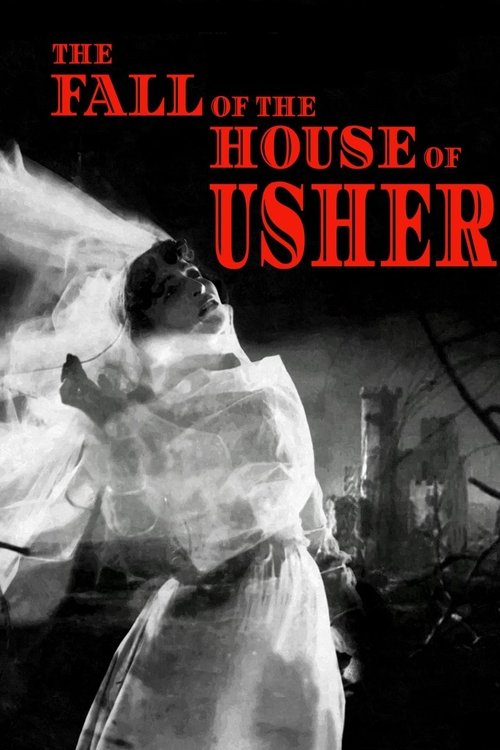
Convinced that his family is tainted by generations of evil, Roderick Usher is hellbent on stopping his sister Madeline’s wedding to prevent the cursed Usher bloodline from expanding. When her fiancé Allan arrives at the crumbling estate to claim his bride, Roderick goes to ruthless—even deadly—lengths to keep them apart.
The Fall of the House of Usher

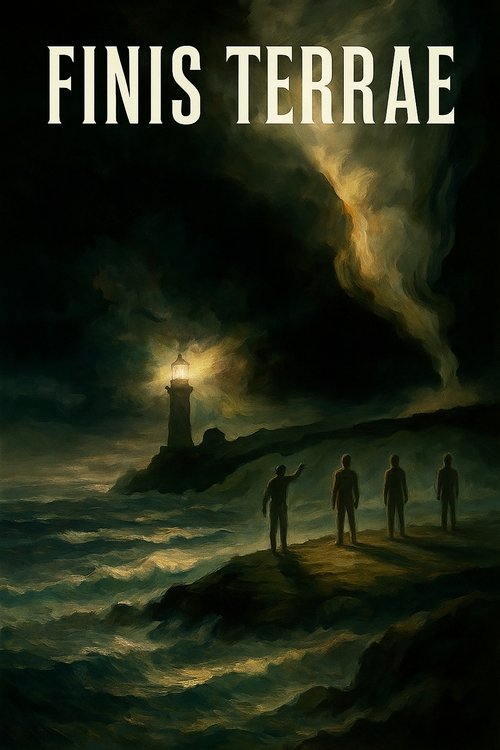
On the islet Bannec, off the coast of Brittany, four fishermen have set up camp for three months to harvest seaweed. If processed correctly, the ash of the seaweed can be sold for high prices. It is therefore burnt in several large piles on the island. Problems arise when one of them gets an infected thumb.
Finis Terræ

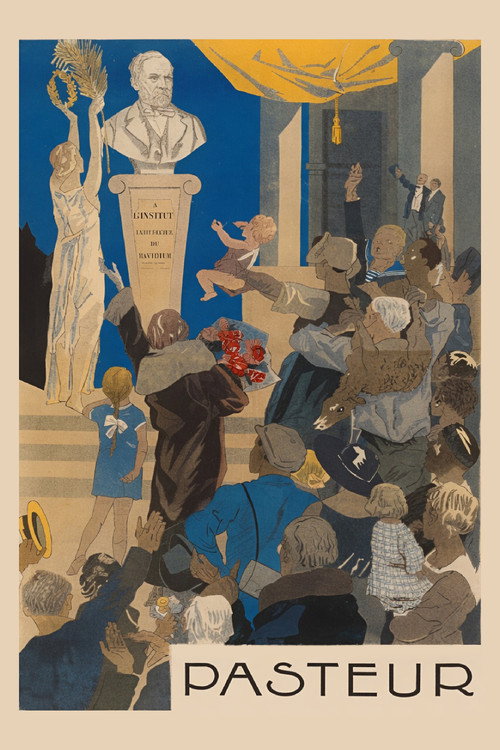
Jean Benoît-Lévy & Jean Epstein's inventive documentary about the life of Louis Pasteur, a French chemist and one of the most important figures of medical microbiology, blends biographical drama with scientific recreations of his experiments, using Pasteur's actual instruments.
Pasteur

Thematic anthology of : Le retour a la Maison (1923) by Man Ray; Emak-Bakia (1926) by Man Ray; L'Etoile de Mer (1928) by Man Ray; Les Mysteres Du Chateau de Dé (1929) by Man Ray; Rhythmus 21 (1921) by Hans Richter; Vormittagsspuk (1928) by Hans Richter; Anemic Cinema (1926) by Marcel Duchamp; Ballet Mecanique (1924) by Fernand Léger; Le Tempestaire (1947) by Jean Epstein; Romance Sentimentale (1930) by Grigori Aleksandrov and Sergei M. Eisenstein; La Coquille et le Clergyman (1928) by Germaine Dulac; Regen (Rain) (1929) by Joris Ivens and Mannus Franken
Cinema of the avant-garde 1923 - 1930

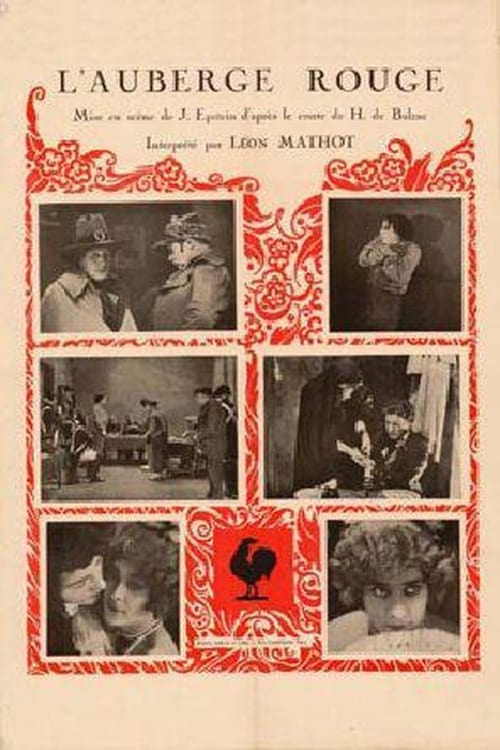
Two young doctors, surprised by the storm, take refuge in an inn. A diamond broker joins them and, for lack of space, shares their room. At dawn he is found dead. A few years later justice is done.
The Red Inn

This portrait of the French film theorist and avant-garde director Jean Epstein (1897-1953) concentrates on the period when he filmed in Brittany, the spot where he became inspired by the sea. Using rare archive footage, Jean Epstein, Young Oceans of Cinema also looks at Epstein’s views on the specificity of the film medium.
Jean Epstein, Young Oceans of Cinema

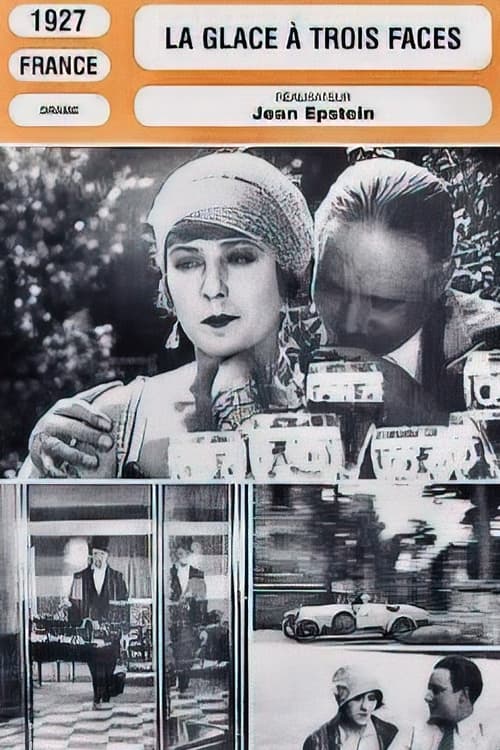
A wealthy young businessman consecutively falls in love with a classy English woman (Pearl), a Russian sculptress (Athalia), and a naive working-class girl (Lucie).
The Three-Sided Mirror

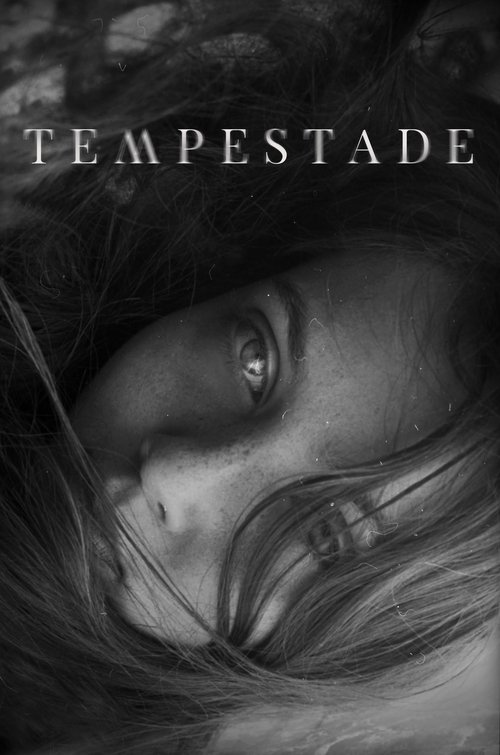
Following a premonition, a young woman tries to persuade her fiancé not to go out to sea in his fishing boat, but the boy ignores her and sets out. Soon, a storm occurs, and the girl frantically tries to find out his fate. Eventually, at the advice of her grandmother, she goes to the "Tempestaire", who has the power to speak to the wind and subdue it.
The Storm-Tamer

The French and the English spy on each other, in this adventure set in post World War I colonial Syria.
The Lady of Lebanon

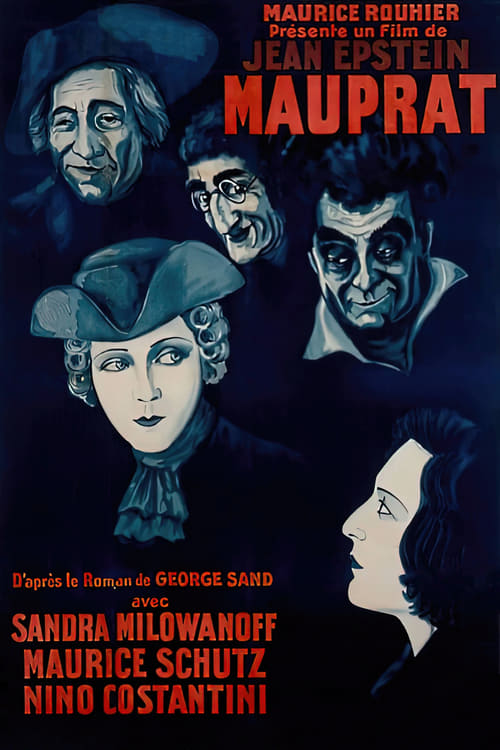
Romantic novelist George Sand's Mauprat as adapted by cinema visionary Jean Epstein. As a child, orphan Bernard de Mauprat was adopted by Tristan, a brigand who brought him up with his biological sons to hate, kill and pillage. Hubert de Mauprat, the elder brother of Tristan, the very incarnation of nobility, and his daughter, the beautiful and intrepid Edmée, undertake to tear wild-eyed Bernard away from his uncle. Still uncouth and rough, Bernard endeavors to wrest the love of Edmée away from her betrothed.
Mauprat

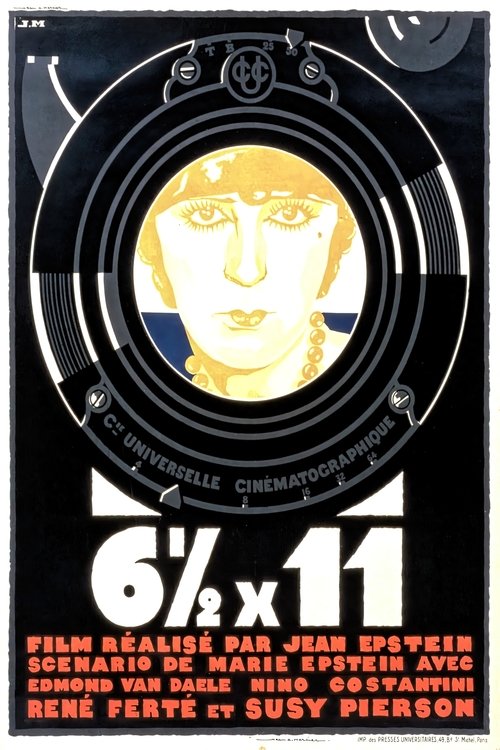
A renowned doctor and his brother live and work together until the brother falls in love with Marie, a singer, and gives up medicine to be with her. After a time however, she misses her old life and goes back on the stage - an act which leads her lover to commit suicide. Later the doctor and Marie also meet, and she becomes his mistress. He finds out about his brother's suicide and goes through his artifacts looking for a clue as to what might have been the cause. He finds a photograph of Marie and realizes the truth, which decimates their relationship.
Six and a Half by Eleven

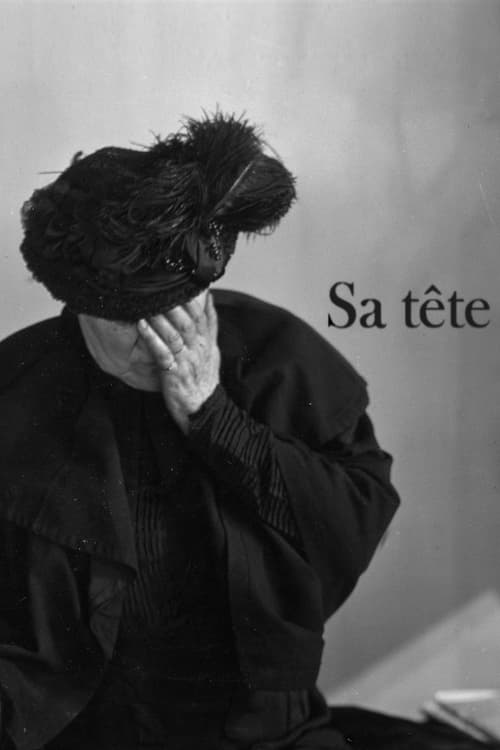
Jean Bonnard, clean-cut industrialist and the only son of a widow, goes to visit his mother in the small village where she lives. However, early in the morning the police arrive to arrest him, accusing the man of having murdered the old banker who'd made advances towards his girlfriend. Jean's mother is eager to aid her son, whom she believes is innocent. Said Epstein of his film: "I shot small landscapes in Livilliers which seemed to me-- in their reality, I mean-- very large".
His Head

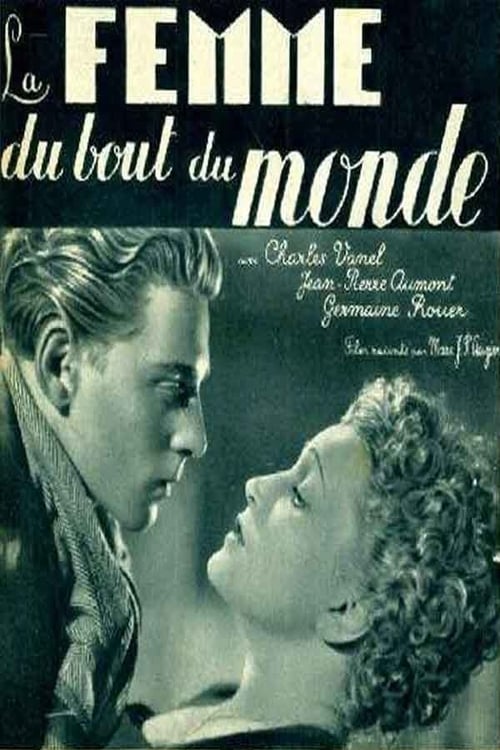
A sailor falls in love with an innkeeper on a lost island.
The Woman at the End of the World

In the kingdom of the Moguls, Prince Roudghito-Sing, a young officer of the palace, falls in love with Zemgali, a captive princess held prisoner and coveted by the Grand Khan. Fleeing the country, he takes refuge in Paris and his presentability allows him to be hired as an actor by a French film company. The trouble is that Anna, the star of the movie, is attracted to him. Which displeases banker Morel, the producer and Anna's lover... Written by Guy Bellinger
The Lion of the Moguls

A woman rocks a cradle; a man comes to land from the sea, but leaves to view it from a distance.
The Cradles

From the French television series Encyclopédie audiovisuelle du cinéma, the episode uploaded here, Jean Epstein ou le Cinéma pour lui-même, was produced and (I'm pretty certain) directed by Claude-Jean Philippe. There isn't much info out there-- especially not in English-- regarding the series in general (though there is an imdb link for the series as a whole) or the episode devoted to Epstein. Running around 25 minutes, the episode combines lengthy excerpts from Epstein's cinematic canon with the ideas contained in his theoretical texts to uncover the personal and conceptual underpinnings running beneath the work of this most exquisite filmmaker. I treasure this documentary in particular as it contains extensive footage from L'Auberge rouge.
Jean Epstein or Cinema by Itself

Documentary about the Narbonne region and the wine harvest.
Les vendanges
No description available.