Cinq silences inachevés
Synopsis
You might also like
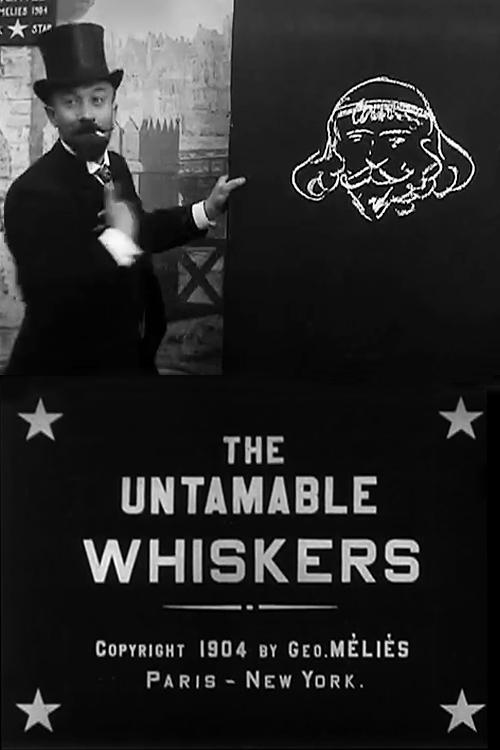
The background of this picture represents a scene along the beautiful river Seine in Paris. A gentleman enters, and taking a blackboard from the side of the picture, he draws on it a sketch of a novelist. Then, standing in the centre, he causes the living features of his sketch to appear in the place of his own, which is utterly devoid of whiskers. The change is made so mysteriously that the eye cannot notice it until one sees quite another person in the place of the first. Again another sketch is shown on the board, this one being that of a miser; then an English cockney; a comic character; a French policeman, and last of all, the grinning visage of Mephistopheles. It is almost impossible to give this film a more definite description; suffice it to say that it is something entirely new in motion pictures and is sure to please. (Méliès Catalog)
The Untamable Whiskers
Félicien Trewey uses a basic prop to create comical hats and their accompanying caricatures.
Transformation by Hats
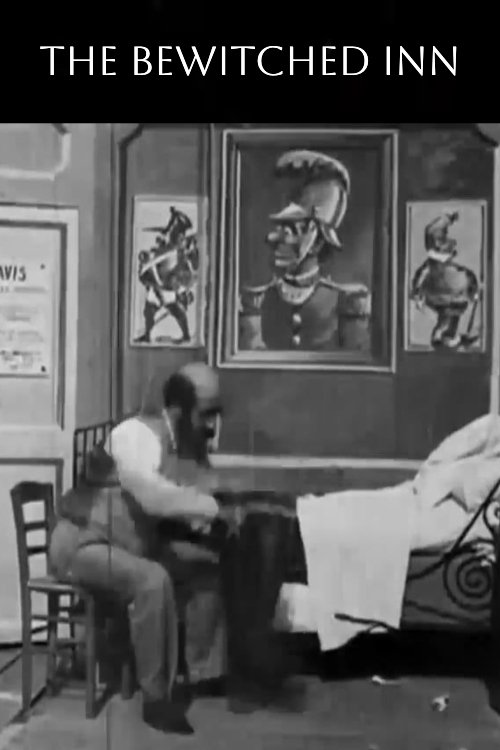
A weary traveler stops at an inn along the way to get a good night's sleep, but his rest is interrupted by odd happenings when he gets to his room--beds vanishing and re-appearing, candles exploding, pants flying through the air and his shoes walking away by themselves.
The Bewitched Inn
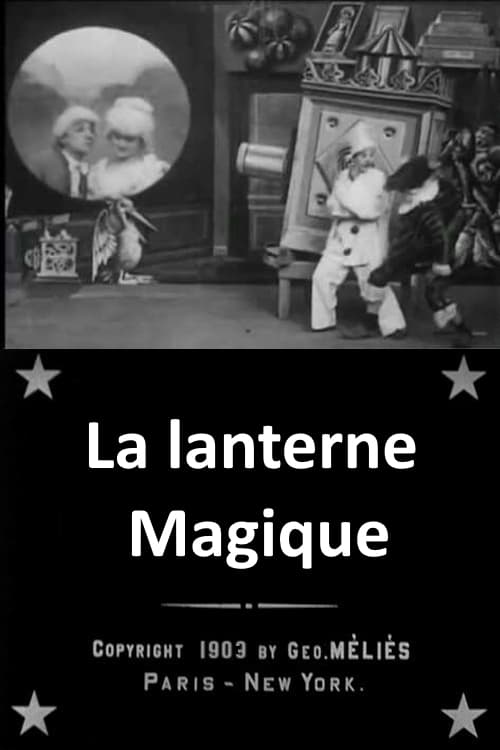
Two impish clowns construct a magic lantern. They prop it up at an angle, and use it to project pictures onto a wall. When the picture show ends, they open up the lantern to reveal a group of dancing girls inside - and this is only the first of the indications that this lantern really is magical.
The Magic Lantern

King of the slack wire. His daring feats of balancing as he performs his thrilling feats in midair show that he is perfectly at home.
Caicedo (with Pole)
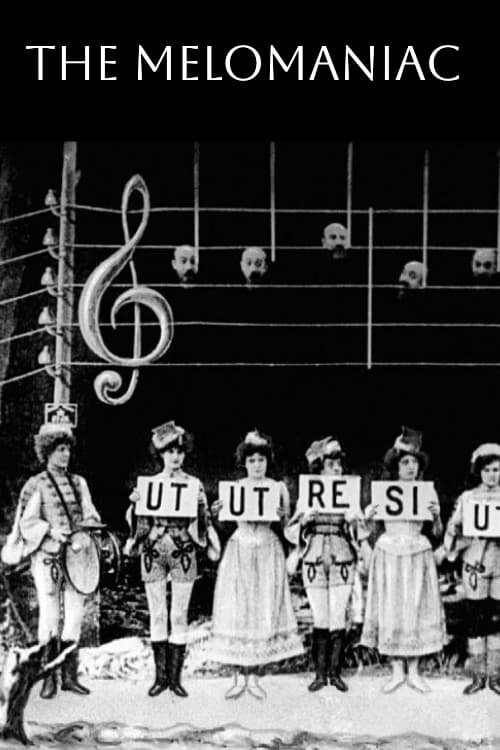
The leader of a marching band demonstrates an unusual way of writing music.
The Melomaniac

Three Chaplin silent comedies "A Dog's Life", "Shoulder Arms", and "The Pilgrim" are strung together to form a single feature length film. Chaplin provides new music, narration, and a small amount of new connecting material. "Shoulder Arms" is now described as taking place in a time before "the atom bomb".
The Chaplin Revue
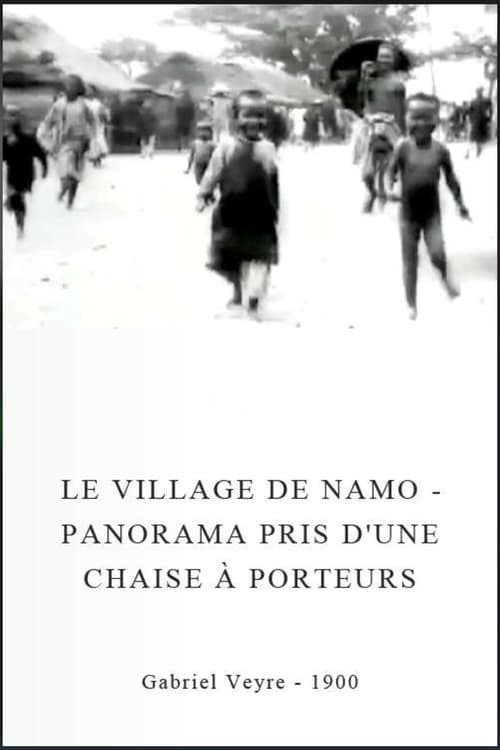
The film is a panorama shot-scene lasting just under a minute. The panorama film, as coined by Lumière, is a moving-camera shot--usually accomplished by placing the camera on a moving transport, such as a boat or train.
Le village de Namo - Panorama pris d'une chaise à porteurs
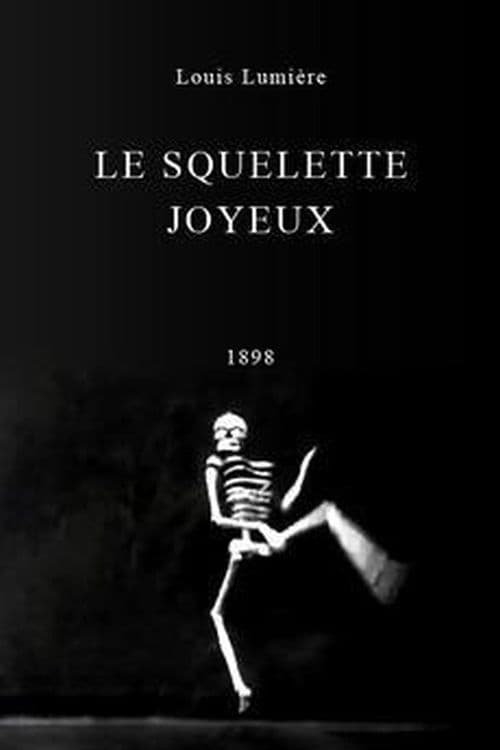
A skeleton dances joyously, often collapsing into a heap of bones and quickly putting itself back together.
The Dancing Skeleton

Georges Méliès makes a woman disappear, then reappear.
The Vanishing Lady

Aspiring filmmakers Mel Funn, Marty Eggs and Dom Bell go to a financially troubled studio with an idea for a silent movie. In an effort to make the movie more marketable, they attempt to recruit a number of big name stars to appear, while the studio's creditors attempt to thwart them.
Silent Movie
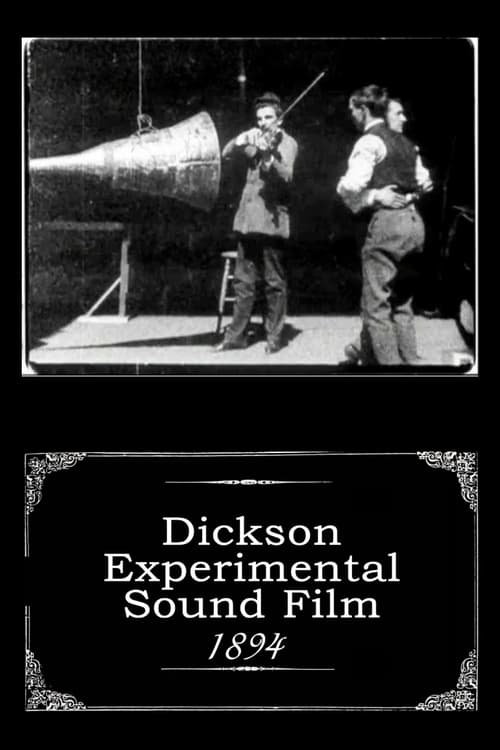
William K.L. Dickson plays the violin while two men dance. This is the oldest surviving sound film where sound is recorded on the phonograph.
Dickson Experimental Sound Film

Mother, father and daughter go to the park. The women doze off on a bench while the father plays a hide-and-seek game with a girl, blindfolded. Charlie leads him into a lake. Both dozing ladies on the bench fall for Charlie and invite him for dinner. The father returns home with a friend. Charlie rushes upstairs and dresses like a woman, shaving his mustache. Both men fall for Charlie.
A Woman

The Little Fellow finds the girl of his dreams and work on a family farm. He helps defend the farm against criminals, and all seems well, until he discovers the girl of his dreams already has someone in her life. Unwilling to be a problem in their lives, he takes to the road, though he is seen skipping and swinging his cane as if happy to be back on the road where he knows he belongs.
The Tramp
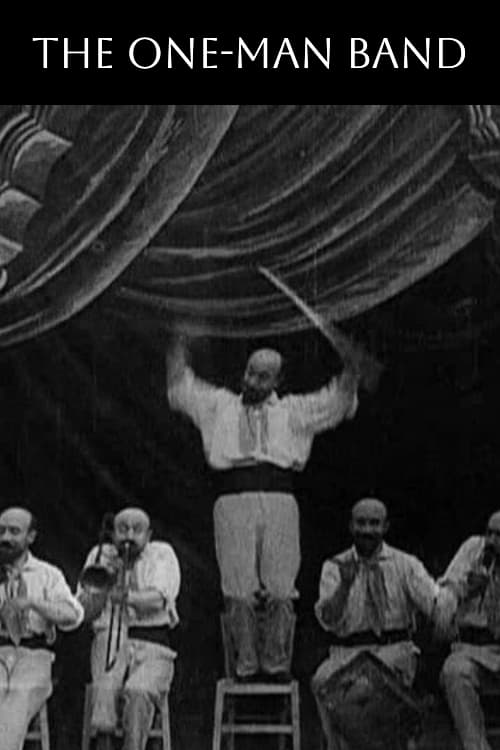
A band-leader has arranged seven chairs for the members of his band. When he sits down in the first chair, a cymbal player appears in the same chair, then rises and sits in the next chair. As the cymbal player sits down, a drummer appears in the second chair, and then likewise moves on to the third chair. In this way, an entire band is soon formed, and is then ready to perform.
The One-Man Band

A collection of Warner Brothers short cartoon features, "starring" the likes of Daffy Duck, Porky Pig and Wile.E.Coyote. These animations are interspersed by Bugs Bunny reminiscing on past events and providing links between the individual animations which are otherwise unconnected. This 1979 feature-length compilation includes several of his best cartoons. Among the 11 shorts shown in their entirety are the classics "Robin Hood Daffy," "What's Opera, Doc?," "Bully for Bugs," and "Duck Amuck". The Bugs Bunny Road Runner Movie provides a showcase not only for Jones's razor-sharp timing, but for the work of his exceptional crew, which included designer Maurice Noble, writer Mike Maltese, composers Carl Stalling and Milt Franklyn, and voice actor Mel Blanc.
The Bugs Bunny/Road Runner Movie

After a daring heist at a museum, the youngest member of the villainous Nelson family, Binky, realizes he's left behind his beloved pacifier. Determined to retrieve it, Binky embarks on an adorable and hilarious mission to recover his prized possession.
Binky Nelson Unpacified

Buster and a woman are mistakenly married and her initially unfriendly family begins to treat him nicely when they come to believe he has a large inheritance awaiting him.
My Wife's Relations
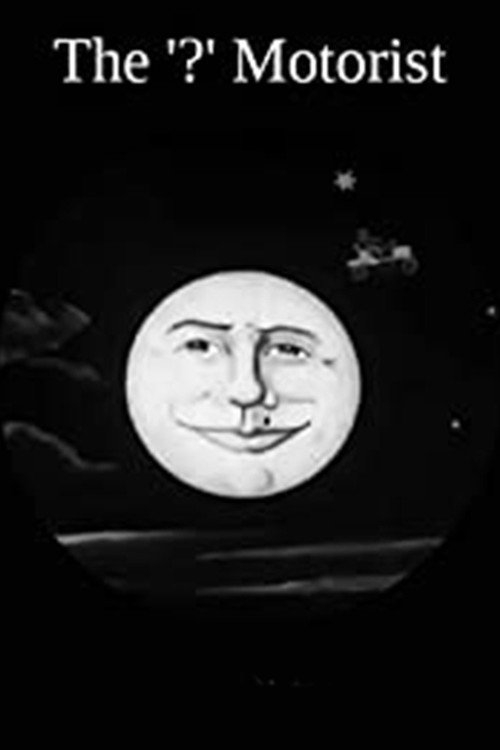
A magical glowing white motorcar ignores policemen, drives up buildings, flies through outer space, and can transform into a horse and carriage.
The '?' Motorist
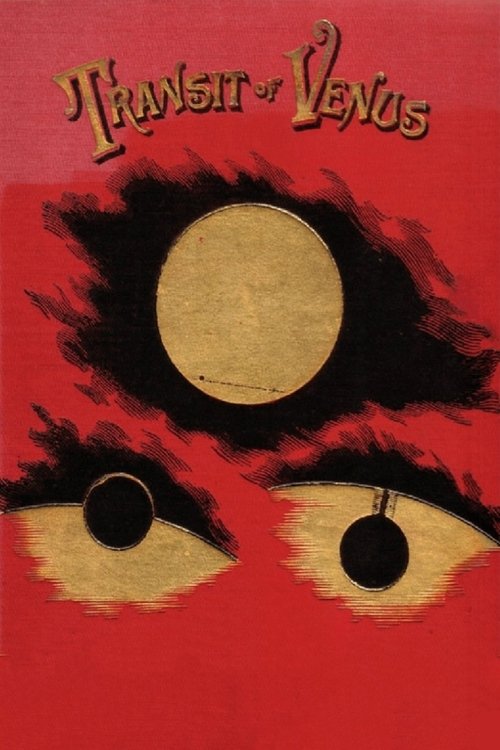
Photo sequence of the rare transit of Venus over the face of the Sun, one of the first chronophotographic sequences. In 1873, P.J.C. Janssen, or Pierre Jules César Janssen, invented the Photographic Revolver, which captured a series of images in a row. The device, automatic, produced images in a row without human intervention, being used to serve as photographic evidence of the passage of Venus before the Sun, in 1874.