Cinématon n°99 : Éric Franck
Synopsis
- Director
- Gérard Courant
- Original language
- French
- Countries
- France
- Official website
- gerardcourant.com
You might also like
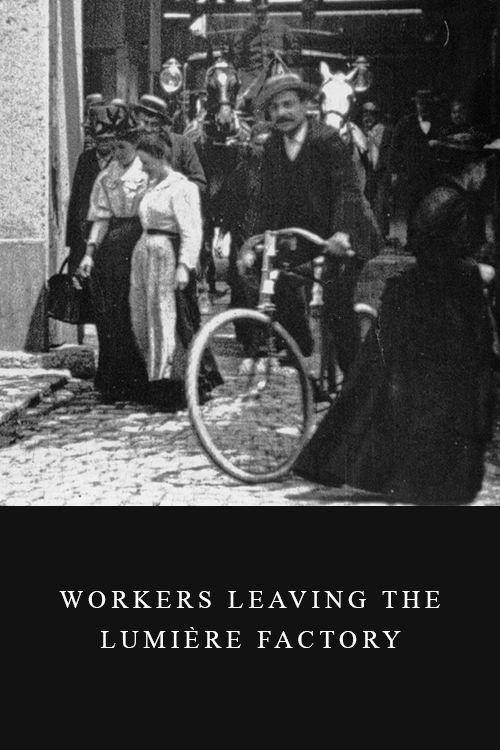
Working men and women leave through the main gate of the Lumière factory in Lyon, France. Filmed on 22 March 1895, it is often referred to as the first real motion picture ever made, although Louis Le Prince's 1888 Roundhay Garden Scene pre-dated it by seven years. Three separate versions of this film exist, which differ from one another in numerous ways. The first version features a carriage drawn by one horse, while in the second version the carriage is drawn by two horses, and there is no carriage at all in the third version. The clothing style is also different between the three versions, demonstrating the different seasons in which each was filmed. This film was made in the 35 mm format with an aspect ratio of 1.33:1, and at a speed of 16 frames per second. At that rate, the 17 meters of film length provided a duration of 46 seconds, holding a total of 800 frames.
Workers Leaving the Lumière Factory
An inexperienced young actress is invited to play a role in a film based on Dostoyevsky's 'The Possessed'. The film director, a Czech immigrant in Paris, takes over her life, and in a short time she is unable to draw the line between acting and reality. She winds up playing a real-life role posing as the dead wife of another Czech immigrant, who is manipulated by the filmmaker into commiting a political assassination.
The Public Woman
Filmmaking icon Agnès Varda, the award-winning director regarded by many as the grandmother of the French new wave, turns the camera on herself with this unique autobiographical documentary. Composed of film excerpts and elaborate dramatic re-creations, Varda's self-portrait recounts the highs and lows of her professional career, the many friendships that affected her life and her longtime marriage to cinematic giant Jacques Demy.
The Beaches of Agnès

A Baltimore teenager who picks up a second-hand camera starts snapping his way to stardom, soon turning into a nationwide sensation, with a fateful choice between his life and his art.
Pecker

The earliest surviving motion-picture film, and believed to be one of the very first moving images ever created, was shot by Louis Aimé Augustin Le Prince using the LPCCP Type-1 MkII single-lens camera. It was taken on paper-based photographic film in the garden of Oakwood Grange, the Whitley family house in Roundhay, Leeds, West Riding of Yorkshire (UK), on 14 October 1888. The film shows Adolphe Le Prince (Le Prince’s son), Mrs. Sarah Whitley (Le Prince’s mother-in-law), Joseph Whitley, and Miss Harriet Hartley walking around in circles, laughing to themselves, and staying within the area framed by the camera. Roundhay Garden Scene is often associated with a recording speed of around 12 frames per second and runs for about 2 to 3 seconds.
Roundhay Garden Scene
Agnès Varda eloquently captures Paris in the sixties with this real-time portrait of a singer set adrift in the city as she awaits test results of a biopsy. A chronicle of the minutes of one woman’s life, Cléo from 5 to 7 is a spirited mix of vivid vérité and melodrama, featuring a score by Michel Legrand and cameos by Jean-Luc Godard and Anna Karina.
Cléo from 5 to 7

On an isolated island in Brittany at the end of the eighteenth century, a female painter is obliged to paint a wedding portrait of a young woman.
Portrait of a Lady on Fire
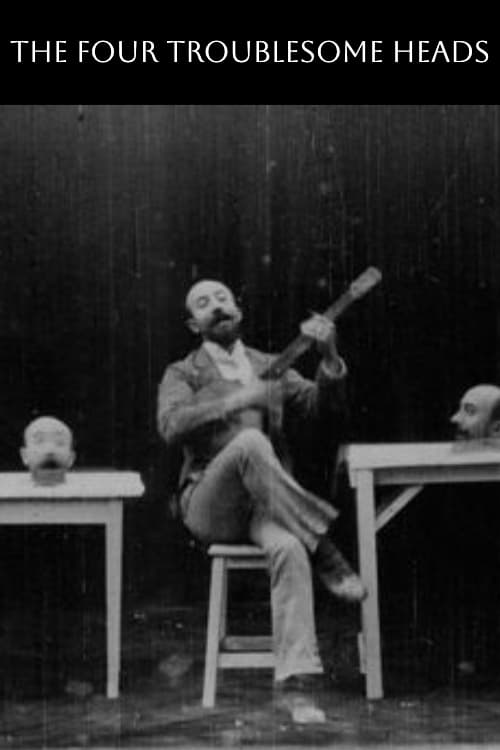
One of the greatest of black art pictures. The conjurer appears before the audience, with his head in its proper place. He then removes his head, and throwing it in the air, it appears on the table opposite another head, and both detached heads sing in unison. The conjurer then removes it a third time. You then see all three of his heads, which are exact duplicates, upon the table at one time, while the conjurer again stands before the audience with his head perfectly intact, singing in unison with the three heads upon the table. He closes the picture by bowing himself from the stage.
The Four Troublesome Heads
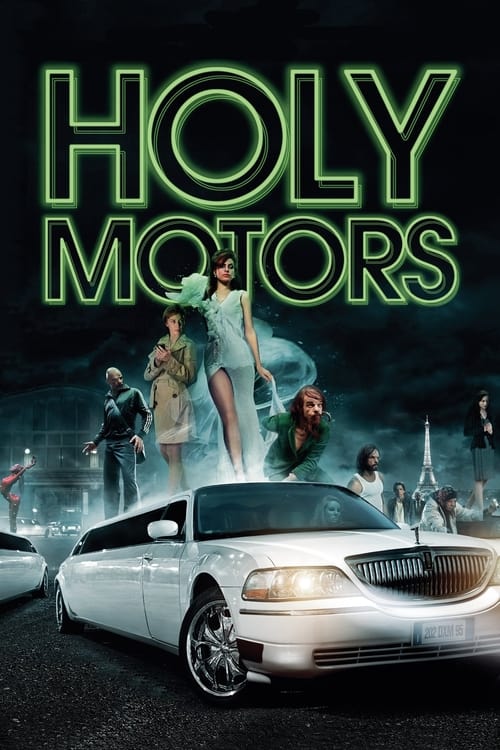
We follow 24 hours in the life of a being moving from life to life like a cold and solitary assassin moving from hit to hit. In each of these interwoven lives, the being possesses an entirely distinct identity: sometimes a man, sometimes a woman, sometimes youthful, sometimes old. By turns murderer, beggar, company chairman, monstrous creature, worker, family man.
Holy Motors

The prodigal son of a family in turmoil returns home to his French rural home to reconnect with his family and make sense of their dysfunctions.
Back Home
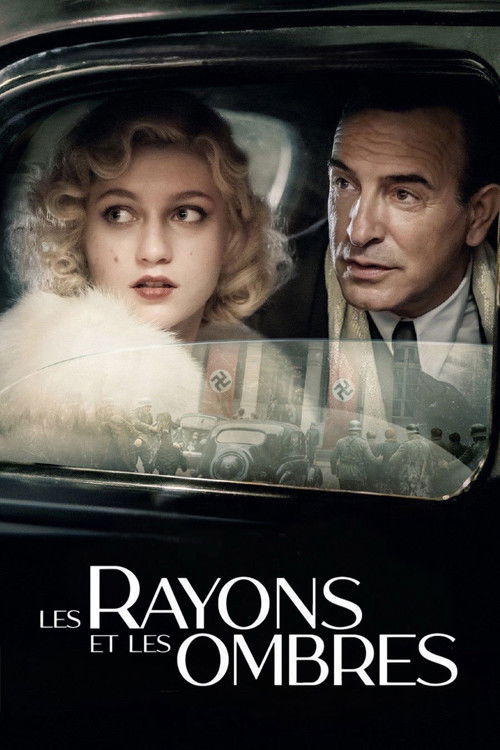
Jean and Otto, a French newspaperman and a young German Francophile, are fighting for peace in Europe. Jean’s daughter, Corinne, is launching a brilliant acting career in the film world, but war breaks out and France is occupied. The two friends have a major role to play in this new France. Jean becomes a big press baron and an ardent advocate of collaboration with the occupying forces, while Otto becomes the Reich’s ambassador in Paris. Corinne, meanwhile, finds herself thrown into the lion’s pit.
The Rays and Shadows
From a prolific career in film and television, Anton Yelchin left an indelible legacy as an actor. Through his journals and other writings, his photography, the original music he wrote, and interviews with his family, friends, and colleagues, this film looks not just at Anton's impressive career, but at a broader portrait of the man.
Love, Antosha
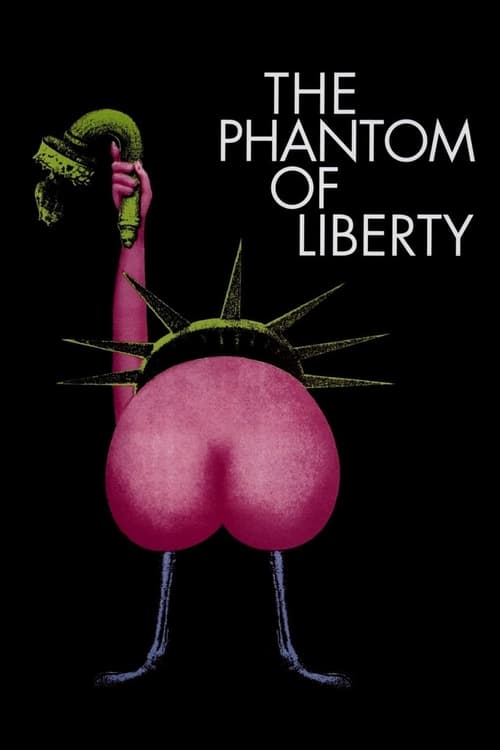
This Surrealist film, with a title referencing the Communist Manifesto, strings together short incidents based on the life of director Luis Buñuel. Presented as chance encounters, these loosely related, intersecting situations, all without a consistent protagonist, reach from the 19th century to the 1970s. Touching briefly on subjects such as execution, pedophilia, incest, and sex, the film features an array of characters, including a sick father and incompetent police officers.
The Phantom of Liberty

The life story of ‘Zen Anarchist’ filmmaker John Milius, one of the most influential storytellers of his generation.
Milius

Set during a sultry summer in a French suburb, Marie is desperate to join the local pool's synchronized swimming team, but is her interest solely for the sake of sport or for a chance to get close to Floriane, the bad girl of the team? Sciamma, and the two leads, capture the uncertainty of teenage sexuality with a sympathetic eye in this delicate drama of the angst of coming-of-age.
Water Lilies
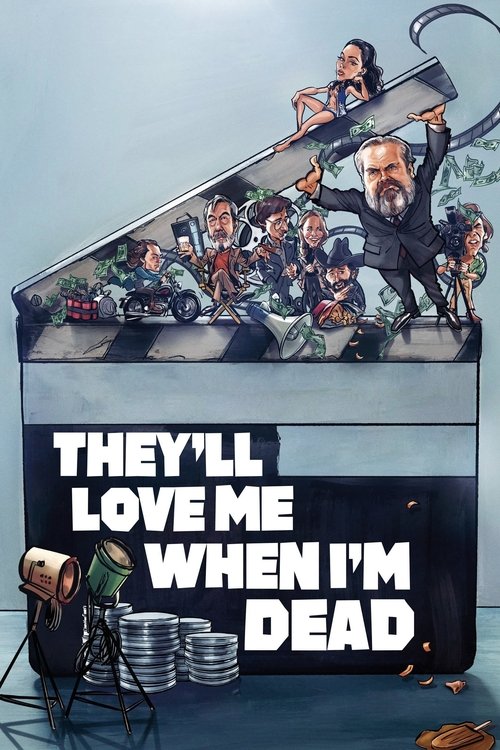
As his life comes to its end, famous Hollywood director Orson Welles puts it all on the line at the chance for renewed success with the film The Other Side of the Wind.
They'll Love Me When I'm Dead
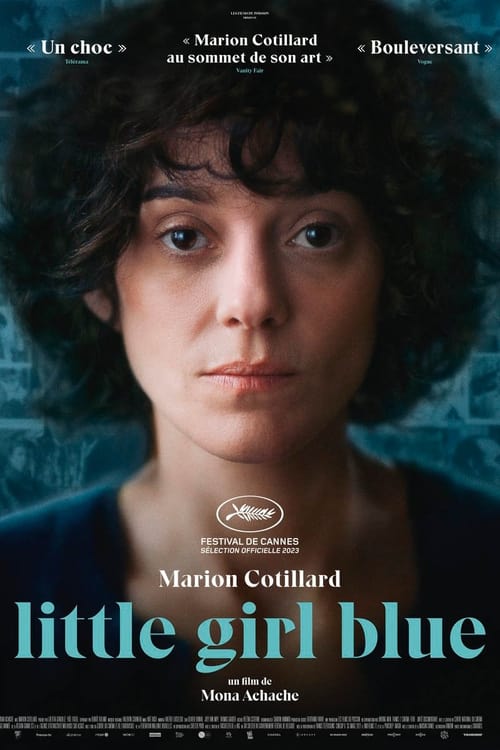
In 2016, French writer and photographer Carole Achache took her own life. After Carole's death, her daughter Mona Achache, a film director, discovers thousands of photos, letters and recordings that Carole left behind, but these buried secrets make her disappearance even more of an enigma. Through the power of filmmaking and the beauty of incarnation with the help of actress Marion Cotillard, the director brings her mother back to life to retrace her journey and find out who she really was.
Little Girl Blue
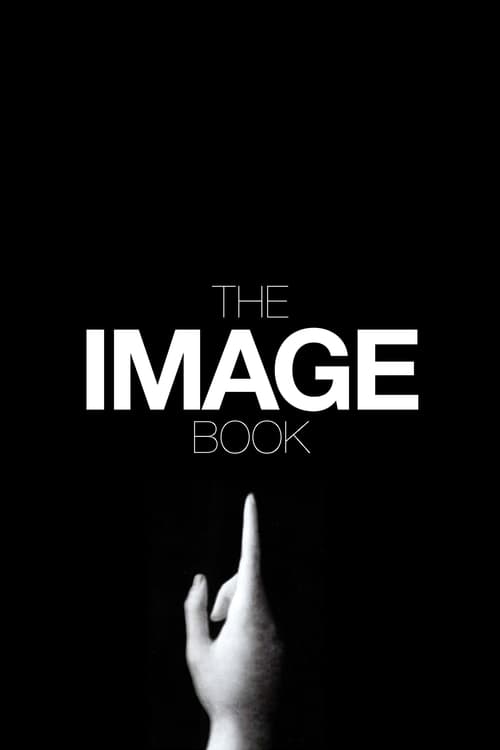
In Le Livre d’Image, Jean-Luc Godard recycles existing images (films, documentaries, paintings, television archives, etc.), quotes excerpts from books, uses fragments of music. The driving force is poetic rhyme, the association or opposition of ideas, the aesthetic spark through editing, the keystone. The author performs the work of a sculptor. The hand, for this, is essential. He praises it at the start. “There are the five fingers. The five senses. The five parts of the world (…). The true condition of man is to think with his hands. Jean-Luc Godard composes a dazzling syncopation of sequences, the surge of which evokes the violence of the flows of our contemporary screens, taken to a level of incandescence rarely achieved. Crowned at Cannes, the last Godard is a shock film, with twilight beauty.
The Image Book
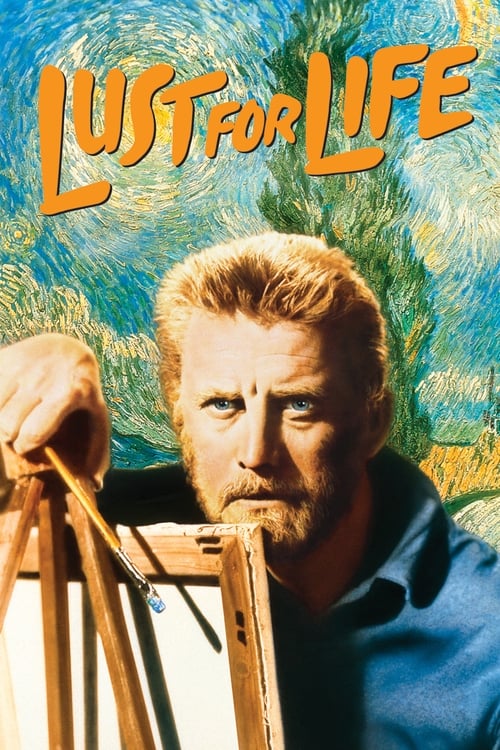
An intense and imaginative artist, revered Dutch painter Vincent van Gogh possesses undeniable talent, but he is plagued by mental problems and frustrations with failure. Supported by his brother, Theo, the tormented Van Gogh eventually leaves Holland for France, where he meets volatile fellow painter Paul Gauguin and struggles to find greater inspiration.
Lust for Life

Two girlfriends on a summer holiday in Spain become enamored with the same painter, unaware that his ex-wife, with whom he has a tempestuous relationship, is about to re-enter the picture.