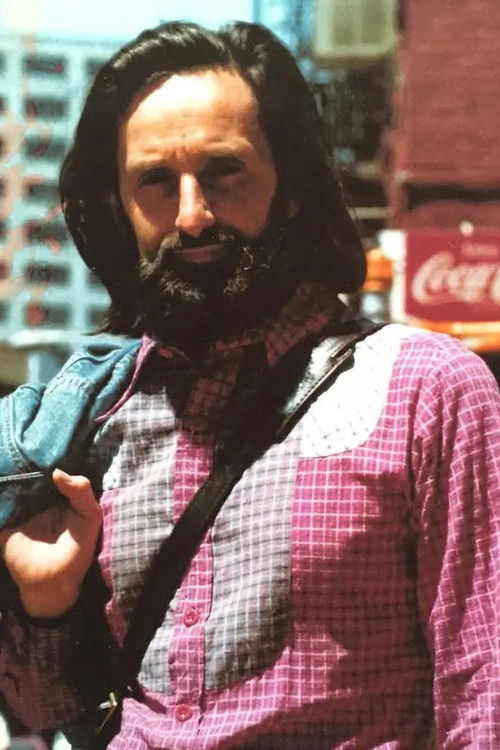
Cinématon n°65 : Howard Guttenplan
Synopsis
Vous aimerez aussi

« Daguerréotypes » n'est pas un film sur la rue Daguerre, pittoresque rue du 14e arrondissement, c'est un film sur un petit morceau de la rue Daguerre, entre le numéro 70 et le numéro 90, c'est un document modeste et local sur quelques petits commerçants, un regard attentif sur la majorité silencieuse. C'est un album de quartier, ce sont des portraits stéréo-daguérréotypés. Ce sont des archives pour les archéo-sociologues de l'an 2975.
Daguerréotypes

Fiona, un bibliothécaire canadienne, débarque à Paris pour venir en aide à sa vieille tante Martha, menacée d'internement dans une maison de retraite. Mais Fiona perd ses bagages et découvre que Martha a disparu. C'est le début d'une avalanche de catastrophes, qui lui feront croiser le chemin de Dom, SDF égoïste, frimeur et collant qui lui pourrit la vie.
Paris pieds nus

Le gardien de la Tour Eiffel découvre un beau matin que plus rien ne bouge dans Paris. Seul un petit groupe d'amis, arrivés par avion dans la capitale, a échappé au rayon paralysant ; désormais, Paris leur appartient...
Paris qui dort

Documentaire making-off de l'épisode IX : Star Wars : L'Ascension de Skywalker.
The Skywalker Legacy

Ceci est l’histoire de Godard tournant « À bout de souffle », racontée dans le style et l’esprit de Godard tournant « À bout de souffle ».
Nouvelle Vague
Avant 12 jours, les personnes hospitalisées en psychiatrie sans leur consentement sont présentées en audience, d’un côté un juge, de l’autre un patient, entre eux naît un dialogue sur le sens du mot liberté et de la vie.
12 jours

« Samsara » est un mot tibétain qui signifie « la roue de la vie », un concept à la fois intime et vaste, qui définit l'âme de chacun. Tourné dans 25 pays, durant 5 ans, « Samsara » explore les merveilles de notre monde. C’est un voyage extraordinaire, une méditation sans paroles.
Samsara

« Dans les faubourgs aquatiques de San Francisco vit un Grec sur une péniche. Il peint des villes célestes et byzantines. Il navigue sur une barque à la voile latine. Il reçoit des hippies et des contestataires dans son bateau-maison. J'ai découvert qu'il était mon oncle d'Amérique et quel merveilleux bonhomme il était. » (Agnès Varda)
Oncle Yanco

Face à une crise qui menace la magie de Noël, le pôle Nord fait appel à la seule personne capable de sauver les fêtes : Mariah Carey. Entourée d’invités prestigieux, la diva vient à la rescousse dans cette émission festive.
Mariah Carey's Magical Christmas Special

Peng est un jars casse-cou, farceur et dragueur. A force d’acrobaties pour épater les jolies oies, il se blesse et doit renoncer à partir avec les oies pour leur grande migration annuelle. Il rencontre alors Chao et Chi, deux petits canetons, également séparés de leur groupe. Aucun ne peut voler ? Qu’importe, ils décident de partir tous les trois, à travers toute la Chine, pour une grande migration… à pied ! Chao et Chi se font un malin plaisir à taquiner Peng, qui découvre bien malgré lui les inconvénients d’un voyage avec des petits canetons facétieux ! Les péripéties et les blagues ne vont pas manquer lors de cette expédition à pied très mouvementée !
Destination Pékin !

Un marine va tout tenter pour empêcher un groupe terroriste de lancer une attaque contre les États-Unis et, accessoirement, sauver sa nièce prisonnière de cette milice aux méthodes radicales...
The Marine 3: Homefront

Après quatre mois de captivité chez les "Viets", le lieutenant Raspeguy obtient, grâce à son influence, un nouveau commandement: le dixième régiment de parachutistes en Algérie surnommés "les lézards". Mais durant la guerre, il doit faire face à divers problèmes: son ami Ben Mahidi est devenu le chef des rebelles terroristes et il tombe amoureux de Aïcha, qui n'est autre que la sœur de Mahidi.
Les Centurions

Charlotte Gainsbourg accepte de jouer une sorcière jetée au bûcher dans le premier film réalisé par Béatrice Dalle. Or l’organisation anarchique, les problèmes techniques et les dérapages psychotiques plongent peu à peu le tournage dans un chaos de pure lumière.
Lux Æterna

À Paris, Ram Bowen, un tromboniste américain qui ne vit que pour le jazz, en allant accueillir à la gare Saint-Lazare le célèbre trompettiste Wild Man Moore, rencontre deux compatriotes, Lilian et son amie noire Connie, venues visiter la capitale durant quelques jours. En se rendant au Club 33, la boîte de jazz où joue Ram, les Américaines font la connaissance du saxophoniste noir Eddie Cook qui semble s'être établi à Paris pour fuir le racisme ambiant aux États-Unis. Les idylles respectives de Ram et Eddie avec Lilian et Connie vont remettre en question la vie artistique des deux musiciens, notamment celle de Ram qui, en pleine création, a obtenu un rendez-vous décisif avec un éditeur musical notable auquel il a envoyé sa composition Paris Blues. La déception de Ram, après son entrevue avec l'éditeur qui lui conseille de se perfectionner, et le grand amour qu'Eddie éprouve pour Connie, vont les convaincre de suivre les deux jeunes femmes aux États-Unis...
Paris Blues

Modeste ouvrier, Douglas Quaid rêve de s'évader de sa vie frustrante. L'implantation de souvenirs que propose la société Rekall lui paraît l'échappatoire idéale. S'offrir des souvenirs d'agent secret serait parfait... Mais lorsque la procédure d'implantation tourne mal, Quaid se retrouve traqué par la police. Il ne peut plus faire confiance à personne, sauf peut-être à une inconnue qui travaille pour une mystérieuse résistance clandestine. Très vite, la frontière entre l'imagination et la réalité se brouille. Qui est réellement Quaid, et quel est son destin ?
Total Recall: Mémoires programmées

Cléo, belle et chanteuse, attend les résultats d'une analyse médicale. De la superstition à la peur, de la rue de Rivoli au Café de Dôme, de la coquetterie à l'angoisse, de chez elle au Parc Montsouris, Cléo vit quatre-vingt-dix minutes particulières. Son amant, son musicien, une amie puis un soldat lui ouvrent les yeux sur le monde.
Cléo de 5 à 7

Paris, 2013. Damien est l'élite de la police. Officier d'une unité spéciale d'intervention, expert en arts martiaux, il est passé maître dans l'art de l'infiltration et sait mener à terme ses opérations par des actions rapides, précises et néanmoins musclées.Et c'est bien la mission la plus extrême de sa carrière qui vient de lui être confiée : une arme de destruction massive a été dérobée par le plus puissant gang de la banlieue. Damien est chargé d'infiltrer dans le secteur pour désamorcer la bombe ou la récupérer.
Banlieue 13

Agnès Varda et JR ont des points communs : passion et questionnement sur les images en général et plus précisément sur les lieux et les dispositifs pour les montrer, les partager, les exposer. Agnès a choisi le cinéma. JR a choisi de créer des galeries de photographies en plein air. Quand Agnès et JR se sont rencontrés en 2015, ils ont aussitôt eu envie de travailler ensemble, tourner un film en France, loin des villes, en voyage avec le camion photographique (et magique) de JR. Hasard des rencontres ou projets préparés, ils sont allés vers les autres, les ont écoutés, photographiés et parfois affichés. Le film raconte aussi l’histoire de leur amitié qui a grandi au cours du tournage, entre surprises et taquineries, en se riant de leurs différences.
Visages Villages

« Un copain déposera un colis et passera le reprendre plus tard », tel est le message laissé par Jacques, avant son départ pour le Japon, à ses deux compères Pierre et Michel avec lesquels il partage un luxueux appartement. Comme prévu, le colis arrive et à la stupéfaction générale, il s'agit d'un bébé… Adieu liberté et aventures sans lendemain.
3 Hommes et un couffin
Une jeune libraire du village new-yorkais, adepte de l'empathie, se voit propulsée, par un journal, à Paris pour présenter la collection d'un grand couturier. Là elle rencontre le grand maître « empathicaliste » qui ne reste pas insensible à ses charmes tandis que le photographe du journal la poursuit de ses assiduités. Une musique de Gershwin pour cette suave comédie musicale qui propose un Paris très hollywoodien.
Drôle de Frimousse
Avis & Notes
Connectez-vous pour donner votre avis
Partagez votre opinion avec la communauté.